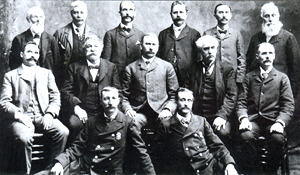
These jurors wished they could’ve asked questions, too.
The Seventh Circuit American Jury Project Commission issued its Final Report last month. It includes some interesting findings about the vanishing jury trial:
- Asking witnesses questions that jurors themselves have proposed "helped their understanding of the facts" without sacrificing efficiency.
- Giving "preliminary substantive jury instructions" achieves "the intended goal of increasing the jurors’ understanding of the case by giving the jurors the legal framework for the parties’ arguments regarding the disputed facts."
- Using a 12-person jury may increase "the jury’s diversity" and therefore "is likely to prove beneficial" and will "pose little difficulty in efficiency terms."
- Jurors found "interim statements" by counsel helpful to their understanding of the evidence and in focusing their attention on the evidence, especially in trials lasting more than a week.
- Having potential jurors complete a questionnaire before voir dire tends to enhance efficiency without affecting fairness of trials.
- Giving more instructions on how to conduct deliberations doesn’t seem to help jurors.
- Judges prefer not to set trial time limits out of concern that they don’t increase fairness, efficiency, or satisfaction.
All that makes sense to Blawgletter — except the bit about limiting trial time. Requiring trial lawyers to distill their cases seldom produces bad outcomes. But it sure does save time and money, not only for the case that goes to trial but also for the others awaiting it.
