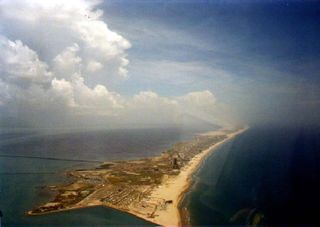
South Padre Island.
The Supreme Court of Texas today held that the passage of time barred claims against a New York lawyer for fraudulently acquiring oil and gas and other property interests in the world's longest barrier island. Kerlin v. Sauceda, No. 05-0653 (Tex. Oct. 10, 2008).
The genesis of the litigation dates to 1829, when the Mexican state of Tamaulipas recognized the claims of uncle and nephew Padre Nicolas Balli and Juan Jose Balli to Padre Island, which hugs about 130 miles of the southern Gulf Coast of Texas.
After many divisions and conveyances of ownership interests in the island, another uncle and nephew team, Frederick Gilbert and Gilbert Kerlin, managed (starting in 1937) to wangle deeds from heirs of Juan Jose. Empire State lawyer Kerlin also revived and settled a lawsuit involving other claimants in a way that granted Gilbert and Kerlin title to surface and mineral interests in Padre Island property.
Balli heirs eventually got wise to Kerlin's maneuvers and, in 1993, filed a lawsuit against him and companies to which he'd conveyed the Gilbert and Kerlin acquisitions. A jury found for the heirs, and the court of appeals affirmed.
But the Supreme Court concluded that the two- and four-year statutes of limitations expired before the heirs sued. The fraudulent concealment doctrine didn't save the claims because for as many as 40 years Kerlin's allegedly fraudulent deeds were a matter of public record. Plus the heirs always knew that they weren't getting the royalties they now claimed.
Nor did Kerlin's "absence" from Texas toll the running of limitations under section 16.063 of the Texas Civil Practice and Remedies Code. Kerlin's amenability to personal jurisdiction in the Lone Star State by virtue of the Texas general long-arm statute made him "present". He therefore lacked absence, and limitations thus kept running, the Court held.
Four justices joined in a tart concurrence.
