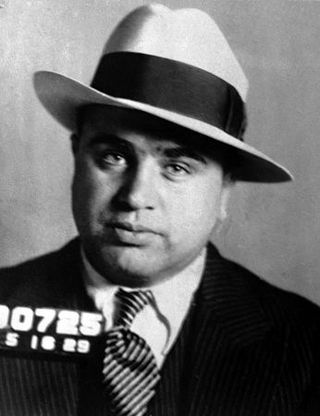
Al Capone didn't confess to racketeering.
Today Blawgletter takes up the Bernard L. Madoff scandal. First we rhetorically bash the Securities and Exchange Commission; then we speculate on what made Mr. Madoff such a exquisitely good defrauder.
The SEC has an unerring sense for the capillary
We read yesterday, in the WSJ, that the SEC "may pursue charges against Mr. Madoff over what they believe were his lies to SEC officials during past examinations."
Huh? Ponzi-boy Madoff will do time for . . . misleading SEC watchdogs? The SEC plans to build its case not so much on a decades-spanning, lives-ruining, economy-tumulting $50 billion fraud . . . but on fibbing to regulators two or three years ago?
Al Capone went to the federal pen for lying about his true income to the Internal Revenue Service instead of for racketeering. But at least he didn't confess to his underlying, far graver crimes; the feds got him on what they could get him on. Scumdog Centimillionaire Madoff, by contrast, all but pleaded guilty.
So what would a piddling perjury conviction do that putting Madoff away on the actual racketeering he's admitted do? Try to justify the SEC's incredible credulousness?
Anyways
Two days ago, we cracked open Malcolm Gladwell's latest book, Outliers: The Story of Success (2008). The best-seller says people succeed not just because of talent and ability in their field — athletics, science, whatnot. No. Other things matter far more. Things like having rare opportunities fall their way, a whole lot of practice (at least 10,000 hours), reasonably good (but not necessarily great) intelligence, and "practical intelligence" about how to navigate in the world.
Gladwell cites Robert Oppenheimer, the father of the A-bomb, as an example of why intelligence alone doesn't make someone great at something. A genius and polymath, Oppenheimer also "possessed the kind of savvy that allowed him to get what he wanted from the world."
Ah.
At 22, in 1960, Bernie Madoff started an upstart brokerage firm that turned into one of the first to harness electronic trading — a serendipitous opportunity that made him rich, the chairman of Nasdaq, and a familiar of the SEC. He loved to court investors and regulators (and scam them) and swiftly accumulated the requisite training time — lots more than the necessary 10,000 plus hours of practice. He seems bright enough (having finished college and a year or so of law school). And he displayed an astonishing gift for inducing people to give him their money and then misusing it – "the kind of savvy that allowed him to get what he wanted from the world."
An outlier, perhaps. But also just another outliar.
 Our feed thinks the SEC needs to hire that "Lie to Me" guy on television.