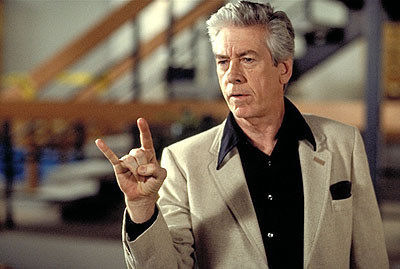
Principal Richard "Dick" Vernon from The Breakfast Club (1985).
A young lawyer asked Blawgletter to look at a draft outline of settlement terms. The Dictabelt captured the ensuing exchange thus:
A: Blawgletter, we hammered out a deal in mediation today. The agreement in principal goes like this:
- Bad guys pay our dear client $X within 30 days;
- Bad guys will delete the electronic documents they stole from our dear client;
- Parties give mutual releases; and
- We get an apology from the bad guys.
B: Good job. But what in bloody heck do you mean by "in principal"?
A. That the agreement covers the most important terms.
B: So will it bind the parties even if they don’t agree on other, non-principal terms?
A: Um . . . no.
B: Do you instead mean an agreement in principle? As in one that morally binds but doesn’t create legal obligations?
A: I see your stupid point. "Principal" implies that the agreement includes all the important terms and therefore has legal effect, whereas "principle" sounds more like "in theory".
B: You’ve done well, grasshopper/padawan. But add a paragraph that says the Agreement in Principle doesn’t obligate anybody anyway.
