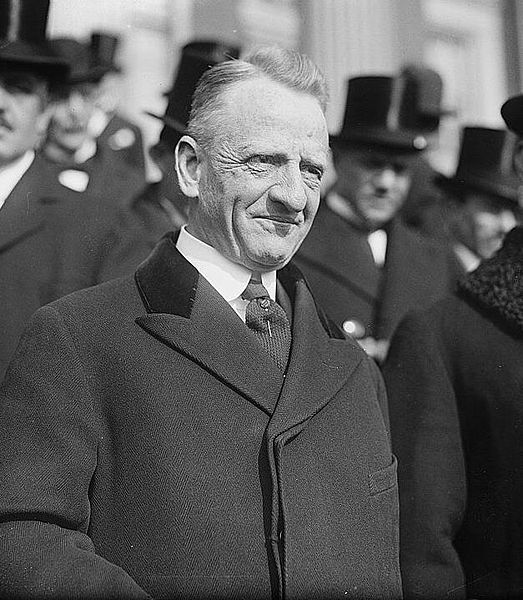
Senator Carter Glass (1858-1946) disliked the New Deal but the banking excesses that preceded the Great Depression even more.
Blawgletter learned in law school about a pillar of the New Deal — the Glass-Steagall Act of 1933. Little did we know that, 66 years after Franklin D. Roosevelt signed it into law, Glass-Steagall would met its end with William J. Clinton’s inking of Gramm-Leach-Bliley.
Who cares, right? You do, we think. Because Glass-Steagall likely would’ve prevented the credit crisis from which we all now suffer.
The 1933 legislation barred commercial banks, which take deposits and make business and other loans, from mating with investment banks, which float securities and invest for their own accounts. In the less than a decade since Gramm-Leach-Bliley repealed the separation of financial church and state, the conjugal bliss between commercial and investment banking has produced horrific excesses.
Take mortgage lending. Under the same profit-seeking roof, the commercial banking arm of one financial conglomerate lent billions to your Countrywides and Ameriquests so they could fund risky — gently to put the matter — real estate loans while the investment bankers down the hall packaged the loans into securitizations and sold them to pension funds and other investors. The banks also sliced and diced the underlying loan instruments into ever-finer pieces, producing tranches of collateralized debt obligations, interest rate swaps, and even auction rate securities. At every step, the bankers collected rich fees for moving the merchandise.
Would that have happened under Glass-Steagall? Nary a chance, we say. The event that produced Glass-Steagall — the Great Depression — resulted from reckless lending and nutty speculation, to both of which the combination of commercial and investment banking in one enterprises mightily contributed. History repeats itself, you know.
Let’s hope that, this time, the excesses resulting from the 1999 repeal of the Act cause nothing more than depressing than a recession.