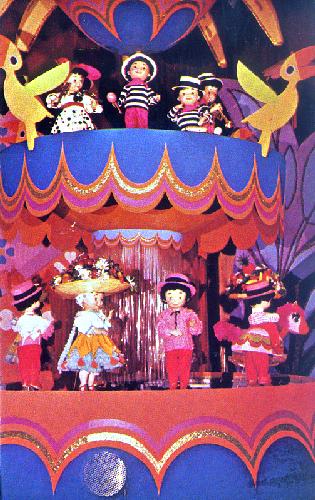
The Simpsons parodied this Disney ride‘s theme song with: "Duff beer for me, Duff beer for you/I’ll have a Duff, you have one, too."
Over the years, Blawgletter has developed — shall we say — aversions to certain common phrases. When we see them, our eyes wish to avert from them. Why? Apart from their banality, they seem to us a crutch for unclear thinking, which unerringly produces opaque expression.
Take "after all". We see it quite a lot in legal opinions, briefs, and memos. It means, we think, something like "contrary to what you’d expect" or — worse — "in view of all circumstances".
Disney deploys the first meaning in its emblematic song and animatronic ride — "It’s a Small World After All". We think of the globe as large, and yet the things we have in common makes it small. Contrary to what you’d expect.
Legal writers whip out the second sense of the phrase. For instance:
Blackacre exists only in the imagination of law professors and treatise-writers. After all, who else would use such a ridiculous name?
After all what, we want to know. In view of all we know about legal didacts and authors of black-letter precepts?
You will see that "after all" presupposes awareness that the reader may not possess — especially if you, the writer, haven’t furnished it. When the audience sees the phrase, it either nods in knowing agreement or wonders what the heck you mean. Which wonderment irritates and confuses. Which detracts from persuasion. Which is your job.
After all.
 FYI — in the end, lots of phrases, as such, irritate our feed.