STMicroelectronics says it won a $406 million arbitration award for "the unauthorized purchase by Credit Suisse of collateralized debt obligations and credit link notes instead of the Federally guaranteed student loan securities that had been specifically mandated by the Company for purchase."

Credit Suisse used STM's money to buy auction rate securities, apparently around the time the ARS market started seizing up.

Check out the Award itself.

Note that STM filed the Financial Industry Regulatory Authority arbitration in February 2008; that the proceedings consumed 32 pre-hearing and hearing days; and that the panel rendered its award less than a year after initiation.

Can you imagine getting that result in court?

FeedIcon Our feed cannot.  But STM will still have to get a court to confirm the Award.

ChampertyShores 
An inchoate home at Champerty Shores, Lake Osoyoos, Washington.  Who said realtors don't have a sense of humor?

Often a yoke companion to maintenancechamperty means . . . what? 

Our law school Black's Law Dictionary (5th ed. 1979) defines the crime as:

A bargain by a stranger with a party to a suit, by which such third person undertakes to carry on the litigation at his own cost and risk, in consideration of receiving, if successful, a part of the proceeds or subject sought to be recovered. . . . "Maintenance" consists of maintaining, supporting, or promoting the litigation of another.

Perfectly clear, right?  Financing somebody else's lawsuit in return for a piece of the action.

But the Second Circuit last week said hold up, wait a minute.  A district court had declared the purchase of a claim champertous because the transaction had as its "primary purpose" the acquisition of "a lawsuit".  It relied on a New York statute that provided:

[N]o corporation or association, directly or indirectly, itself or by or through its officers, agents or employees, shall solicit, buy or take an assignment of, or be in any manner interested in buying or taking an assignment of a bond, promissory note, bill of exchange, book debt, or other thing in action, or any claim or demand, with the intent and for the purpose of bringing an action of proceeding thereon.

New York Judiciary Law § 489(1).

Finding Empire State decisions on what counts as champerty unclear, the Second Circuit certified questions to the New York Court of Appeal:

1. Is it sufficient as a matter of law to find that a party accepted a challenged assignment with the “primary” intent proscribed by New York Judiciary Law § 489(1), or must there be a finding of “sole” intent?

2. As a matter of law, does a party commit champerty when it “buys a lawsuit” that it could not otherwise have pursued if its purpose is thereby to collect damages for losses on a debt instrument in which it holds a pre-existing proprietary interest?

3. (a) As a matter of law, does a party commit champerty when, as the holder of a defaulted debt obligation, it acquires the right to pursue a lawsuit against a third party in order to collect more damages through that litigation than it had demanded in settlement from the assignor?

(b) Is the answer to question 3(a) affected by the fact that the challenged assignment enabled the assignee to exercise the assignor’s indemnification rights for reasonable costs and attorneys’ fees?

Trust for Certificate Holders of Merrill Lynch Investors Inc. Mortgage Pass-Through Certificates 1999-C-1 v. Love Funding Corp., No. 07-1050, slip op. at 26-27 (2d Cir. Feb. 13, 2009).


Blawgletter doesn't pretend to understand the nuances of New York's anti-champerty law, but we do note that the core purpose of deeming champertous conduct a crime lay (as the Second Circuit noted) in discouraging the purchase of claims for the purpose of ginning up fees and expenses and then recovering them. 

One may easily imagine a Dickensian lawyer who bought claims (cheap) for the sole purpose of (a) giving him something to do and (b) furnishing him a possible source of income.

We expect the Court of Appeal will recognize the permissibility of selling commercial claims in circumstances that don't suggest a lawsuit incubator and hatchery operation. 

The wheels of commerce cannot — must not — be stayed!

FeedIcon They toil not, neither do they spin.

Mister Thorne's set in style — a blog on legal writing — features an interesting interview of Dan Harris — who co-posts China Law Blog

Mister Thorne elicits Dan's thoughts on blawging — what, why, how, who, when.

Dan's advice includes:

  • Show some personality, express some opinions, don't hide your views.
  • Ask for comments.

What do y'all think?  What draws you to a particular blawg?  What do you find blawgs useful for?  How many do you subscribe to?  When do you read law blogs?  Did you know I grew up in Nacogdoches and played linebacker on the Golden Dragons football team?  Would you have preferred not to know?

FeedIcon Our feed delivers.

_________________________________________________

Hat tip to Kimberly Kralowec at The UCL Practitioner for the head's up on the set in style post.

GasProcessingPlant 
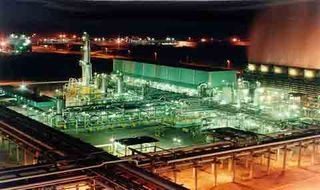
Gas processing plants strip liquid condensate from raw natural gas.

The Fifth Circuit decided a straight-up breach of contract case today.  It involved suspicious, and possibly illegal, goings on near the Texas border with Mexico.

Flint Hills Resources signed a contract that obligated it to buy about 1,000 barrels a day of natural gas condensate from JAG Energy in south Texas.  Flint Hills heard a rumor that Pemex, the owner of all oil and gas in Mexico, had experienced thefts of condensate and that the thieves may try to sell the contraband in the U.S.  Flint Hills asked JAG to prove title to condensate it delivered to Flint Hills, but JAG failed to comply.  When Flint Hills withheld payment and cancelled the contract, JAG sued for breach.

After a bench trial, the district court found that Flint Hills did breach the contract and awarded JAG damages.

The Fifth Circuit reversed and rendered.  It cited contract language that obligated JAG, upon request, "to furnish evidence of title satisfactory to" Flint Hills and that gave Flint Hills the "right to withhold any payments" in the event JAG "shall default in any payment or other performance under this or any other agreement existing by and between the parties hereto".  Because JAG didn't furnish evidence of title, the court concluded, JAG defaulted in its performance; Flint Hills therefore could withhold payment and properly did.  Flint Hills Resources LP v. JAG Energy Inc., No. 08-20152 (5th Cir. Feb. 13, 2009).

So there.

FeedIcon Happy Friday (the 13th)!


AbrahamLincoln2 

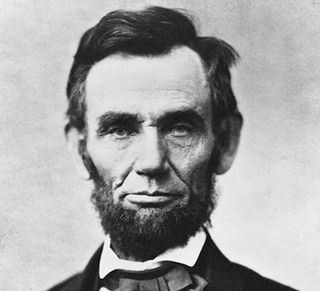
Today marks the bicentennial of Abraham Lincoln's birth.

In his honor, Blawgletter reproduces President Lincoln's two most famous (and short) speeches:

Gettysburg Address

Four score and seven years ago our fathers brought forth on this continent a new nation, conceived in Liberty, and dedicated to the proposition that all men are created equal.

Now we are engaged in a great civil war, testing whether that nation, or any nation, so conceived and so dedicated, can long endure. We are met on a great battle-field of that war. We have come to dedicate a portion of that field, as a final resting place for those who here gave their lives that that nation might live. It is altogether fitting and proper that we should do this.

But, in a larger sense, we can not dedicate—we can not consecrate—we can not hallow—this ground. The brave men, living and dead, who struggled here, have consecrated it, far above our poor power to add or detract. The world will little note, nor long remember what we say here, but it can never forget what they did here. It is for us the living, rather, to be dedicated here to the unfinished work which they who fought here have thus far so nobly advanced. It is rather for us to be here dedicated to the great task remaining before us—that from these honored dead we take increased devotion to that cause for which they gave the last full measure of devotion—that we here highly resolve that these dead shall not have died in vain—that this nation, under God, shall have a new birth of freedom—and that government of the people, by the people, for the people, shall not perish from the earth.

Second Inaugural

Fellow Countrymen:

At this second appearing to take the oath of the Presidential office there is less occasion for an extended address than there was at the first. Then a statement somewhat in detail of a course to be pursued seemed fitting and proper. Now, at the expiration of four years, during which public declarations have been constantly called forth on every point and phase of the great contest which still absorbs the attention and engrosses the energies of the nation, little that is new could be presented. The progress of our arms, upon which all else chiefly depends, is as well known to the public as to myself, and it is, I trust, reasonably satisfactory and encouraging to all. With high hope for the future, no prediction in regard to it is ventured.

On the occasion corresponding to this four years ago all thoughts were anxiously directed to an impending civil war. All dreaded it, all sought to avert it. While the inaugural address was being delivered from this place, devoted altogether to saving the Union without war, insurgent agents were in the city seeking to destroy it without war—seeking to dissolve the Union and divide effects by negotiation. Both parties deprecated war, but one of them would make war rather than let the nation survive, and the other would accept war rather than let it perish. And the war came.

One-eighth of the whole population were colored slaves, not distributed generally over the Union, but localized in the southern part of it. These slaves constituted a peculiar and powerful interest. All knew that this interest was somehow the cause of the war. To strengthen, perpetuate, and extend this interest was the object for which the insurgents would rend the Union even by war, while the Government claimed no right to do more than to restrict the territorial enlargement of it. Neither party expected for the war the magnitude or the duration which it has already attained. Neither anticipated that the cause of the conflict might cease with or even before the conflict itself should cease. Each looked for an easier triumph, and a result less fundamental and astounding. Both read the same Bible and pray to the same God, and each invokes His aid against the other. It may seem strange that any men should dare to ask a just God's assistance in wringing their bread from the sweat of other men's faces, but let us judge not, that we be not judged. The prayers of both could not be answered. That of neither has been answered fully. The Almighty has His own purposes. 'Woe unto the world because of offenses; for it must needs be that offenses come, but woe to that man by whom the offense cometh.' If we shall suppose that American slavery is one of those offenses which, in the providence of God, must needs come, but which, having continued through His appointed time, He now wills to remove, and that He gives to both North and South this terrible war as the woe due to those by whom the offense came, shall we discern therein any departure from those divine attributes which the believers in a living God always ascribe to Him? Fondly do we hope, fervently do we pray, that this mighty scourge of war may speedily pass away. Yet, if God wills that it continue until all the wealth piled by the bondsman's two hundred and fifty years of unrequited toil shall be sunk, and until every drop of blood drawn with the lash shall be paid by another drawn with the sword, as was said three thousand years ago, so still it must be said 'the judgments of the Lord are true and righteous altogether'.

With malice toward none; with charity for all; with firmness in the right, as God gives us to see the right, let us strive on to finish the work we are in; to bind up the nation's wounds; to care for him who shall have borne the battle, and for his widow, and his orphan – to do all which may achieve and cherish a just and lasting peace, among ourselves, and with all nations.

HomeForeclosure

The Judicial Panel on Multidistrict Litigation yesterday ordered In re Fannie Mae Securities and Employee Retirement Incomne Security Act (ERISA) Litig., MDL No. 2013, to the U.S. District Court for the Southern District of New York.

The Transfer Order brings to six the number of multi-district litigation matters the Panel has moved since its January session.  And fully half of those have gone to the S.D.N.Y.

Feed-icon-14x14 Sign o' the times, Blawgletter supposes.

Some guy — who we'll refer to as "gun nut" – claimed that arming potential victims with gats causes violent crime to fall.  A best-selling book, Freakonomics (2005), said gun nut may have faked his data and, even if he didn't, others who "tried to replicate" his work couldn't.

Obvious libel, right?  Somebody find that man a lawyer!

Not so fast, quoth the Seventh Circuit.  Illinois law does treat calling someone incompetent or dishonest as defamatory per se (and therefore actionable without proof of special damages), but it also withholds the per se label if the statement doesn't necessarily blacken reputation.  Thus the court said:

A closer look at the paragraph where the contested sentence is found supports this innocent reading.  The paragraph describes and critiques [gun nut's] "idea," "theory," and "hypothesis," but makes no mention of his methodology or what data set he used.  In this context, it is natural to read Levitt's statement as a critique on this theory, rather than an accusation of falsifying data.  In fact, instead of weighing in on the rumor that [gun nut] faked some of his results, Levitt distanced himself from it.  Levitt mentioned the "troubling allegation," but noted that "[r]egardless of whether the data were faked, [gun nut's] admittedly intriguing hypothesis doesn't seem to be true."  Far from assailing [gun nut's] competence, he acknowledge that [gun nut's] theory is "sensible" and "intriguing."  To the extent that [gun nut] is complaining about an attack on his ideas, he is barking up the wrong tree.  The remedy for this kind of academic dispute is the publication of a rebuttal, not an award of damages.

[Gun nut] v. Levitt, No. 07-3095, slip op. at 10 (7th Cir. Feb. 11, 2009).

The court, by the way, deemed one of gun nut's arguments "disingenuous" and an attempt at "gamesmanship".  It also noted the "embarrassing" but "apparently true" charge that gun nut "exacerbated" his status as a "lightning rod for gun controversy" (a/k/a gun nut) "by creating a pseudonym, 'Mary Rosh,' which he used to defend his theory in debates over the Internet".

Feed-icon-14x14 Where have you gone, Mary Rosh? 

The Judicial Panel on Multi-District Litigation has commenced issuing transfer orders in the matters it considered at the January 29 session in Fort Myers, Florida:

MDL No. 2005In re Air Crash at Tegucigalpa, Honduras, on May 30, 2008 (S.D. Fla.)

MDL No. 2006In re Chrysler LLC 2.7 Liter V-6 Engine Oil Sludge Products Liability Litig. (D.N.J.)

MDL No. 2007 In re Aftermarket Automotive Lighting Products Antitrust Litig. (C.D. Cal.)

MDL No. 2011In re The Reserve Fund Securities and Derivative Litig. (S.D.N.Y.)

MDL No. 2017In re Lehman Brothers Holdings, Inc., Securities & Employee Retirement Income Security Act (ERISA) Litig. (S.D.N.Y.)

In 1995, Congress went on the war path against securities class actions.  It started with the Private Securities Litigation Reform Act of 1995.  The PSLRA set a tougher test for pleading scienter (intent to defraud) and required "loss causation" (plaintiff bought high and sold low due to fraud).

Congress followed up the PSLRA with the Securities Litigation Uniform Standards Act of 1998 and made all kinds of class actions the target in the Class Action Fairness Act of 2005.  SLUSA precluded state law cases and claims that fell within the subject matter of the PSLRA.  CAFA let defendants federalize most class actions and set requirements for class action settlements.

The Ninth Circuit today held that SLUSA didn't bar state law claims that fit within the "Delaware carve-out" in the statute.  It ordered return of the case back to California state court.  Madden v. Cowen & Co., No. 07-15900 (9th Cir. Feb. 11, 2009).

Congress simultaneously (1) stringently regulated lawsuits that aimed to enforce integrity in the financial markets and (2) deregulated those same financial markets.  Now the markets have all but collapsed, costing taxpapers trillions of dollars

Blawgletter hopes the culpable legislators feel at least a twinge of conscience.

Feed-icon-14x14 Our feed lives dangerously.