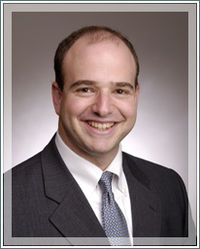
Nathan Koppel at the WSJ reports today, under the headline "Securities Lawsuits Leapt in '08":

Securities-fraud lawsuits rose in 2008 due largely to a rash of filings against financial firms by investors who sustained losses from the mortgage meltdown.

A total of 210 prospective securities class actions were filed last year, a 19% increase over the previous year and more than 80% above the 2006 total, according to a report issued jointly Tuesday by Stanford Law School and Cornerstone Research. The 2008 suits allege more than $800 billion in damages, although suits often settle for a fraction of claimed damages.

On the same day, the Fourth and Seventh Circuits affirmed dismissals of — you guessed it — securities fraud class actions. 

The Fourth Circuit held that the allegations didn't raise a "strong inference of scienter" on the part of Deloitte & Touche in failing to detect fraudulent accounting practices at Royal Ahold, N.V., and U.S. Foodservice, Inc.  Public Employees' Retirement Ass'n of Colorado v. Deloitte & Touche LLP, No. 07-1704 (4th Cir. Jan. 5, 2009).  The court's decision turned largely on its crediting the audit firm's insistence on gullibility.

Up in Chicago, Judge Posner positively blistered the whole litigation process in concluding that the plaintiffs' long and rambling complaint pleaded no plausible basis for believing they actually relied on the allegedly false statements.  His snippy opinion concluded thus:

Defendants are not to be subjected to the costs of pretrial discovery in a case in which those costs, and the costs of the other pretrial maneuvering common in a big case, are likely to be great, unless the complaint makes some sense.  If after 85 pages of huffing and puffing in the complaint, and another 83 pages of appellate briefs, sophisticated investors cannot make their case seem plausible, the litigation must end then and there.

Stock Trading v. Falconbridge Ltd., No. 08-1327 (7th Cir. Jan. 5, 2009).

Feed-icon-14x14 Hulk says:  Puny human! and You're making me angry. You wouldn't like me when I'm angry.

Blawgletter's senior partner in Dallas, Terry Oxford, enjoys reading The Onion, which styles itself America's Finest News Source.  He doesn't browse it for the news.  Or for journalistic virtuosity.  Not even for the editorials.  No.

A couple of 2008 story headlines will give you a sense for what arouses Mr. Oxford's interest:

Factual Error Found on Internet

American Airlines Now Charging Fees to Non-Passengers

And:

Online Dating Helping Pathetic Women Get Their Hopes Crushed More Efficiently

Warning to young lawyers:  "The Onion is not intended for readers under 18 years of age."

Feed-icon-14x14 Happy Saturday!

SwissCheese 
Dairy product as metaphor.

The First Circuit, diligently working on New Year's Eve, issued an opinion that allowed an arbitrator to change his award.  It held that the doctrine of functus officio — Latin for "having performed his office" — didn't bar the arbitrator from revisiting and altering his on-its-face complete award.  Eastern Seaboard Construction Co., Inc. v. Gray Construction, Inc., No. 08-1679 (1st Cir. Dec. 31, 2008).

Gray Construction won a contract for building something at the Portsmouth Naval Shipyard in Kittery, Maine.  Gray hired Eastern Seaboard to do the site work.  The Navy refused to pay Gray for extra costs, and Gray in turn stiffed Eastern.  The dispute went to arbitration before a single American Arbitration Association arbitrator, who awarded Gray $77,000 on its counterclaim but forgot to address Eastern's entitlement to $66,613.89 under the base contract.  The arbitrator later amended the award to grant the $66,613.89 offset to Eastern.  The district court rejected Eastern's motion to confirm the post-amendment award.

The First Circuit reversed.  It noted that plenty of exceptions apply to functus officio.  AAA Rule 47 permitted corrections to "any clerical, typographical, technical or computational errors in the award."  The arbitrator stated that Gray didn't seriously dispute the $66,613.89 claim.  And that, the court concluded, put the amendment within the arbitrator's authority and, because plausible, immunized it from judicial second-guessing.

Blawgletter has a couple of observations.  First, we wonder what functus officio has to do with an arbitrator's decision to amend an award on an apparently timely request under AAA Rule 47.  How could the arbitrator's performance of his or her office have ended before ruling on a live motion?  Second, the opinion sheds little light on the scope of the functus officio doctrine beyond suggesting that it resembles Swiss cheese.  May a court send an award back to an arbitrator for reconsideration?  If so, under what circumstances?  And how far may the arbitrator then go in altering the award?

Feed-icon-14x14 Ummm, Swiss cheese.

HappyNewYear

My, what a year we had in 2008!

Lawyers in the news included:

  • President-elect Barack Obama;
  • Vice President-elect Joe Biden; and
  • Inmate no. 8675309-elect Rod Blagoyevich.

The weather in New York turned so cold, per David Letterman, that Ponzi-master Bernie Madoff "is looking forward to burning in hell."

And Blawgletter celebrates the start of our third year of serving you, our dear readers.

Happy New Year!

FeedIcon The Blawgliterati.

The Federal Circuit yesterday affirmed a district court's permanent injunction against manufacture and sale of a proximal humeral nail, which fixes breaks in the upper arm bone (the one connecting elbow to shoulder).  The district court originally granted the permanent injunction under the easy-breezy standard that prevailed in patent infringement cases before the Supreme Court abolished the presumption in favor of injunctive relief in eBay Inc. v. MercExchange LLC, 547 U.S. 388 (2006). 

The intervening eBay decision prompted the Federal Circuit to vacate and remand, after which the district court again issued a permanent injunction to halt infringing activity. 

The Federal Circuit this time affirmed, holding that the evidence satisfied the four-part post-eBay test (irreparable harm, no adequate remedy for harm at law, balance of hardships, and public interest).  Accumed LLC v. Stryker Corp., No. 08-1124 (Fed. Cir. Dec. 30, 2008).

Blawgletter found a favorite passage in the opinion:  "[A] district court must be allowed to halt the exchange of reply memoranda at some point."  Id. at 13.

FeedIcon Roger that!

HydrogenPeroxide 
Mix two hydrogens with two oxygens and, voilahydrogen peroxide.

The Third Circuit took a torque wrench today to the standards for class certification under Rule 23(b)(3).  The tightening may portend mini-trials — and perhaps big ones, too – on whether or not a price-fixing case meets the requirements of the rule.  In re Hydrogen Peroxide Antitrust Litig., No. 07-1689 (3d Cir. Dec. 30, 2008).

The litigation involved a claim that manufacturers of hydrogen peroxide, sodium percarbonate, and sodium perborate conspired to fix prices on those chemicals during the period from January 1, 1994 through January 5, 2005.  The district court denied motions to dismiss and, after "extensive" discovery, granted a motion to certify a domestic purchaser class.

The Third Circuit granted discretionary review of the certification order under Rule 23(f).  And it vacated the order and remanded for reconsideration of class treatment under a more stringent test than the one the district court applied.  The panel summarized thus:

In deciding whether to certify a class under Fed. R. Civ. P. 23, the district court must make whatever factual and legal inquiries are necessary and must consider all relevant evidence and arguments presented by the parties.

See Newton v. Merrill Lynch, Pierce, Fenner & Smith, Inc.

, 259 F.3d 154, 166, 167 (3d Cir. 2001) (citing Szabo v. Bridgeport Machs., Inc., 249 F.3d 672, 676 (7th Cir. 2001); Manual for Complex Litigation (Third) § 30.1 (1995)). In this appeal, we clarify three key aspects of class certification procedure. First, the decision to certify a class calls for findings by the court, not merely a “threshold showing” by a party, that each requirement of Rule 23 is met. Factual determinations supporting Rule 23 findings must be made by a preponderance of the evidence. Second, the court must resolve all factual or legal disputes relevant to class certification, even if they overlap with the merits—including disputes touching on elements of the cause of action. Third, the court’s obligation to consider all relevant evidence and arguments extends to expert testimony, whether offered by a party seeking class certification or by a party opposing it.

In re Hydrogen Peroxide, slip op. at 5.

The guts of the opinion deals with what class action wags call "the battle of the experts".  The district court's sin, the panel held, consisted in giving a pass to the plaintiffs-side expert's opinions on whether the class could prove "common impact" of the conspiracy on all class members (i.e., that all class members paid a higher price than they would have absent collusion). 

The court noted that both sides presented expert opinions and highlighted that the district court chose not to determine which side's evidence carried more persuasive force.  A "threshold showing" by the plaintiffs' expert — even one that withstands a Daubert challenge to admissibility – won't do.  Instead:

Like any evidence, admissible expert opinion may persuade its audience, or it may not. This point is especially important to bear in mind when a party opposing certification offers expert opinion. The district court may be persuaded by the testimony of either (or neither) party’s expert with respect to whether a certification requirement is met. Weighing conflicting expert testimony at the certification stage is not only permissible; it may be integral to the rigorous analysis Rule 23 demands.

In re Hydrogen Peroxide, slip op. at 46.

Blawgletter imagines that the trouble may have stemmed from the plaintiffs' expansive class definition, both temporally (an 11-year period) and by product (all grades and concentrations).  The court tersely — and wryly? — implied as much in a footnote, observing that "[t]he current record suggests it may be possible to overcome some obstacles to class certification by shortening the class period or by fashioning sub-classes.  See Fed. R. Civ. P. 23(c)(5)."  In re Hydrogen Peroxide, slip op. at 51.

Feed-icon-14x14 The hurrier our feed goes, the behinder it gets.

The Fifth Circuit's en banc mandamus order in an Eastern District of Texas personal injury case, In re Volkswagen of Am., Inc., 545 F.3d 304 (2008) (Volkswagen II), bled over today into the patent realm.  The Volkswagen II court held that the district court's error in refusing to move the case to the Northern District of Texas justified the extraordinary writ and directed transfer of the lawsuit to Dallas. 

The Federal Circuit, applying Volkswagen II, concluded that the same judge made the same mistake in denying a motion under 28 U.S.C. 1404(a) to hurl a patent infringement action from Marshall, Texas, to Columbus, Ohio.  In re TS Tech USA Corp., Misc. No. 888 (Fed. Cir. Dec. 29, 2008).  Summing up, the court said:

There is no easy-to-draw line separating a "clear" abuse of discretion from a "mere" abuse of discretion in all cases. Volkswagen II, 545 F.3d at 310. Nevertheless, we conclude that TS Tech has met its difficult burden of demonstrating a clear and indisputable right to a writ. As in Volkswagen II, the district court clearly abused its discretion in denying transfer from a venue with no meaningful ties to the case. In granting mandamus, the en banc Fifth Circuit found that the court’s denial of transfer was a clear abuse of discretion because it (1) applied too strict of a standard to demonstrate transfer, (2) misconstrued the weight of the plaintiff’s choice of venue, (3) treated choice of venue as a § 1404 factor, (4) misapplied the forum non conveniens factors, (5) disregarded Fifth Circuit precedent, including the 100-mile rule, and (6) glossed over the fact that not a single relevant factor favored the plaintiff’s chosen venue. Id. at 318. Because the district court’s errors here are essentially identical, we hold that TS Tech has demonstrated a clear and indisputable right to a writ.

In re TS Tech, slip op. at 8.

Blawgletter hesitates to make predictions, but we imagine that the combination of Volkswagen II and TS Tech will influence patent plaintiffs' calculus in deciding whether to sue in the Eastern District of Texas — and, indeed, anywhere within the Fifth Circuit.  Patent cases seemed for awhile to enjoy relative immunity from the usual section 1404(a) analysis in E.D. Tex.  Volkwagen II struck us as a reaction — actually, an over-reaction — to that, and TS Tech merely represents the logical extension.

Don't get us wrong.  Volkswagen II feels extreme.  But 10 out of 17 Fifth Circuit judges didn't mind.  And so things will stay unless the Supreme Court or Congress takes a hand.

Feed-icon-14x14 Our feed doesn't plan on holding its breath.

WallStreetBull 
He looks a little pekid.

The Judicial Panel on Multidistrict Litigation convenes for its next hearing session in Fort Myers, Florida, on Wednesday, January 29, 2009.  See Notice of Hearing Session.

The Panel has at last returned to its seven-judge full strength with the addition of Hon. Frank C. Damrell, Jr.  Judge Damrell sits in Sacramento, whose U.S. courthouse houses the main office for the Eastern District of California.

As it usually does, the Panel's docket holds a backward-looking mirror to the American economy.  Witness the abundance of cases that involve allegations of fraud against our erstwhile mighty — and currently taxpayer money-hungry — securities and banking institutions: 

  • In re Regions Morgan Keegan Securities, Derivative and Employee Retirement Income Security Act (ERISA) Litig., No. 2009;
  • In re The Reserve Fund Securities and Derivative Litig., No. 2011;
  • In re Fannie Mae Securities and Employee Retirement Income Security Act (ERISA) Litig., No. 2013;
  • In re Bank of America Corp. Auction Rate Securities (ARS) Marketing Litig., No. 2014;
  • In re Wachovia Corp. "Pick-a-Payment" Mortg. Marketing and Sales Practices Litig., No. 2015; and
  • In re Lehman Bros. Holdings, Inc., Securities & Employee Retirement Income Security Act (ERISA) Litig., No. 2017.

Feed-icon-14x14 Only three more days 'til 2009!

'Twas the night before Christmas, when all through the house
Not a creature was stirring, not even a mouse;
The stockings were hung by the chimney with care,
In hopes that St Nicholas soon would be there;
The children were nestled all snug in their beds,
While visions of sugar-plums danced in their heads;
And mamma in her ‘kerchief, and I in my cap,
Had just settled our brains for a long winter’s nap,
When out on the lawn there arose such a clatter,
I sprang from the bed to see what was the matter.
Away to the window I flew like a flash,
Tore open the shutters and threw up the sash.
The moon on the breast of the new-fallen snow
Gave the lustre of mid-day to objects below,
When, what to my wondering eyes should appear,
But a miniature sleigh, and eight tinny reindeer,
With a little old driver, so lively and quick,
I knew in a moment it must be St Nick.
More rapid than eagles his coursers they came,
And he whistled, and shouted, and called them by name;
‘Now Dasher! now, Dancer! now, Prancer and Vixen!
On, Comet! On, Cupid! on, on Donner and Blitzen!
To the top of the porch! to the top of the wall!
Now dash away! dash away! dash away all!’
As dry leaves that before the wild hurricane fly,
When they meet with an obstacle, mount to the sky;
So up to the house-top the coursers they flew,
With the sleigh full of Toys, and St Nicholas too.
And then, in a twinkling, I heard on the roof
The prancing and pawing of each little hoof.
As I drew in my head, and was turning around,
Down the chimney St Nicholas came with a bound,
He was dressed all in fur, from his head to his foot,
and his clothes were all tarnished with ashes and soot.
A bundle of Toys he had flung on his back,
And he looked like a peddler, just opening his pack.
His eyes-how they twinkled! his dimples how merry!
His cheeks were like roses, his nose like a cherry!
His droll little mouth was drawn up like a bow,
And the beard of his chin was as white as the snow;
The stump of a pipe he held tight in his teeth,
and the smoke it encircled his head like a wreath;
He had a broad face and a little round belly,
That shook when he laughed, like a bowlful of jelly.
He was chubby and plump, a right jolly old elf,
and I laughed when I saw him, in spite of myself;
A wink of his eye and a twist of his head,
Soon gave me to know I had nothing to dread.
He spoke not a word, but went straight to his work,
and filled all the stockings; then turned with a jerk,
and laying his finger aside of his nose,
and giving a nod, up the chimney he rose;
He sprang to his sleigh, to his team gave a whistle,
and away they all flew like the down of a thistle.
But I heard him exclaim, ‘ere he drove out of sight,
‘Happy Christmas to all, and to all a good-night.

FeedIcon Good tidings of great joy.