ThomasHobbes 
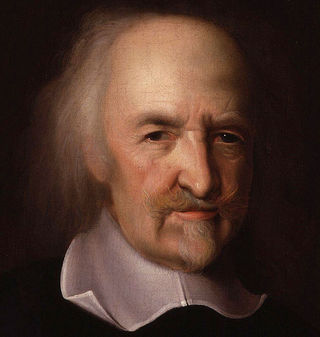
Thomas Hobbes (1588-1679) didn't study or practice law, but he did write about the state of nature.  Which is similar.

Blawg Review styles itself a "blawg carnival" and each Monday features a blawg-writer who surveys the past week's blawg postings.  Blawgletter did an installment a while back, but we have observed since a — shall we say — spottiness in the quality of the weekly offerings.  And by "spottiness" we mean a Great Many of them put us in mind of rubbish.  Smelly rubbish.  With dead animals in it.

Not so this week.  Joshua Fruchter at www.lawyercasting.com puts out a fine issue on Monday (although he seems to have jumped the gun a bit).  Taking Evolution Day (November 24) as his point of departure, Joshua draws our attention to a bunch of recent blawg posts that deal with survival in a tumultuous legal market.

We liked it.

FeedIcon  Nasty, brutish, and short.

MoneyBundles 
California consumers stand to gain. 

Blawgletter just got back from trying a class action case for five weeks against AT&T in Kansas City, Kansas.  The federal jury didn't find that AT&T conspired to fix prices but that AT&T did breach its contract with California residential long-distance customers.  The eight-person panel unanimously awarded the class $16,881,000.  With prejudgment interest, the award would grow to about $26 million.

Per the Associated Press (by way of Houston Chronicle):

KANSAS CITY, Mo. — A federal jury has ordered AT&T Inc. to pay almost $17 million for overcharging customers in California when passing along a federally mandated phone fee.

But in the verdict reached late Wednesday, the Kansas City, Kan., jurors determined there wasn't enough evidence showing the telecommunications giant conspired with Sprint Nextel Corp. or then-competitor MCI to overcharge customers nationwide for the Universal Service Fund.

"We're gratified that the jury correctly found no evidence of antitrust activities," Michael Coe, a spokesman for Dallas-based AT&T, said in an e-mail. "We're studying our options on the breach-of-contract ruling involving California residential customers, and continue to believe we acted properly."

Barry Barnett, a lead attorney for the plaintiffs, said his side was "very pleased" with the decision regarding the California customers and would ask the judge to add up to $10 million in pre-judgment interest to the award.

Barnett said U.S. District Judge John W. Lungstrum hasn't yet decided how much of the award will go to attorneys fees, and they haven't determined how the award will be paid out to the class members.

He said the plaintiffs were deciding whether to appeal the decision on the antitrust accusations.

The antitrust case consolidated dozens of class-action lawsuits filed across the country and covered customers who paid into the Universal Service Fund between Aug. 1, 2001, and March 31, 2003.

The fund subsidizes the cost of running phone service to rural areas, low-income customers and public facilities, such as schools, libraries and rural hospitals.

Carriers are required to contribute to the fund a percentage of their gross revenue from interstate and international calls. The Federal Communications Commission sets the contribution rate.

AT&T described the fee on its bills as a "Universal Connectivity Charge."

After a five-week trial, jurors agreed AT&T had violated its contract with its California residential customers, a subset of the class-action members, and awarded $16.9 million.

Sprint was a co-defendant in the case. But the Overland Park, Kan.-based company agreed in September to settle its involvement for $30 million.

We've now gone to trial in three class cases.  And we can't wait for the next one.

FeedIcon Happy Friday, y'all.

Blawgletter's hometown newspaper, The Dallas Morning News, editorially warned on October 17 against straight-ticket voting because, it said, that "can be a dangerous thing; it might make you miss important issues."

The editors cited, in support of their opposition, the referendum on a $747 million bond issue for a new Parkland hospital, which provides essential health care to people who can't afford it. 

Did the proposition pass on November 4?  Only by an 82-18 percent margin, the same paper reported.

Now TDMN recommends doing away with straight-ticket voting altogether.  Throughout the Lone Star State.  And it cites the fact that, in the 2008 election, 64 percent of Dallas County voters chose the "lazy" way.

We wonder what manner of laziness prompted ballot-casters to approve, by a huge margin, the very proposition that TDMN feared would fail because of straight-party voting.  We marvel even more that the newspaper would, post-election, propose ending a practice that failed, despite the editors' dire warnings, to defeat the one proposal that won a landslide victory.

Had TDMN railed against pulling the one-party lever years ago, when another party seemed ascendant, we might sympathize with its warning against voter laziness.  But its post-election support of a Texas House of Representatives bill that would prohibit straight-party voting — in Dallas as well as state-wide — strikes us as, well, without principles.

FeedIcon  Imagine our feed's disappointment.

The Sixth Circuit today reversed dismissal of a class action securities fraud complaint because the district court applied a tougher, pre-Tellabs standard for judgment whether plaintiffs adequately alleged the scienter (fraudulent intent) element.  Frank v. Dana Corp., No. 07-4235 (6th Cir. Nov. 19, 2008).

The district court erred by failing to see, the court held, that Tellabs, Inc. v. Makor Issues & Rights, Ltd., 127 S. Ct. 2499 (2007), had the effect of overruling Helwig v. Vencor, Inc., 251 F.3d 540 (6th Cir. 2001) (en banc).  Tellabs set the standard for a "strong inference" of scienter under the Private Securities Litigation Reform Act as requiring that "a reasonable person would deem the inference of scienter cogent and at least as compelling as any opposing inference one could draw from the facts alleged."  Tellabs, 127 S. Ct. at 2510 (emphasis added).  Helwig, by contrast, said "the 'strong inference' requirement means that plaintiffs are entitled only to the most plausible of competing inferences."  Helwig, 251 F.3d at 553 (emphasis added).

The appeals court remanded the case to allow the district court to assess the complaint under the "at least as compelling" test.

Feed-icon-14x14 Our feed hopes to watch the Game on Saturday.

OzCyclone 
It's a twista!  It's a twista!

Some signs we think of as presaging a storm:  Dusky ponderous clouds that loom on a horizon.  A swirling sudden reversal of wind direction.  The plummeting barometer.  And that poetical classic, red sky at morning/sailor take warning.

Storm warnings, all.

But what does "storm warnings" mean in the legal context?  Mercy, it does seem imprecise.  And the law does not like imprecision.

Yet the allure of metaphor to enliven the dullness of legal prose has proven well-nigh irresistible.  Just so in the case of storm warnings.  And what duller subject can you think of than the question of when, precisely, a statute of limitations commences its run its race towards dealing oblivion to a legal claim?

The Second Circuit today wrassled with that very topic yesterday. 

The case involved allegations that The Hartford, an insurance and financial services giant, defrauded investors by touting to the market the genius of The Hartford's business model when in fact its sucess depended on paying "kickbacks" to insurance brokers.  The Hartford defended on several grounds, including that the plaintiff sued too late — specifically, more than two years after "storm warnings" about The Hartford's business model should have put the plaintiff on notice of the kickback backstop. 

The district court held that the plaintiff could have, in the exercise of reasonable diligence, discovered the storm warnings; that the storm warnings would have put him on notice of allegedly fraudulent doings at The Hartford; and that therefore his failure to file suit until more than two years after he should have learned of the storm warnings barred him from court.

The Second Circuit vacated the dismissal.  Review of its "storm warnings" precedents (since adopting the doctrine in 1993) alone spanned 17 paragraphs.  Blawgletter confesses that the factual exposition of the cases – a feature that seems common to Second Circuit opinions – lent concrete definition to the metaphor.

The plaintiff won the appeal because the publicly available information — the storm warnings — either failed to point to The Hartford as a participant in the practice of paying of kickbacks to brokers or lacked sufficient notoriety.  An article in The New York Times, for example, never mentioned The Hartford; industry newsletters referred to The Hartford but didn't tie it to kickbacks; and pleadings in an obscure lawsuit in California state court drew no journalistic interest or publicity whatsoever.  Staehr v. The Hartford Fin. Svcs. Group, Inc., No. 06-3877-cv (2d Cir. Nov. 17, 2008).

What have we learned?  That judges should shun metaphor because of its imprecision and therefore potential to lead to wrong decisions?

We must say no.  We like judicial metaphors.  They add style, provoke thought, promote understanding, and aid persuasion.  Haig Bosmajian even wrote a book about them — Metaphor and Reason in Judicial Opinions (1992).

No, the vice lies not in colorful, memorable rhetorical flourishes but in using them as a crutch for the hard lawyerly work of applying law to facts.  Rigorously.

Feed-icon-14x14 Our feed never yells fire! in a crowded theatre.  Except when necessary.

EricMayer 
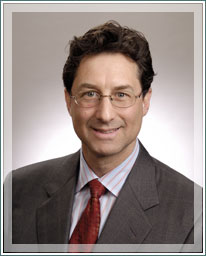
Eric J. Mayer, trial lawyer extraordinaire.

One of Blawgletter's favorite partners — and of course we love them all — spoke the other day at the 31st Annual Advanced Civil Trial Course in Houston.  The State Bar of Texas sponsored the event. 

The partner, Eric J. Mayer, talked about "How to Bust or Follow Through with an Arbitration".

Which gives us an excuse to mention that Eric's a terrific lawyer.  Highlights of his career include these (which feature a video of Eric in action) recent ones:

For the last four years, Mayer has acted as national and supervising trial counsel for Texas Instruments (and a newly formed company recently spun off by Texas Instruments, Sensata Technologies, Inc.), handling a variety of litigation pending against these companies throughout the United States. Mayer also acts as national and supervising trial counsel for Aetna Life Insurance Company and ING USA Annuity and Life Insurance Company in connection with asbestos related litigation against these insurance companies in a variety of jurisdictions.

In August 2008, the Texas Supreme Court held in a 7-2 decision that Zurich American Insurance Company, Federal Insurance Company and National Union Fire Insurance Company had a duty to defend Susman Godfrey's client, Nokia, Inc, in a series of class actions pending around the U.S. The ruling is a vindication for Nokia which has spent millions successfully defending these claims. Nokia hired Susman Godfrey partner Eric Mayer after losing on this issue in the trial court. Mayer and Susman Godfrey lawyers Brian Melton, Ian Crosby and Lexie White argued that Nokia's insurers wrongfully denied coverage. The ruling by the Texas Supreme Court now opens the way for Nokia to recover millions in defense costs and fees from this group of insurers. Mayer argued the appeal for Nokia. Click here to read the Texas Supreme Court's opinion. Click here to watch excerpts of Mayer's oral argument before the Texas Supreme Court.

In July 2008, Mayer successfully argued and won the appeal in a Texas-wide class action against The Hertz Corporation in connection with the company's rental car fuel-service charge. The class consisted of tens of thousands of class members and Plaintiffs alleged millions of dollars in damages. The Court of Appeals for the Thirteenth District Court of Texas reversed the trial court's class certification order and decertified the class on all claims. This victory will serve as persuasive authority in similar cases around the country.

Thanks for being a terrific partner, Eric.

Feed-icon-14x14 Our feed rises early and stays up late.

The unanimous Supreme Court of Texas yesterday booted "single business enterprise" as a way to pierce a corporation's corporate veil under state law.  SSP Partners v. Gladstrong Investments (USA) Corp., No. 05-0721 (Tex. Nov. 14, 2008).

The case arose from a house fire that killed a five year-old boy.  The boy's parents alleged that the fire resulted from a defective child-resistant mechanism on a disposable butane lighter.  The seller of the lighter, SSP Partners, and the U.S. importer and distributor, Gladstrong Investments (USA), settled for $1.6 million each.  SSP recovered $800,000 in indemnity payments from an intermediate seller, Metro Novelties.  SSP and Metro then sought indemnity on a variety of grounds from Gladstrong Investments (USA).  The trial court granted Gladstrong Investments (USA) summary judgment on the indemnity claims, and the court of appeals affirmed in part and reversed in part.  That left only a common law indemnity claim.

The Supreme Court affirmed.  It agreed that chapter 82 of the Texas Civil Practices and Remedies Code allowed indemnity from a "manufacturer" or "producer" but that Gladstrong Investments (USA) didn't qualify as either.  Gladstrong Investments (USA), the court noted, merely distributed the lighters after acquiring them from its parent, Gladstrong Hong Kong, in China. 

Turning to the "single business enterprise" theory for extending to Gladstrong Investments (USA) the indemnity obligation of Gladstrong Hong Kong as manufacturer or producer of the lighters, the court said:

Creation of affiliated corporations to limit liability while pursuing common goals lies firmly within the law and is commonplace. We have never held corporations liable for each other’s obligations merely because of centralized control, mutual purposes, and shared finances. There must also be evidence of abuse, or as we said in Castleberry[ v. Branscum, 721 S.W.2d 270 (Tex. 1986)], injustice and inequity. By “injustice” and “inequity” we do not mean a subjective perception of unfairness by an individual judge or juror; rather, these words are used in Castleberry as shorthand references for the kinds of abuse, specifically identified, that the corporate structure should not shield — fraud, evasion of existing obligations, circumvention of statutes, monopolization, criminal conduct, and the like. Such abuse is necessary before disregarding the existence of a corporation as a separate entity. Any other rule would seriously compromise what we have called a “bedrock principle of corporate law” — that a legitimate purpose for forming a corporation is to limit individual liability for the corporation’s obligations. 

SSP Partners, slip op. at 14 (footnotes omitted).  The court nonetheless remanded the case to the trial court to consider whether common law indemnity applied, observing that Gladstrong Investments (USA) failed to seek summary judgment on that theory.

Blawgletter would express surprise at the fate of single business enterprise if we could muster it.  But the court's rejection of it accords with a 20-year or so trend towards curtailing grounds for imposition of liability in the Lone Star State. 

And the decision seems hardly radical on that point.  "Single business enterprise" posited a loosey-goosey standard; the corporations need only have "'integrate[d] their resources to achieve a common business purpose'".  SSP Partners, slip op. at 7-8 (quoting Paramount Petroleum Corp. v. Taylor Rental Center, 712 S.W.2d 534, 536 (Tex. App. — Houston [14th Dist.] 1986, writ ref'd n.r.e.)) (footnote omitted).  That standard fit with the let-the-jury-decide conception that prevailed in the 1980s, but the jury-friendly view has long since faded.

Feed-icon-14x14 Predictability v. fairness.

WhaleSubmarine 
The Navy bought Intelligent Whale, an early submarine, in 1870.  The vessel never saw service.

The U.S. Supreme Court yesterday decided that lower courts erred in restricting how the U.S. Navy may train sonar operators in the ways of enemy submarine detection.  The environmental group plaintiffs argued that the pinging of active sonar transmissions threatened marine wildlife — specifically including whales — but the majority cited the importance of deferring to military judgments about "effective, realistic training of its sailors."  Winter v. Natural Resources Defense Council, No. 07-1239, slip op. at 13 (U.S. Nov. 12, 2008).

Feed-icon-14x14 Our feed desires that you call it Ishmael.