The Antitrust Division of the U.S. Department of Justice today announced that three companies agreed to plead guilty to fixing prices on liquid crystal display panels.  The trio — LG Display Co. Ltd, Sharp Corp., and Chunghwa Picture Tubes Ltd. — also consented to paying $585 million in criminal fines.

The pleas will likely spell trouble for these and other defendants in In re TFT-LCD (Flat Panel) Antitrust Litig., No. 07-cv-1827-SI (N.D. Cal.)  U.S. District Judge Susan Ilston partly denied and partly granted motions to dismiss in August.

Feed-icon-14x14 And the beat goes on.

JudgeAndrews 
Judge William S. Andrews (1858-1936) wrote the dissent in Palsgraf.

The arbitration clause in the Loan Agreement said:  "All disputes, claims, or controversies arising from or relating to this Agreement or the relationships which result from this Agreement . . . shall be resolved by binding arbitration."

The motion to compel arbitration raised the issue of whether the borrower's claims against a stranger to the Loan Agreement – the loan servicer — "aris[e] from or relat[e] to . . . the relationships which result from" the Loan Agreement.

The district court answered no.  The Fifth Circuit held the opposite.  Who got it right?

Blawgletter sees both sides of the argument.  The lender's post-Loan Agreement decision to assign servicing rights – including authority to collect loan payments and probably to enforce the Loan Agreement itself — in a but-for sense resulted from the original transaction.  As the Fifth Circuit noted, "without the Loan Agreement, there would be no loan for Green Tree to service".  Sherer v. Green Tree Servicing LLC, No. 07-60567, slip op. at 4 (5th Cir. Nov. 10, 2008) (per curiam).  The assignment to Green Tree thus, at least indirectly, produced the involuntary "relationship" between it and Mr. Sherer.

But putting so much stress on "result from" strikes Blawgletter as a stretch.  Presumably the loan to Mr. Sherer resulted in lots of other relationships as well.  The funds seem to have enabled him to buy a mobile home.  Did his relationship with the trailer-seller also result from the Loan Agreement?  How about his new relationship with the governmental authorities that taxed his purchase and required registration of his movable property?  What if the new digs won him a companion?  Didn't those connections also result from the loan?

Perhaps the notion of but-for causation, on which the Fifth Circuit latched, proves too much.  As the dissenting Judge Andrews said in Palsgraf:

Any philosophical doctrine of causation does not help us. A boy throws a stone into a pond. The ripples spread. The water level rises. The history of that pond is altered to all eternity.  It will be altered by other causes also. Yet it will be forever the resultant of all causes combined.

The answer likely lies in the commonplace that lenders of money for mobile home purchases often, and foreseeably, do assign servicing rights to third parties.  We would even wager that, with an extra sentence or two, the court could've pointed to contract language that specifically contemplated such an assignment.  That would've made us more confident in the, er, result.

The case more interestingly, in our view, points up the peculiar ability of using passive voice in contracts to extend rights and obligations from beyond the particular parties to a mass of strangers.  The "shall be resolved by binding arbitration" encompasses potentially anyone; it doesn't say who has to resolve disputes between (or among) themselves, only that classes of disputes "shall be resolved" in a certain way.

Feed-icon-14x14 Our feed denies that this post resulted from the Loan Agreement.

AmEx 
Now offering a free toaster with each new account.

The newspaper of record reports today that American Express Company has won the nod of federal regulators to morph into a bank holding company:

American Express, the nation’s last big independent credit card company, said late Monday that it would transform into a bank holding company to strengthen its position in the market turmoil.

Federal Reserve banking regulators said they approved its application because of the “unusual and exigent circumstances” roiling financial markets and the company’s interest in tapping up to $3.8 billion in government money. As a full-fledged bank, American Express would gain greater access to the Treasury Department’s bailout plan for banks, a move that might allow it to lend more freely and perhaps acquire a larger deposit-taking institution.

The step follows in the path of Goldman Sachs and Morgan Stanley but ahead of financial units at General Motors and General Electric. 

No word on why the bankruptcy-dwelling Lehman Brothers or the takeover-submitting Countrywide Financial and Bear Stearns missed the bank holding company maneuver.

And yet Blawgletter imagines that timing makes a difference.  The recent bailouts of financial institutions — including that supremely arrogant titan of insurance, AIG, and its mortgage-buying counterparts, Fannie Mae and Freddie Mac – has opened up vast new vistas for salvaging plummeting fortunes.

So, Fed Chairman Ben Bernanke, please consider this our declaration of intent to seek BHC status.  While technically neither we nor our day job activities qualify as a banking institution — and we don't have the too-big-to-fail pedigree – our operating costs far exceed income from same.  And please let's not even talk about our nutty investments in blawging futures.

Paperwork to follow.

Feed-icon-14x14 Pls send money.

In case you didn't notice, Congress recently added a new Rule 502 of the Federal Rules of Evidence.  It took effect on September 19, 2008, upon President Bush's signing.

The Judicial Conference of the United States approved the fresh standard for waiver of privileges, the American Bar Association lent "strong support", the Senate passed it by unanimous consent, and on September 8 it flew through the House of Representatives on a voice vote.

In general, Rule 502 makes waiver harder to prove, more difficult to expand, and easier to prevent (including by way of a federal court protective order).  It also applies in state court proceedings.

The text follows:

Rule 502. Attorney-Client Privilege and Work Product; Limitations on Waiver

The following provisions apply, in the circumstances set out, to disclosure of a communication or information covered by the attorney-client privilege or work-product protection.

(a) Disclosure made in a federal proceeding or to a federal office or agency; scope of a waiver. —

When the disclosure is made in a federal proceeding or to a federal office or agency and waives the attorney-client privilege or work-product protection, the waiver extends to an undisclosed communication or information in a federal or state proceeding only if:

(1) the waiver is intentional;

(2) the disclosed and undisclosed communications or information concern the same subject matter; and

(3) they ought in fairness to be considered together.

(b) Inadvertent disclosure. —

When made in a federal proceeding or to a federal office or agency, the disclosure does not operate as a waiver in a federal or state proceeding if:

(1) the disclosure is inadvertent;

(2) the holder of the privilege or protection took reasonable steps to prevent disclosure; and

(3) the holder promptly took reasonable steps to rectify the error, including (if applicable) following Fed. R. 25 Civ. P. 26(b)(5)(B).

(c) Disclosure made in a state proceeding. —

When the disclosure is made in a state proceeding and is not the subject of a state-court order concerning waiver, the disclosure does not operate as a waiver in a federal proceeding if the disclosure:

(1) would not be a waiver under this rule if it had been made in a federal proceeding; or

(2) is not a waiver under the law of the state where the disclosure occurred.

(d) Controlling effect of a court order. —

A federal court may order that the privilege or protection is not waived by disclosure connected with the litigation pending before the court – in which event the disclosure is also not a waiver in any other federal or state proceeding.

(e) Controlling effect of a party agreement. —

An agreement on the effect of disclosure in a federal proceeding is binding only on the parties to the agreement, unless it is incorporated into a court order.

(f) Controlling effect of this rule. —

Notwithstanding Rules 101 and 1101, this rule applies to state proceedings and to federal court-annexed and federal court-mandated arbitration proceedings, in the circumstances set out in the rule. And notwithstanding Rule 501, this rule applies even if state law provides the rule of decision.

(g) Definitions. —

In this rule:

(1) “attorney-client privilege” means the protection that applicable law provides for confidential attorney-client communications; and

(2) “work-product protection” means the protection that applicable law provides for tangible material (or its intangible equivalent) prepared in anticipation of litigation or for trial.

Feed-icon-14x14 Bye bye waiver.

The First Circuit today took a roundabout tour through Massachusetts precedents before concluding that a declaratory judgment didn't preclude "coercive" claims that arose from the same nucleus of operative facts.  The reason?  Section 33 of the Restatement (Second) of Judgments — which section the court found controlling — "[a] valid and final judgment in an action brought to declare rights or other legal relations of the parties is conclusive in a subsequent action between them as to the matters declared." 

The "as to matters declared" part made the difference.  Although in the first case the plaintiff obtained a declaration that the defendant's insurance policy covered the plaintiff's loss, the judgment didn't touch on whether — as the plaintiff alleged in the second suit — that the insurer's stonewalling amounted to a deceptive trade practice for which the plaintiff could recover treble damages.  Robinson v. Hartford Fire Ins. Co., No. 08-1255 (1st Cir. Nov. 10, 2008). 

And, yes, Judge Selya did write the opinion.

Feed-icon-14x14 The serial sesquipedalian.

Thomas O. Barnett will resign effective November 19 as the Assistant Attorney General in charge of the Antitrust Division.

In his honor, Blawgletter reprises our September 12, 2007 post — Antitrust Division Disbands, Declares Competition Safe.  Here goes:

Monopolygame
The end for Rich Uncle Pennybags?

Packing up his desk today, Assistant Attorney General Thomas O. Barnett announced the break-up of the U.S. Department of Justice's Antitrust Division.  The tear in his eye betrayed a wistful sadness.  "You know, the Division had a great run.  But, after 75-plus years, we just ran out of price-fixers, monopolists, boycotters, price discriminators, market-allocators, supply-suppressors, and cartelists to go after.  We won."

Barnett cited the Division's recent implementation of a voluntary-compliance program as a big factor in accomplishing the pro-competitive mission.  And he pointed to the fact that in the last couple of years the Division has uncovered only a couple of large price-fixing conspiracies.  The latest one victimized multinational oil companies by overcharging them for the enormous hoses they use to off-load petroleum.  "When about the only people who still need the Division's help already make tens of billions of dollars in profits, you have to feel pretty good about the job you've done," he said.

Outgoing Attorney General Alberto Gonzales likened Barnett to the legendary banisher of snakes from Ireland, "Saint what's-his-name.  Really, what was his name?"

Turning for one last look at his now-empty office, Barnett added:  "Did I mention that hell froze over?"

Barry Barnett (no relation)

Feedicon14x14_2 Saint Patrick.

The Supreme Court today granted certiorari to heal a circuit split over the question of whether the federal Arbitration Act allows strangers to a contract that contains an arbitration clause to appeal an order denying their motion to stay a federal court case pending arbitration.  Arthur Andersen LLP v. Carlisle, No. 08-146 (U.S. Nov. 7, 2008) (order granting certiorari).

[Blawgletter has noted the disagreement among the D.C., Sixth, and Tenth Circuits and the Second Circuit here and here.]

The district court refused to allow strangers to an arbitration agreement to enforce it against plaintiffs that entered into the agreement with another defendant.  [We've written about the "arbitration-by-estoppel" theory most recently here.]  The Sixth Circuit dismissed the appeal on the ground that section 3 of the FAA permits appeals only if the appellants seek a stay pending arbitration "under an agreement in writing for such arbitration."  9 U.S.C. 3 (emphasis added).   Because non-signatories don't actually have an arbitration-requiring "agreement in writing", the court reasoned, they can't appeal.  The court thus followed DSMC Inc. v. Convera Corp., 358 U.S. App. D.C. 356, 349 F.3d 679 (D.C. Cir. 2003), and In re Universal Service Fund Telephone Billing Practices Litig., 428 F.3d 940, 944-45 (10th Cir. 2005).  Carlisle v. Curtis, Mallet-Prevost, Colt & Mosle, LLP, 521 F.3d 597 (6th Cir. 2008).

The Second Circuit reached the opposite conclusion in Ross v. Am. Express Co., 478 F.3d 96 (2d Cir. 2007).

The cert. petition presents two variations on the appellate jurisdiction question — the first under FAA section 3, which requires an "agreement in writing" as the basis for a stay motion, and the second under section 16(a)(1)(A), which authorizes interlocutory appeals from an order "refusing a stay of any action under section 3 of this title".  Apparently the petitioners think a win on either variation will produce victory.

SCOTUSBlog has a write-up on the case and links to the cert. petition and briefs.

How do we think the case will come out?  We hazard that the Court's ferociously pro-arbitration trend will continue and that the Court therefore will read the FAA to authorize interlocutory appeals by non-signatories. 

Although we prefer to bet on safer things like credit default swaps and collateralized debt obligations.

Feed-icon-14x14 Happy Friday!

CementKiln 
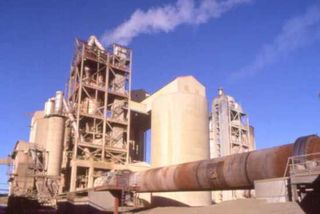
Kilns like this one cook limestone and clay or shale into "clinker".

The European Commission announced yesterday that antitrust enforcers raided offices of the world's five largest cement makers.  The Commission's press release said:

The European Commission can confirm that on the 4th and the 5th of November of 2008 Commission officials carried out unannounced inspections at the premises of companies active in the cement and related products industry in several Member States.  The Commission has reason to believe that the companies concerned may have violated EC Treaty antitrust rules that prohibit cartels and restrictive business practices and/or abuse of a dominant market position (Articles 81 and 82 respectively).

Reuters reports that the raidees included Lafarge, Holcim, HeidelbergCement, Dyckerhoff, and Cemex.

Do the inspections signify cartel activity in the U.S.?  Before you rush out to file a complaint, consider the Second Circuit's recent treatment of allegations that a European conspiracy spilled over into the U.S.:

Plaintiffs provide an insufficient factual basis for their assertions of a worldwide conspiracy affecting a global market for elevators and maintenance services. Allegations of anticompetitive wrongdoing in Europe–absent any evidence of linkage between such foreign conduct and conduct here–is merely to suggest (in defendants' words) that "if it happened there, it could have happened here." And, regarding the nature of the elevator market, plaintiffs offer nothing more than conclusory allegations: for example, there are no allegations of global marketing or fungible products, see Empagran S.A. v. F. Hoffmann-LaRoche, Ltd., 368 U.S. App. D.C. 18, 417 F.3d 1267, 1270 (D.C. Cir. 2005), no indication that participants monitored prices in other markets, see Dee-K Enters., Inc. v. Heveafil Sdn. Bhd, 299 F.3d 281, 295 (4th Cir. 2002), and no allegations of the actual pricing of elevators or maintenance services in the United States or changes therein attributable to defendants' alleged misconduct. See generally Todd v. Exxon Corp., 275 F.3d 191, 200 (2d Cir. 2001). "To survive a Rule 12(b)(6) motion to dismiss, an alleged product market must bear a rational relation to the methodology courts prescribe to define a market for antitrust purposes–analysis of the interchangeability of use or the cross-elasticity of demand, and it must be plausible." (citations and internal quotation marks omitted)). Without an adequate allegation of facts linking transactions in Europe to transactions and effects here, plaintiffs' conclusory allegations do not "nudge [their] claims across the line from conceivable to plausible." [Bell Atlantic Corp. v.] Twombly, 127 S. Ct. [1955,] 1974 [(2007)].

Transhorn, Ltd. v. United Techs. Corp. (In re Elevator Antitrust Litig.), 502 F.3d 47, 52 (2d Cir. 2007).  Although the court upheld dismissal of the Elevators complaint, its opinion does suggest factors that could suffice — "global marketing or fungible products", monitoring of prices in the U.S., and "actual pricing" and "changes therein" in the U.S.

Blawgletter would also want to know more about things like market structure (do a handful of cement makers dominate the market?), pricing methodology (do manufacturers publish per ton list prices?), changes in capacity and inventory (have cement makers reduced output despite rising prices?), and areas of effective and potential competition (what effect does the high weight-to-value ratio of cement have on the distance that manufacturers can profitably deliver their product?).

FeedIcon Our feed has its suspicions.

ParcelTanker 
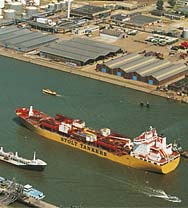
A Stolt-Nielsen parcel tanker.

The Second Circuit today clarified that "manifest disregard of the law" doesn't provide a non-statutory ground for vacating arbitration awards under the federal Arbitration Act.  The phrase instead signifies a "mechanism" for enforcement of arbitration agreements, which by operation of law incorporate the statutory grounds – such as corruption, evident partiality, and exceeding powers – that sections 10(a)(3) and 10(a)(4) specify.  The gloss thus harmonized "manifest disregard" with the holding that the Arbitration Act states the "exclusive" grounds for vacatur in Hall Street Assocs., L.L.C. v. Mattel, Inc., 128 S. Ct. 1396 (2008).

But more important — to Blawgletter's way of thinking — the court turned back an attack on a "clause construction" award by a panel of arbitrators.  The claimants in the arbitration proceedings had contracts for parcel tanker shipping services and alleged that Stolt-Nielsen and others conspired to restrain competition for those services, artificially inflating prices as a result.  After a Connecticut district court ordered arbitration of the dispute as the contracts required, the claimants asked that the arbitration proceed on a class basis.  Respondents resisted but couldn't point to contract language that prohibited class arbitration.  The arbitral panel granted class treatment, but on petition of the respondents a district court vacated the award.  The Second Circuit disagreed, holding that the arbitrators didn't manifestly disregard applicable law in rendering their award.  Stolt-Nielsen SA v. AnimalFeeds Int'l Corp., No. 06-3474-cv (2d Cir. Nov. 4, 2008).

Feed-icon-14x14 Our feed says yes we can.

Vote 
Do what the button says.  Be a patriot.

Blawgletter exercised the old franchise last week.  Right there in the Dallas County Records Building.  A block from Dealey Plaza and catty-corner from the former Texas School Book Depository.  Where you know what happened in November 1963.

It felt good to vote.  Or, more accurately, to have voted.  Because casting the ballot means making choices.  Even if you go straight ticket, you choose.  And choosing takes thought, requires effort, and even possibly causes a little brain pain.

Please join us in feeling euphoric.  If you haven't already done it, go now to your proper polling place and do what our Founders and fighting men and women sacrificed so much to guarantee you the right and ability to do. 

You'll feel good.  Like a proud and patriotic American.

[You can look up where to go on Google maps or at the League of Women Voters.]

Feed-icon-14x14 Our feed gets out the vote.