Cheesecake 
The plaintiff claimed JPMorgan comitted to fund a cheesecake venture — in Vegas.

Last Friday the Seventh Circuit — per Judge Richard Posner — turned away a challenge to summary judgment that eliminated claims against a bank for not fulfilling an oral promise to lend money to a cheesecake-making company.  The court held that the statute of fraud plainly applied.  But Judge Posner went on to give a sort of 360-degree look at an equitable exception to the statute of frauds and illustrate why it didn't apply.  He thus put verbal flesh on other judges' vague formulations of the equitable defense to a defense.  Worth reading.  Classic Cheesecake Co., Inc. v. JPMorgan Chase Bank, N.A., No. 07-3910 (7th Cir. Oct. 17, 2008) (applying Indiana law).

Feed-icon-14x14 What happens in Vegas . . . gets litigated back home.

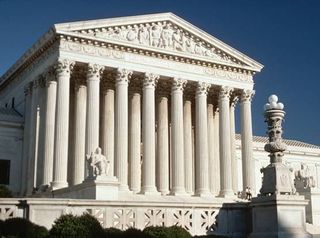
SupremeCourtBuilding 
Beyond Bush v. Gore.

The U.S. Supreme Court, in a per curiam order, dissolved a temporary restraining order that would've forced the Ohio secretary of state to do stuff that she argued would suppress voting.  Brunner v. Ohio Republican Party, No. 08A332 (U.S. Oct. 17, 2008) (per curiam).

The case holds obvious interest but also featured unusual carping among lower court judges.  The panel that first considered the secretary of state's arguments split 2-1 on overturning the TRO.  Ohio Republican Party v. Brunner, No. 08-4242 (6th Cir. Sept. 30, 2008).  The en banc court went the other way — but not before a dissenting circuit judge questioned a colleague's sub silentio failure to recuse despite the fact that her husband (a candidate for office) stood to benefit from the court's ruling.  Ohio Republican Party v. Brunner, No. 08-4322 (6th Cir. Oct. 14, 2008).

FeedIcon Happy Monday!

The Federal Circuit held last Friday that the "re-examination" clause of the seventh amendment forbids a court from changing a jury's damages award without giving the claimant the option of retrying the amount of damages.  Minks v. Polaris Industries, Inc., No. 07-1490 (Fed. Cir. Oct. 17, 2008).

The jury in Minks found that Polaris Industries wilfully infringed a patent relating to an electronic governor system for internal combustion engines.  The jury awarded "reasonable royalty" damages of $1,294,620.91.  The district court cut the award to its own estimate of a reasonable royalty — a mere $27,904.80 – but failed to offer Minks a new trial on damages as an alternative to accepting the court's de novo damages determination.

The Federal Circuit relied on the seventh amendment's injunction that "no fact tried by a jury, shall be otherwise re-examined in any Court of the United States, than accordng to the rules of common law."  U.S. Const. amend. VII.  A court runs afoul of this re-examination clause, the panel held, when it substitutes, for a jury's award, the court's own factual assessment of what amount the evidence supports.  The district court did just that, and so it must on remand give Minks the choice of a new trial on damages.

Blawgletter hazards a guess that Minks will go the new trial route.

FeedIcon Our feed thinks juries are awesome.

Cipro 
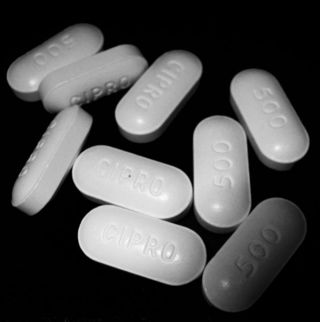
The synthetic antibiotic Cipro.

The Federal Circuit yesterday affirmed summary judgment against antitrust claim-bringers who alleged that a patent holder (Bayer) illegally agreed to allocate the market for a drug (ciprofloxacin hydrochloride) when it settled litigation in which it accused potential generic manufacturers (including Barr) of infringing the patent.  The settlement terms included a covenant by the generics not to challenge the validity of the patent and a promise by the patent holder to pay the generic people north of $49 million.  The court held that the arrangement didn't violate antitrust law because its anticompetitive effects fell within the "exclusionary power" of the patent.  In re Ciprofloxacin Hydrochloride Antitrust Litig., No. 08-1097 (Fed. Cir. Oct. 15, 2008).

Cowboys 
Dallas at least beat Marshall last week.  Sorta.

The Fifth Circuit last week held, in a 10-7 en banc decision, that a district judge in Marshall, Texas (within the Eastern District) abused his discretion in refusing to transfer a car wreck case 142 miles to Dallas, Texas (the Northern District).  Lots of stuff happened in Dallas — including the accident itself — but the case had no connection to the Eastern District of Texas, the majority noted.  The strong dissent pointed to the extraordinariness of using mandamus to overturn a discretionary refusal to move venue.  In re Volkswagen of Am., Inc., No. 07-40058 (5th Cir. Oct. 10, 2008).

Feed-icon-14x14 But it's a long 142 miles.

TwoStep
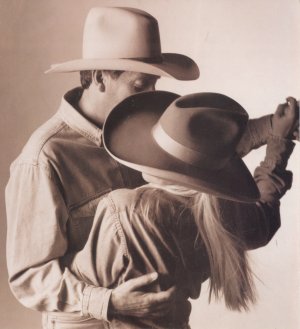
"The best effect is created when dancers achieve a smooth gliding motion in time to the music."

Blawgletter offers a two-part plan for ending the beginning of the credit market fiasco.  The two steps will inject capital into the credit system — helping liquidity and pay-as-you-go solvency — and will also eliminate the horrifying overhang that $60-plus trillion in gambling debts has created.

Step, the first:  Pay banks 100 cents on the dollar for, oh, $700 billion of the skunky bets they made on the real estate market.  You know, those securitizations of dumb mortgages — including the subprime variety — that investment-cum-commercial banks put together (for a fee) and sold (at a profit) to gullible (as well as eyes-wide-open) investors.

But this jab doesn't come free of charge.  It has a catch:  If the feds lose when they unload the securities, in five or so years we'll have us what the corporate deal lawyers call a "true-up".  Meaning that the bank-seller will have to make up the deficit at the end of the five-or-so year period. 

In the event the government makes money, on the other hand, the profit goes to Joe Six-Pack taxpayer.

The buy-plus-true-up option (a) replaces a bad asset (the mortgage-back securities) with a good one (cash money) and (b) enhances the banks' liquidity but (c) keeps the banks on the hook for taxpayer losses.

The solution doesn't address balance sheet solvency — assets less liabilities — due to the future true-up obligation.  (Although our accounting friends could conceivably find a way to finesse the issue.)  But it does provide immediate solvency in the sense of ability to pay debts as they come due.  That beats a poke in the eye with a sharp stick.

Step, the second:  As we suggested before, Congress could declare null, void, and unlawful the credit default swap obligations that resulted from pure gambling.  In the hands of speculators, who have no association with the underlying debt, the swaps represent a pristine wager that bad things will happen to the real estate projects that the debt financed.

Okay, the speculators won the bet.  Big time.  They stand to harvest trillions in profits.  But letting them enforce the swaps would violate public policy, not least because of the extreme danger they posed then (and pose even more now) to the financial system.

Make the people who sold the swaps to speculators refund the premiums.  Fine.  But desperate times call for exercise of the government's full powers — especially if it will do more than anything else to resolve the single greatest threat to the credit market's solvency and stability.  If it can be done lawfully — and surely those smart government lawyers can find a lawful way – void the swaps.

Feed-icon-14x14 Gotta go.  Trial on Tuesday!

PadreIsland 
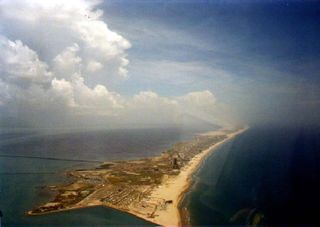
South Padre Island. 

The Supreme Court of Texas today held that the passage of time barred claims against a New York lawyer for fraudulently acquiring oil and gas and other property interests in the world's longest barrier island.  Kerlin v. Sauceda, No. 05-0653 (Tex. Oct. 10, 2008).

The genesis of the litigation dates to 1829, when the Mexican state of Tamaulipas recognized the claims of uncle and nephew Padre Nicolas Balli and Juan Jose Balli to Padre Island, which hugs about 130 miles of the southern Gulf Coast of Texas. 

After many divisions and conveyances of ownership interests in the island, another uncle and nephew team, Frederick Gilbert and Gilbert Kerlin, managed (starting in 1937) to wangle deeds from heirs of Juan Jose.  Empire State lawyer Kerlin also revived and settled a lawsuit involving other claimants in a way that granted Gilbert and Kerlin title to surface and mineral interests in Padre Island property.

Balli heirs eventually got wise to Kerlin's maneuvers and, in 1993, filed a lawsuit against him and companies to which he'd conveyed the Gilbert and Kerlin acquisitions.  A jury found for the heirs, and the court of appeals affirmed.

But the Supreme Court concluded that the two- and four-year statutes of limitations expired before the heirs sued.  The fraudulent concealment doctrine didn't save the claims because for as many as 40 years Kerlin's allegedly fraudulent deeds were a matter of public record.  Plus the heirs always knew that they weren't getting the royalties they now claimed.

Nor did Kerlin's "absence" from Texas toll the running of limitations under section 16.063 of the Texas Civil Practice and Remedies Code.  Kerlin's amenability to personal jurisdiction in the Lone Star State by virtue of the Texas general long-arm statute made him "present".  He therefore lacked absence, and limitations thus kept running, the Court held.

Four justices joined in a tart concurrence.

FeedIcon Happy Friday!