Blawgletter doesn't often visit the realm of criminal jurisprudence, but we couldn't help but notice yesterday's ruling in United States v. Hope, No. 07-60769 (5th Cir. Oct. 8, 2008). The court there addressed whether the double jeopardy clause barred prosecution of Danny Hope for two counts of possessing a handgun (a .380 caliber Walther). Mr. Hope used the gat, first, to rob a convenience store and, second, still had it under his car seat a day later (after a high speed chase that started when a police officer noticed the vehicle had a headlight out). The court held that Mr. Hope's conviction on both counts did, indeed, constitute double jeopardy; vacated the conviction; and remanded for resentencing on just one of the counts.

The Wisdom of Voir Dire
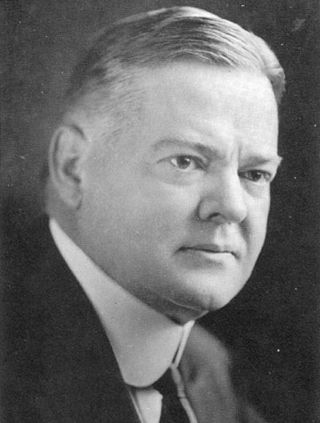
Did Herbert Hoover like juries?
Have you ever picked a jury? By which Blawgletter means have you stood in front of a venire and asked questions whose answers might assist you, your opponent, and the judge to select the right jurors for your case?
Whether you have or not, do you believe in seating the first group of citizens who show up? Or do you think lawyers should probe the potential jurors' attitudes, biases, and preconceptions before accepting them as the final judges of the facts?
We ask because we recently witnessed a presentation in which an appellate judge told why we oughtn't worry about juror bias. Any random assemblage of people, the judge implied, qualifies to sit on pretty much any civil jury.
The rationale, as we understand it, derives from the jurist's reading — and embrace — of James Surowiecki's The Wisdom of Crowds: Why the Many Are Smarter Than the Few and How Collective Wisdom Shapes Business, Economies, Societies and Nations (2004). The book argues that a big group of people, operating independently, most often arrive collectively at correct answers to even highly complex questions. As where hundreds or thousands of people guess the number of jelly beans in a jar or how much a cow carcass weighs; the average of their independent answers comes startlingly close to the right number.
The judge extended the Surowiecki thesis to the idea that putting any 12 people together on a jury will assure a better result than a single judge could come to. And that, thus, trial by jury deserves protection.
Please allow us a measure of skepticism. The same judge opposes, with eerie certitude, the advisability of asking prospective jurors whether or not they hate lawsuits. Or belong to organizations that despise litigation. The judge has also earned a reputation for enthusiasm in overturning jury verdicts that, in the judge's view — but not in the opinion of the jurors, the trial judge, and other appellate judges – lack evidentiary support. And the judge has never blushed, as far as we can tell, at reaching beyond traditional measures of jurisdiction to take cases in order to correct judgments that by the judge's lights didn't come out right.
The judge's cheery endorsement of Americans' seventh amendment right because it replicates the accuracy of jelly-bean-in-a-jar collective guessing seems to us a frightening point of view. For it implies a shockingly low opinion of jurors' intelligence. It also reflects, we fear, the judge's wishful reasoning by false analogy. An anonymous crowd of individuals who independently answer a question may result in the factually correct answer about carcass weight, but juries don't work that way. Jurors aren't anonymous, and they deliberate together in a collective effort to reach the find facts based on the evidence.
We love juries. Not least because, after a proper voir dire that identifies and eliminates those with bias, the jurors who serve have no financial, political, social, neighborly, professional, or personal stake in the outcome. Shouldn't we aim for the best jury possible in each case? And not for just a random group whose small size and tendency to give undue weight to opinions of dominating members, whose influence robs the group of independent thinking (thus destroying the conditions that Surowiecki holds crucial to group wisdom)?

Federal Circuit Remands Decade-Old Patent Case

Elves live forever. Should lawsuits?
The Federal Circuit yesterday decided that a district court made right and wrong rulings in a patent dispute. Indeed, the court whirled a positive blur of both (right and wrong) decision types. And, despite the district court's unconscionable delay in resolution of the case (nine years after filing and five years after hearing), the majority sent the case back to the same supine district judge for proceedings that the dissenting judge deemed pointless. Cohesive Technologies, Inc. v. Waters Corp., No. 08-1029 (Fed. Cir. Oct. 7, 2008).
Blawgletter will say no more. For you must read the opinion to see what a hash the courts can, and did, make of a patent case.

How to Solve the Credit Crisis

Congress abolished gold clauses in contracts in 1933. Should it do the same with speculative credit default swap contracts?
Blawgletter just finished reading an article on credit default swaps from our source for all facts whose accuracy doesn't matter — Wikipedia. And, boy, did it throw a scare into us.
It says:
A credit default swap (CDS) is a contract in which a buyer pays a series of payments to a seller, and in exchange receives the right to a payoff if a credit instrument goes into default or on the occurence of a specified credit event (such as bankruptcy or restructuring). The associated instrument does not need to be associated with the buyer or the seller of this contract.
Originally used as a form of insurance against bad debts, these instruments became a tool for financial speculation when the US Commodity Futures Modernization Act of 2000 specifically barred regulation of these trades.
The part that gave us a fright notes that "[t]he associated [credit] instrument does not need to be associated with the buyer or seller of this contract." The "not need to be associated" means that anybody — anybody — could gamble that just about any debt obligation would go south and reap a big bonus from the swap seller if it, in fact, does.
We guess the most tempting morsels must have taken the form of credit default swaps on the riskiest kinds of debt. Subprime mortgages, say. Or the murkiest, scariest, double-dog-dare-dangerousest tranches of subprime mortgage securitizations.
As the folks at Investopedia gently note, "it is obvious that speculation has grown to be the most common function for a CDS contract."
Bloomberg puts the size of the swaps market at $54.6 trillion. For those of you keeping track, that amounts to about 5.5 times the size of the U.S. national debt.
All that sounds to us like pure gambling.
But this isn't Las Vegas. And all those speculators who had no business with the credit default swaps except gambling should receive, at most, a refund of their money. But neither would we mind seeing them get bupkes.
Congress voided contract clauses that required payment in gold or gold equivalent dollars during the Great Depression. Credit default swaps, anyone?

AAI Releases “Agenda” for Next Administration

Get ready for 415 pages of recommendations.
The American Antitrust Institute just published The Next Antitrust Agenda: The American Antitrust Institute’s Transition Report on Competition Policy to the 44th President of the United States.
At 415 pages, the Transition Report on Competition Policy packs a wallop. So you may prefer to browse, which you can do by chapter:
- Introduction
- Cartels
- Monopoly, Exclusion and Intrabrand Competition
- Buyer Power
- Merger Policy
- The Institutions of Enforcement (Department of Justice and the Federal Trade Commission)
- Private Enforcement of Antitrust Laws
- Media
- Agriculture
- Healthcare
- Energy
- Summary of Major Recommendations
Blawgletter found the Institutions of Enforcement section especially interesting.
And we suspect that the receptiveness of the major parties’ presidential candidates to AAI’s pro-enforcement prescriptions will differ. A lot.

Seventh Circuit American Jury Project Final Report
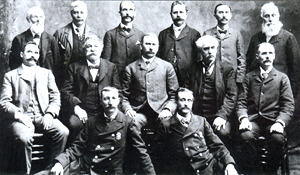
These jurors wished they could’ve asked questions, too.
The Seventh Circuit American Jury Project Commission issued its Final Report last month. It includes some interesting findings about the vanishing jury trial:
- Asking witnesses questions that jurors themselves have proposed "helped their understanding of the facts" without sacrificing efficiency.
- Giving "preliminary substantive jury instructions" achieves "the intended goal of increasing the jurors’ understanding of the case by giving the jurors the legal framework for the parties’ arguments regarding the disputed facts."
- Using a 12-person jury may increase "the jury’s diversity" and therefore "is likely to prove beneficial" and will "pose little difficulty in efficiency terms."
- Jurors found "interim statements" by counsel helpful to their understanding of the evidence and in focusing their attention on the evidence, especially in trials lasting more than a week.
- Having potential jurors complete a questionnaire before voir dire tends to enhance efficiency without affecting fairness of trials.
- Giving more instructions on how to conduct deliberations doesn’t seem to help jurors.
- Judges prefer not to set trial time limits out of concern that they don’t increase fairness, efficiency, or satisfaction.
All that makes sense to Blawgletter — except the bit about limiting trial time. Requiring trial lawyers to distill their cases seldom produces bad outcomes. But it sure does save time and money, not only for the case that goes to trial but also for the others awaiting it.

MTM, WTF?

Blawgletter has lately heard complaints — especially from congressional folk — about the Financial Accounting Standards Board‘s requirement that companies book their assets at their current fair value.
The gripers deem FASB No. 107, Disclosures About Fair Value of Financial Instruments (summary here), as a rigid mandate that handcuffs struggling banks. They complain that we ought not compel public companies owning suddenly illiquid instruments like collateralized debt obligations and asset/mortgage-backed securities to "mark to market" the value of the stuff. Because in some cases that would render the investing outfits insolvent. See, e.g., Lehman Brothers Holdings.
And yet we recall several years ago when the likes of Enron abused FASB No. 107 by recording huge profits on investments that never seemed likely to (and in the event didn’t) produce any kind of positive return. Remember all those off balance sheet special-purpose entities?
FASB No. 107 requires mark-to-market accounting for many financial instruments, including your CDOs and ABSs. That means that FASB 107 compels the owners of financial instruments to value financial instruments at the price a willing buyer would pay.
Some now view the standard as unfair to banks that bought high-risk paper before the highness of the risk turned obvious even to outsiders. But they ignore the fact that, for years, mtm made those same banks’ bubbly profits positively frothy. Mtm meant marking assets up and booking bigger profits and larger shareholders’ equity.
Blawgletter thus lacks sympathy for anybody who says our current financial crisis resulted in even the least way from proper application of FASB No. 107. It happened instead from the Enronian sense that anything goes — that companies may book asset gains as profits even though the gains were ephemeral and depended on an unsustainable speculative real estate bubble. People don’t need an overhaul of FASB No. 107; instead they require its honest implementation.
If you don’t believe us, go ask Lehman Brothers.

Quote of the Day: Winston Churchill
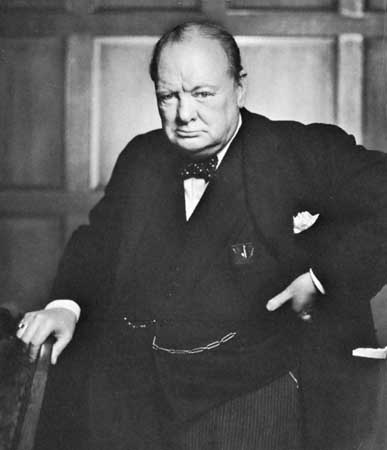
Sir Winston Leonard Spencer-Churchill (1874-1965). His mom came from Brooklyn.
You can always count on Americans to do the right thing — after they’ve tried everything else.

Rule 23(f) Strikes Again; Second Circuit Makes Class Cert Even Harder; Grubman Grins
Blawgletter likes to fuss about the heightening of hurdles, embiggening of traps, and sharpening of snares along the obstacle course that class litigation has become.
So imagine our delight today upon reading Millowitz v. Citigroup Global Markets, Inc. (In re Salomon Analyst Metromedia Litig.), No. 06-3225-cv (2d Cir. Sept. 30, 2008).
The class of Metromedia Fiber Network stock buyers complained that Salomon Smith Barney stock analyst Jack Grubman wrote misleading research reports about the company in hopes of getting its business for his Citigroup overlords. Part of the securities fraud claim survived a motion to dismiss, and the district court certified a class. Then the Second Circuit stepped in, accepting the defendants’ appeal under Rule 23(f) of the Federal Rules of Civil Procedure. Rule 23(f) — as you well know — allows but doesn’t require appeals courts to review class certification decisions.
The panel upheld U.S. District Judge Gerald E. Lynch’s conclusion that the Grubmans of the world don’t deserve more protection than securities issuers from claims under Securities and Exchange Commission Rule 10b-5 and section 10(b) of the Securities Exchange Act of 1934. The ruling turned on applicability of the "fraud on the market" presumption of reliance under Basic Inc. v. Levinson, 485 U.S. 224 (1985), to "secondary actors" like stock analysts. The court said it does apply to them.
But the court went on to hold that, during class cert proceedings, defendants must have a "full" opportunity to show that their dissemination of (allegedly) false material information didn’t affect the market price of the security in question. Such a rebuttal of the Basic presumption (that all class members relied on the false information) would force each class member to prove individual reliance — a circumstance that would defeat the requirement for class certification under Rule 23(b)(3) that issues common to all class members "predominate".
So now we’ll have mini-trials in securities class actions on whether the (alleged) fraud in fact inflated the market price.
And some people wonder why we have so many fewer actual trials anymore.

Agreement in Principal — or Principle?
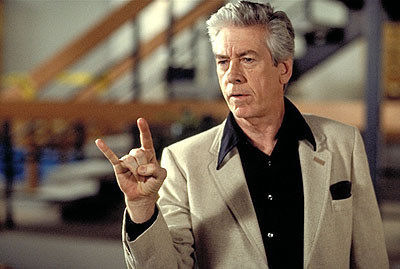
Principal Richard "Dick" Vernon from The Breakfast Club (1985).
A young lawyer asked Blawgletter to look at a draft outline of settlement terms. The Dictabelt captured the ensuing exchange thus:
A: Blawgletter, we hammered out a deal in mediation today. The agreement in principal goes like this:
- Bad guys pay our dear client $X within 30 days;
- Bad guys will delete the electronic documents they stole from our dear client;
- Parties give mutual releases; and
- We get an apology from the bad guys.
B: Good job. But what in bloody heck do you mean by "in principal"?
A. That the agreement covers the most important terms.
B: So will it bind the parties even if they don’t agree on other, non-principal terms?
A: Um . . . no.
B: Do you instead mean an agreement in principle? As in one that morally binds but doesn’t create legal obligations?
A: I see your stupid point. "Principal" implies that the agreement includes all the important terms and therefore has legal effect, whereas "principle" sounds more like "in theory".
B: You’ve done well, grasshopper/padawan. But add a paragraph that says the Agreement in Principle doesn’t obligate anybody anyway.