Intelboard_2
Patent owners beware — no downstream royalties for you.

In Quanta Computer, Inc. v. LG Electronics, Inc., No. 06-937 (U.S. June 9, 2008), the Court extended the doctrine of patent exhaustion to "method" patents.  It also held that the doctrine barred collection of royalties from a downstream user of products in which the patent holder’s licensee embodied key aspects of the patents in suit.

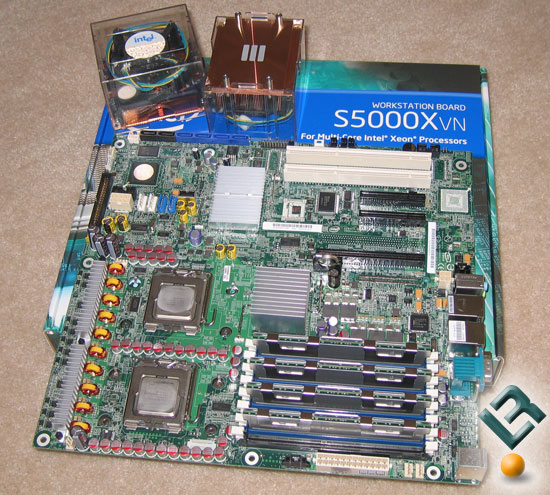
LG Electronics licensed its portfolio of patents to Intel, which practiced the patents in manufacturing microprocessors and chipsets.  The license agreement reserved LG’s right to sue purchasers of Intel products for combining them with other products — such as putting the microprocessors or chipsets into a computer.  Quanta and other computer makers bought stuff from Intel and, with notice of the limits on Intel’s license from LG, plopped them into — you guessed it — computers.  LG sued the downstream buyers.  The Federal Circuit concluded that the patent exhaustion doctrine doesn’t apply to method patents, which describe a way to make a product, and that regardless the LG-Intel license prevented exhaustion via the "sale" of the right to practice the patents to Intel.

The unanimous Court reversed.  Justice Thomas wrote that limiting exhaustion to apparatus patents would kill the doctrine, enabling clever inventors to get around it by including method claims along with apparatus ones.  Nor did the fact that downstream buyers had to combine Intel products with other components before LG could sue for infringement matter.  The Intel chips included essential characteristics of the LG patents and had no use other than in combination.  Finally, the LG-Intel license couldn’t defeat exhaustion.  No matter what the license said, the exhaustion doctrine overcomes efforts to impose conditions on the first sale of a product.  The first sale exhausts patent rights; period.

Feedicon End of story.

Ussupremecourt
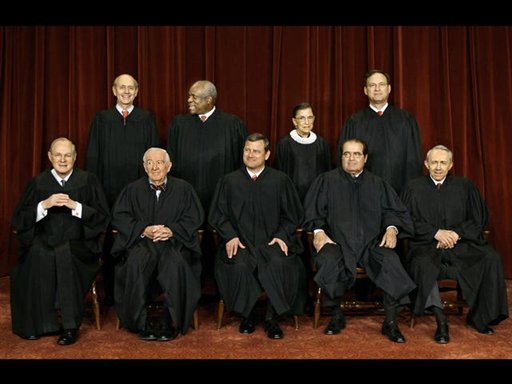
Justice Thomas wrote the opinion for a 9-0 Court.

Today a unanimous U.S. Supreme Court held that the Racketeer Influenced and Corrupt Organizations Act doesn’t require a plaintiff to show reliance on underlying fraud.  The plaintiff may satisfy the causal element under RICO simply by proving that the predicate act proximately caused injury to its business or property.  That usually will happen when the plaintiff relies on a falsehood, but the unanimous Court concluded it can also occur when a third-party’s reliance result in the plaintiff’s harm.  Bridge v. Phoenix Bond & Indemnity Co., No. 07-210 (U.S. June 9, 2008).

Blawgletter found the issue interesting — so much so that we co-wrote an amicus brief pro bono for the States of Connecticut, Arizona, Illinois, Montana, New Mexico, Ohio, Oklahoma, and Tennessee.  The Argument section says:

I. THE INJURY “BY REASON OF” LANGUAGE IN SECTION 1964(c) MEANS INJURY BECAUSE OF THE PREDICATE ACT – NOT BECAUSE OF RELIANCE ON THE PREDICATE ACT As we read their complaint, Respondents lost chances to buy tax liens at Cook County auctions because Petitioners cheated. Petitioners’ cheating – what Blackstone called an “Offense Against Public Trade” – consisted of lying about their independence from one another. They in fact ganged up to deprive Respondents of seats at the lien auctions and then to split the profits from acquiring extra liens. Petitioners’ zero-sum game resulted, as they intended, in wins for them and losses for Respondents. Section 1964(c) of RICO authorizes civil remedies for injuries that occur “by reason of” serious criminal conduct. The complaint alleges that Petitioners used the mails to facilitate their cheating and so committed a predicate offense under the mail fraud statute. They now deny liability on the ground that Respondents’ losses did not result from their reliance on Petitioners’ misrepresentations. But in this Court Petitioners do not contest Respondents’ allegation that Petitioners proximately caused Respondents actual injury in their business and property. Petitioners argue instead that the Court – having deemed “by reason of” to incorporate the common law element of “proximate cause” in Holmes and Anza – ought now to augment those words to mean “by reason of reliance” by the plaintiff on the underlying mail fraud. The “by reason of” phrase itself – which of course says nothing about reliance – will not bear Petitioners’ interpretation. As the Court recognized in Holmes, the language “can . . . be read to mean that a plaintiff is injured ‘by reason of’ a RICO violation, and therefore may recover, simply on showing that the defendant violated § 1962, that plaintiff was injured, and the defendant’s violation was a ‘but for’ cause of plaintiff’s injury.” Holmes, 503 U.S. at 265-66 (footnote omitted). But the literal construction “is hardly compelled”, and it would ignore the “meaning that courts had already given” the same formulation in decades of antitrust decisions. Id. at 266 & 268. “Proximate cause is thus required.” Id. at 268. No such interpretive history supports adding “reliance by the plaintiff” after “by reason of”. Victims of monopolization, boycotting, or price-fixing do not have to show that they suffered injury “by reason of” their reliance on anticompetitive conduct. Many antitrust cases on the contrary arise from openly coercive and predatory behavior – the very opposite of deception. E.g., Allied Tube & Conduit Corp. v. Indian Head, Inc., 486 U.S. 492 (1988) (involving overt influence on private association whose standards gave defendant competitive advantage). And this Court has expressly recognized that the acquisition of monopoly power through fraud on a governmental entity – but not on the plaintiff – provides a basis for recovery of treble damages under the Sherman Act. Walker Process Equip., Inc. v. Food Machinery & Chem. Corp., 382 U.S. 172, 176 (1965) (authorizing “recovery of treble damages for fraudulent procurement of the patent [from the U.S. Patent and Trademark Office] coupled with violations of § 2”). Reliance by the plaintiff is thus a concept alien to the historical meaning of “by reason of”. Nor would engrafting a reliance element onto section 1964(c) make sense with respect to most instances of possible “racketeering activity”. Section 1961(1) defines “racketeering activity” to include about 100 indictable offenses, many of which do not involve fraud – things like “sports bribery”, “transmission of gambling information”, “obscene matter”, “murder-for-hire”, “infringement of a copyright”, “trafficking in contraband cigarettes”, and “chemical weapons”. 18 U.S.C. § 1961(1). Does “by reason of” shift meaning according to the peculiar common law roots of each different underlying offense – assumpsit, deceit, and the like? Does the phrase add an element to the “proximate cause” inquiry for “forgery or false use of passport” in section 1961(1) but not for mere “misuse of passport”? Or does it instead simply signify, as the Court held in Holmes and Anza, a proximate cause requirement? But even if section 1964(c) shifts meaning depending on the predicate offense, the path that Petitioners invite the Court to embark upon – “to interpret § 1341 in conjunction with § 1964(c)” – simply does not lead to the conclusion they wish. For nothing in section 1341, either, so much as hints at a reliance element. Yes, the Court in Neder v. United States, 527 U.S. 1 (1999), read “scheme or artifice to defraud” in section 1341 to require materiality, but in the same case the Court construed the same language not to require reliance, id. at 25 (“The common-law requirements of ‘justifiable reliance’ and ‘damages,’ for example, plainly have no place in the federal fraud statutes.”). The “conjunction” of one statute – which does not incorporate a reliance element – with another one – which likewise does not incorporate it – cannot generate the absent element. Petitioners do not venture to explain where in the statutory text one finds the reliance element. One must conclude that they cannot. II. THE NATURAL READING OF SECTION 1964(c) WILL ENHANCE WISE LAW ENFORCEMENT To us, the dispute between Petitioners and Respondents presents a question of enforcing an important federal statute and, by analogy, its state law offspring. We submit that interpreting RICO not to incorporate a reliance element will promote sound law enforcement without penalizing legitimate business practices. A. An Unduly Restrictive Construction of Section 1964(c) Would Thwart Congressional Intent and Hinder State Law Enforcement The Court has noted that “narrow readings” of section 1964(c) ignore the intent of Congress to enact “an aggressive initiative to supplement old remedies and develop new methods for fighting crime.” Sedima, 473 at 498. RICO thus “is to be read broadly” and “is to be ‘liberally construed to effectuate its remedial purposes,’ Pub. L. 91-452, § 904(a), 84 Stat. 947.” Id. at 497 & 498. “The statute’s ‘remedial purposes’ are nowhere more evident than in the provision of a private action for those injured by racketeering activity.” Id. at 498. “Indeed, if Congress’ liberal-construction mandate is to be applied anywhere, it is in § 1964, where RICO’s remedial purposes are most evident.” Id. at 491 n.10. Curtailing the reach of section 1964(c) by engrafting a “reliance” element on it in 2008 would defeat the mandate of Congress in 1970 just as surely as adding a “racketeering injury” element or a “prior-conviction requirement” to it would have in 1985. Id. at 495 & 488 (rejecting both). As this case demonstrates, state and local governments will not discover and correct all frauds. Indeed, “[p]rivate attorney general provisions such as § 1964(c) are in part designed to fill prosecutorial gaps.” Id. at 493. True, as Chief Judge Easterbrook noted, “governments always have some ability to detect and penalize frauds.” Pet. App. at 7a (emphasis added). And, in an ideal world of limitless resources, state and local governments could “detect and penalize” all of the various “frauds” that may game their normal functions. State and local governments have the legal means and resources to take enforcement action and punish only a fraction of those they do discover. States are not offended when private litigants pursue available remedies. We respectfully differ with the argument that prosecutorial discretion does not inform ourdecisions about whether to pursue civil RICO claims. See Brief for Petitioners at 37-38; Brief for the Chamber of Commerce at 22. Although the argument may aim at private lawyers, it hits us, too. Trying to cabin civil RICO (unduly, we believe) in hopes of discouraging expensive strike suits would at the same time deprive many states of a tool that we use judiciously in the service of our citizens within the parameters intended by Congress. B. Other Arguments Do Not Justify Adding a “Reliance” Element We respectfully disagree with suggestions that declining to impose an extra-statutory condition on RICO claims sounding in fraud would open litigation floodgates. See Brief of Washington Legal Foundation at 18 (claiming an “ever increasing number of civil RICO suits filed each year”). Since 2000, private RICO cases in federal court have averaged 753 annually (and totaled 703 in the year that ended March 31, 2007) – representing less than 0.3 percent of the more than 250,000 average federal filings each year during that period. Of these, no more than a handful may relate to rigging of auctions or the making of misrepresentations to third parties. In 97 pages of briefs, Petitioners and their supporting amici have identified none. The notion that the Court should bend its statutory construction to create a “reliance” barrier to class actions deserves comment as well. Brief for McKesson Corp. at 29-33. In the first place, this case does not involve class allegations; and we question the appropriateness of bringing class certification issues into the discussion of the questions on which the Court granted review. Second, the point that “class actions that are certified almost always settle”, if true, hardly distinguishes class actions from all other civil cases, which likewise “almost always settle”; nor does it say anything about whether the defendants in those cases overpaid, after rationally taking into account the cost of litigating and the probability of losing on the merits. Third, we believe that aggregate litigation, including class actions, more often than not serves the salutary purpose of leveling the parties’ respective bargaining positions; absent aggregation, an individual who has lost $5 or even $500 as a proximate result of a company’s RICO violation enjoys a purely theoretical right to a civil remedy. We therefore do not see the possibility of thwarting aggregation as a legitimate reason to narrow RICO. The concept that the antitrust case of Illinois Brick Co. v. Illinois, 431 U.S. 720 (1977), provides any help here strikes us as inapposite. See Brief of Washington Legal Foundation at 13-15. The Court in Illinois Brick, for policy and administrative reasons, limited standing to the first victims of price fixing – the ones who purchased directly from a member of the price fixing conspiracy regardless of whether they passed on the overcharge to their customers. This case of course does not involve price fixing. Nor does it concern any question of whether Cook County, the entity that relied on Petitioners’ misrepresentations, suffered pecuniary loss; it manifestly did not. And it therefore, unlike the direct purchasers in Illinois Brick, could not possibly have passed its (non-existent) losses on to Respondents, a circumstance that might conceivably raise a question about allocation of damages. Finally, the suggestive citations to Stoneridge Inv. Partners, LLC v. Scientific-Atlanta, Inc., 128 S. Ct. 761 (2008), actually underscore the fundamental difference between this case and securities fraud litigation. No one doubted that section 10(b) of the Securities Exchange Act and the Securities and Exchange Commission’s Rule 10b-5 required proof of reliance on something fraudulent. The reliance element existed from the moment the cause of action sprang from the Court’s brow. See id. at 776. In this case, Congress enacted section 1964(c) and defined mail fraud as an instance of “racketeering activity” with knowledge of the distinctive requirements of securities fraud claims and yet chose language that made “proximate cause” simpliciter the test of causation. That, we submit, should end the matter.

Feedicon14x14 Bon.

Ftcsculpture
FTC v. Intel.  Symbolically.

The Federal Trade Commission announced a formal investigation into possible anticompetitive conduct by Intel, which makes and sells 80-90 percent of computer brains in the U.S.  The unveiling, per the NYT, follows months of stalling by the former top FTC Commissioner, who now works as general counsel at Procter & Gamble.

The probe appears to focus on Intel’s rebating and discounting practices (as competitor Advanced Micro Devices alleges in a separate lawsuit).  According to the NYT article:

A.M.D. has asserted that Intel offers rebates and discounts that, in effect, result in its chips being sold at prices below the cost of production, a practice that some courts in cases involving other companies have said can be a violation of antitrust law.

Intel denies that its discounts and rebates drive its prices below cost, or at predatory levels. Intel has said that it offered legitimate discounts based on the volume of chips that have been purchased by companies, and that consumers benefit when personal computer manufacturers — using the discounts — are able to lower the cost of making their products.

The story also notes that Intel, AMD, and several PC-makers that buy microprocessors from Intel and AMD got FTC subpoenas recently.  The Commission’s website, including the Bureau of Competition’s home webpage, makes no mention of the investigation as of mid-day today.

In 1998, the Commission charged Intel with antitrust violations through disciplining of customers that tried to enforce their patent and other intellectual property rights in microprocessor technology.  The FTC’s 10-year-old administrative complaint said:

Intel has engaged in exclusionary conduct by cutting off and threatening to cut off valuable commercial relationships with certain of its customers as a means of coercing licenses to their patent rights in rival microprocessor and related technologies.  In each instance, Intel’s conduct had a significant adverse effect on the ability of the targeted customer to develop and bring to market in a timely manner computer systems based on Intel microprocessors, and would have posed a more significant long-term threat to the businesses of those customers if they had not agreed to license their technologies to Intel or, in the case of Intergraph, won an injunction against Intel’s conduct. Because patent rights are an important means of promoting innovation, Intel’s coercive tactics to force customers to license away such rights diminishes the incentives of any firm dependent on Intel to develop microprocessor-related technologies. Because most firms who own or are developing such technologies are vulnerable to retaliation from Intel, the natural and probable effect of Intel’s conduct is to diminish the incentives of the industry to develop new and improved microprocessor and related technologies.  Consequently, Intel’s conduct entrenches its monopoly power in the current generation of general-purpose microprocessors and reduces competition to develop new microprocessor technology and future generations of microprocessor products.

Complaint 39, In the Matter of Intel Corp., No. 9288 (F.T.C.).  The Commission and Intel reached a settlement in March 1999.

The AMD complaint, which it filed in 2005, alleges that Intel engaged in a wide range of anticompetitive conduct, including:

  • forcing "major customers into exclusive or near-exclusive deals,"
  • conditioning "rebates, allowances and market devvelopment funding on customers’ agreement to severely limit or forego entirely purchases from AMD,"
  • establishing "a system of discriminatory, retroactive, first-dollar rebates",
  • threatening "retaliation against customers introducing AMD computer platforms,"
  • establishing and enforcing "quotas among key retailers effectively requiring them to stock overwhelmingly, if not exclusively, Intel-powered computers",
  • forcing "PC makers and technology partners to boycott AMD product launches and promotions," and
  • abusing "its market power by forcing on the industry technical standards and products which have as their central purpose the handicapping of AMD in the marketplace."

Complaint 2, Advanced Micro Devices, Inc. v. Intel Corp., No. 1:05-cv-00441-JJF (D. Del. June 27, 2005) (available on PACER).

Feedicon14x14 Can you say predatory pricing?  The FTC probably will have to.

The Ninth Circuit — per Chief Judge Alex Kozinski — yesterday upheld a class action complaint alleging securities fraud.  The opinion aptly described the feat as "something much harder now than in days gone by."  Whiting v. Applied Signal Technology, Inc., No. 06-15454 (9th Cir. June 5, 2008).

The complaint alleged that Applied Signal kept reporting a big "backlog" even after its biggest customer, the federal government, ordered it to quit work under four separate contracts.  The stop-work orders cut ongoing revenues by 25 percent and portended cancellation of the contracts.  But Applied didn’t disclose the orders and even continued to report the work under the rubric of "uncompleted portions of existing contracts".  When the truth outed, Applied’s stock took a 16 percent tumble.

Feedicon Our feed wishes you a happy Friday.

Viacomtrestlebillboard
A CBS Outdoor (formerly Viacom) railroad trestle sign.

A federal jury awarded two billboard companies, Craig Outdoor and Midwest Outdoor, $125,000 each in tort damages against Viacom for swiping billboard sites that it tricked them into identifying.  Acting as agent for several railroads, Viacom asked for applications to build the big signs on rights of way and in the applications required the hopefuls to specify the locations they wanted.  But Viacom planned to take the best sites for itself and, after it got them, used false excuses for the railroads’ refusals of the applicants’ entreaties.  The jury looked unkindly on Viacom’s scheme and topped off the compensatory awards with punitives ones of $1,044,445 apiece.  Craig Outdoor Advertising, Inc. v. Viacom Outdoor, Inc., No. 06-3335 (8th Cir. June 4, 2008).

The Eighth Circuit affirmed the eight-times multiple over Viacom’s due process objection:

Although a ratio of actual to punitive damages in excess of eight to one may be constitutionally suspect, "there are no rigid benchmarks that a punitive damages award may not surpass."  State Farm Mut. Auto. Ins. Co. v. Campbell, 538 U.S. 408, 425 (2003).  We conclude that in this case, given Viacom’s deceitful conduct directed at Plaintiffs, the single-digit multiplier comports with due process.

Id., slip op. at 25 (footnote omitted).  The court also rejected Viacom’s argument that it set a 4:1 ratio as the upper constitutional limit in commercial cases.  Id. at 25 n.9 (distinguishing Eden Electric, Ltd. v. Amana Co., 370 F.3d 824, 828-29 (8th Cir. 2004), cert. denied, 543 U.S. 1150 (2005)).

Feedicon Our feed believes we’ll never see a billboard lovely as a tree.  Even from a train.

The Supreme Court of New Jersey today ordered dismissal of claims that sought, on behalf of a class of people who took pain-killer Vioxx, recovery for the cost of monitoring them for signs of injury.  The Court said:

We hold that the definition of harm under our Products Liability Law (PLA), N.J.S.A. 2A:58C-1 to -11, does not include the remedy of medical monitoring when no manifest injury is alleged.  We also hold that the PLA is the sole source of remedy for plaintiffs’ defective product claim; therefore, the Consumer Fraud Act (CFA), N.J.S.A. 56:8-1 to -106, does not provide an alternative remedy.

Sinclair v. Merck & Co., Inc. , No. A-117 (N.J. June 4, 2008).

Feedicon14x14 Our feed monitors stuff all the time.

Rupertmurdoch
Media magnate Rupert Murdoch may find  less to grin about under a Barack Obama presidency.

Tonight, Senator Barack Obama claimed the Democratic nomination for President.

What sort of antitrust policy would he bring to the U.S. Department of Justice? A far more assertive one, Blawgletter thinks.

On May 18, the candidate said, according to Reuters:

I will assure that we will have an antitrust division that is serious about pursuing cases.

There are going to be areas, in the media for example where we’re seeing more and more consolidation, that I think [it] is legitimate to ask . . . is the consumer being served?

We’re going to have an antitrust division in the Justice Department that actually believes in antitrust law. We haven’t had that for the last seven, eight years.

Some of the consolidations that have been taking place, I think, may be anti-competitive.

We live in a globalized economy and we probably have to update how we approach antitrust to figure out what is truly uncompetitive behavior on the part of monopolies or oligopolies and what are just big successful companies that need to be big in order to compete internationally.

Witness also what Senator Obama told the American Antitrust Institute last September:

When it works well, capitalism is great for consumers. Firms compete to cut prices and improve the customer experience, and consumers have plenty of alternatives, so they are not vulnerable to corporate greed or incompetence. Most of the time, American business enthusiastically participates in this win-win system.

Antitrust helps to keep that system in force. It addresses the temptation that some businesses will sometimes experience, to merge with key rivals instead of outperforming them, to agree not to compete too hard, or to sabotage rivals’ efforts to serve consumers instead of redoubling their own.

Antitrust is the American way to make capitalism work for consumers. Unlike some forms of government regulation, it ensures that firms can reap the rewards of doing a better job. Most fundamentally, it insists that customers—not government bureaucrats, and not monopoly CEOs—are the judges of what best serves their needs. America has been a longtime leader in antitrust, and our antitrust rules and institutions have often served as models for other countries wanting to make capitalism work for consumers. At home, for more than a century, there has been broad bipartisan support for vigorous antitrust enforcement, to protect competition and to foster innovation and economic growth.

Regrettably, the current administration has what may be the weakest record of antitrust enforcement of any administration in the last half century. Between 1996 and 2000, the FTC and DOJ together challenged on average more than 70 mergers per year on the grounds that they would harm consumer welfare. In contrast, between 2001 and 2006, the FTC and DOJ on average only challenged 33. And in seven years, the Bush Justice Department has not brought a single monopolization case.

The consequences of lax enforcement for consumers are clear. Take health care, for example. There have been over 400 health care mergers in the last 10 years. The American Medical Association reports that 95% of insurance markets in the United States are now highly concentrated and the number of insurers has fallen by just under 20% since 2000. These changes were supposed to make the industry more efficient, but instead premiums have skyrocketed, increasing over 87 percent over the past six years.

As president, I will direct my administration to reinvigorate antitrust enforcement. It will step up review of merger activity and take effective action to stop or restructure those mergers that are likely to harm consumer welfare, while quickly clearing those that do not.

My administration will take aggressive action to curb the growth of international cartels, working alone and with other jurisdictions to ensure that firms, wherever located, that collude to harm American consumers are brought to justice.

My administration will look carefully at key industries to ensure that the benefits of competition are fully realized by consumers. Americans, for example, spend billions of dollars each year on drugs. Competition from generic manufacturers has the potential to reduce these costs significantly, or at least prevent these costs from ballooning further.

An Obama administration will ensure that the law effectively prevents anticompetitive agreements that artificially retard the entry of generic pharmaceuticals onto the market, while preserving the incentives to innovate that drive firms to invent life-saving medications.

My administration will also ensure that insurance and drug companies are not abusing their monopoly power through unjustified price increases – whether on premiums for the insured or on malpractice insurance rates for physicians. I have introduced legislation in the Senate that would repeal the longstanding antitrust exemption for medical malpractice insurance. This narrow bill would do so only for the most egregious cases of price fixing, bid rigging, and market allocation. As president, I will sign this bill into law.

My administration will strengthen the antitrust authorities’ competition advocacy programs to ensure that special interests do not use regulation to insulate themselves from the competitive process.

Finally, my administration will strengthen competition advocacy in the international community as well as domestically. It will take steps to ensure that antitrust law is not used as a tool to interfere with robust competition or undermine efficiency to the detriment of US consumers and businesses. It will do so by improving the administration of those laws in the US and by working with foreign governments to change unsound competition laws and to avoid needless duplication and conflict in multinational enforcement of those laws.

In short, I will direct my administration to take seriously our responsibility to enforce the antitrust laws so that all Americans benefit from a growing and healthy competitive free-market economy.

Feedicon Our feed imagines a brighter future for competition.

Confectionery giant Mars, Incorporated, and a subsidiary, Mars Electronic International, Inc., sued Coin Acceptors for infringing patents on technology that recognizes coins electronically and allows vending machines to drop correct change into the tray.  The district court found infringement and ordered Coinco to pay a reasonable royalty of seven percent for the period 1996 through 2003.  It also refused to allow Mars to recover under a lost profits theory and held that MEI lacked standing to sue for pre-1996 infringement.

The Federal Circuit affirmed but concluded that Mars itself didn’t have standing in 1996-2003.  Mars, Incorporated v. Coin Acceptors, Inc., No. 07-1409 (Fed. Cir. June 2, 2008).  That left Mars with a claim for reasonable royalties before 1996.

First let’s tackle the lost profits thing.  Mars said it lost profits because its transfer of the patents-in-suit to subsidiary MEI required MEI to pay Mars everything it got from selling coin changers and that, therefore, MEI’s profits "inexorably flowed" to Mars.  But MEI didn’t pass on its profits to Mars; it paid royalties.  So, even assuming that a subsidiary’s profits can, ipso facto, count as profits of the parent — a question the court declined to reach — Mars didn’t show what profits MEI made, only the revenues MEI received on sales. 

On standing, we get into a peculiarity of patent law (one of many).  A non-exclusive licensee doesn’t have standing because it doesn’t have the right to prevent others from using the patent.  The Federal Circuit pointed out that Mars transferred the patents-in-suit to MEI in 1996 but that another subsidiary continued to hold a license to practice the inventions in the U.S. (and elsewhere). That existence of another licensee deprived MEI of the right to exclude all others from practicing the invention and thus of standing to sue for the pre-1996 period.

The 1996-2003 time frame presented a question of whether Mars regained ownership of the patents before final judgment.  A Confirmation Agreement recited that Mars "owns and retains the right to sue for past infringement" of the patents and that, "[t]o the extent MEI may have or claim any rights in or to any past infringement . . . , MEI does hereby irrevocably assign all such rights to Mars."  Transferring the right to sue, the court held, doesn’t convey title of the patent itself.  As a non-exclusive holder of rights under the patent, Mars therefore lacked standing.

Also something about how to determine a reasonable royalty.

Feedicon Our feed remains 100 percent royalty-free.

A federal judge today sentenced Melvyn Weiss to 30 months in prison, Bloomberg reports.  Mr. Weiss must also pay a $250,000 fine and forfeit another $9.75 million.

The sentencing comes two months after the former name partner in Milberg Weiss Bershad Hynes & Lerach pleaded guilty to participating in a racketeering conspiracy.

Bloomberg also notes that, according to an article by Nathan Koppel in The Wall Street Journal, Mr. Weiss’s former firm — which now goes by Milberg LLP — may soon resolve its own troubles stemming from the imbroglio.  Mr. Koppel reports that Milberg "is in advanced talks with prosecutors to settle the charges against it by admitting wrongdoing and paying a fine in the neighborhood of $75 million, according to people familiar with the talks.  If the sides can not strike a deal, Milberg, which has so far denied wrongdoing, is due to stand trial in August."

Former partners in the firm, Bill Lerach, David Bershad, and Steven Schulman, pleaded guilty earlier.

Feedicon14x14 Our feed operates at the speed of light.

Supremecourtbuilding

People come up all the time — usually lawyers but sometimes small children too — and ask "Blawgletter, what else will come out this Term from the U.S. Supreme Court?" (The tykes say "Mr. Blawgletter".) "Having to do with business law, I mean", they clarify.

Fancy that! As if Mr. Blawgletter has time to track the doings (and not-doings) of what Jeffrey Toobin calls The Nine.

"Ah", you note — that adorable twinkle in your voice. "You wrote a preview about one case, Klein & Co. Futures v. Board of Trade, No. 06-1265; a post on Exxon Shipping Co. v. Baker, No. 07-219 and another one on District of Columbia v. Heller, No. 07-290; and a dadburn amicus brief in Bridge v. Phoenix Bond & Indemnity, No. 07-210."

True enough. We apparently do have time.  Or at least inclination.  So let’s do have a quick look at what, bidness law-wise, the Court will do by the end-of-Term later this month (calendar here):

Standing for assignees. In Sprint Communications v. APCC Services, Inc., No. 07-552, payphone owners found a nifty way to sue — or, more accurately, not to sue — telephone companies that they believed shortchanged them (on payments for customers’ use of the payphones for toll-free calls). They achieved not suing by assigning their claims "for purposes of collection" to companies that agreed to serve as plaintiffs.  The owners retained the right to any cash the plaintiffs got in the lawsuit.

The question before the Court asks whether plaintiffs that "have no personal stake in the case" and "avowedly litigate only ‘on behalf of’ the assignors" have standing.  If they don’t, claimants will have to find another way to prosecute their claims — presumably by doing it themselves.

Punies for Exxon Valdez disaster. The Exxon Shipping case posits limits on punitive damages under maritime law. An Alaska jury awarded fishermen $5 billion — almost 250 times the compensatory damages — which the Ninth Circuit cut to $2.5 billion. Does the award still punish Exxon too much? In view of the fact that the Exxon CEO wasn’t on the bridge when the Valdez ran aground, should Exxon get any punishment at all?

Reliance for RICO? The Racketeer-Influenced and Corrupt Organizations Act requires a civil plaintiff to prove harm "by reason of" any of a hundred or so crimes. The Court has interpreted the phrase as creating a "proximate cause" element. A common predicate offense under RICO, mail fraud, doesn’t demand that anybody relied on the fraud; a mere attempt suffices. But does a mail fraud RICO claim import a reliance element? And if it does must the plaintiff herself do the relying? The Court will tell us when it rules in Bridge v. Phoenix Bond & Indemnity.

Exhausting those patents. The doctrine of patent exhaustion holds that a patent holder can’t sue an infringer that buys an infringing product from the patent holder’s licensee. Quanta Computer, Inc. v. LG Electronics, Inc., No. 06-937, involves a variation on the "first sale" doctrine: Does it matter that the patent holder’s license expressly reserved the right to sue the licensees’ customers for infringement?

The Court dismissed the Klein case, which involved a claim under the Commodities Exchange Act, apparently because it settled.  The Heller suit concerns whether the second amendment trumps a District of Columbia ban on handguns and doesn’t directly implicate business law — unless you buy and sell them or use them for protection or, ahem, to aid in debt-collection activities.  So we’ll leave that one alone.  For now.

Feedicon Our feed imagines Sisyphus happy.