A Bexar County, Texas, district judge issued a temporary restraining order putting a two-by-four across the head of banks that committed to finance Bain Capital’s and Thomas E. Lee Partners’ purchase of Clear Channel Communications.  WSJ story here.  Clear Channel press release here.

The judge, John D. Gabriel, didn’t rule on the merits.  He concluded instead only that failure to issue the TRO would cause Clear Channel immediate and irreparable injury.

Normally a TRO lasts 14 days.  Texas procedure allows a judge to extend the TRO one more 14-day period but not beyond that.  To extend the restraint until trial, the court must consider evidence in a temporary injunction proceeding, where the merits become key.

Feedicon Bexar County = home of San Antonio — and the Alamo!

The U.S. Judicial Panel on Multidistrict Litigation heard arguments today at the Homer Thornberry Judicial Center in Austin, Texas.  The Panel assigned 20 minutes each to more than a dozen motions to centralize before one federal judge cases pending in multiple federal district courts.  Most of the arguments consisted of short bursts, often as terse as a minute.

Blawgletter attended mainly to make a pitch for centralizing the 70-plus cases constituting In re Chocolate Confectionary Antitrust Litigation, MDL-1935, before U.S. District Judge Michael Schneider in the Eastern District of Texas.  We also enjoy watching the spectacle and visiting with colleagues from around the country.

Our prediction for Chocolate?  If Judge Schneider doesn’t get it, we’d put our money on Philadelphia.  The city has excellent transportation, the judges move complex cases quickly, and the courthouse forms a bulls-eye for the 100-mile range of trial subpoenas, reaching the U.S. headquarters of three out of the four principal defendants.

Feedicon14x14 Yumm!

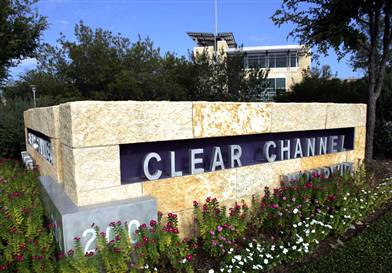
Clearchannel
Entrance to Clear Channel Communications headquarters.

Two prolific borrowers — the private equity firms Bain Capital and Thomas E. Lee Partners — have sued six of the biggest banks — Citigroup, Credit Suisse, Deutsche Bank, Morgan Stanley, Royal Bank of Scotland, and Wachovia — for refusing to carry through on financing a buy out of radio-and-billboard behemoth Clear Channel Communications for $19.5 billion.  Bain and Lee allege that the banks committed to lend.  Stories here and here.

Apparently the dispute required at least two lawsuits — one in Clear Channel’s home town of San Antonio, Texas, and the other in New York City.  Both in state court.

Stay tuned.

Feedicon14x14 Same bat time.  Same bat channel.

Six of the nine Justices sided today with the Ninth Circuit — over, among others, the Fifth.  Wow!  Sweet sassie molassie.  Hall Street Assocs., L.L.C. v. Mattell, Inc., No. 06-989 (U.S. Mar. 25, 2008).

The issue concerned arbitration.  As Justice Souter framed the matter:

The question here is whether statutory grounds for prompt vacatur and modification [under the federal Arbitration Act] may be supplemented by contract.  We hold that the statutory grounds are exclusive.

The decision means that parties may not require courts to conduct a more searching review of arbitration awards than the Arbitration Act allows.

Blawgletter wants to know what, in practical terms, the ruling signifies for the future of arbitration generally.  We think it will encourage more serious attention to the arbitral process itself.  If you worry that an arbitrator might go off the reservation, for example, make sure your contract provides for review by a panel of colleagues.  JAMS, for instance, offers an Optional Appeal Procedure.

We’ve commented before about how repeat offenders may try to strangle legitimate claims by making them uneconomic in an arbitral forum.  Hall Street ought to wake up companies and individuals who think the standard for arbitration is perfection. 

About time, we say.

Feedicon But that’s just us.

The Eleventh Circuit today reversed dismissal of misappropriation claims by a group of doctors against a "preferred provider organization" that contracted for their services and another company that sold "medical discount cards".  The practitioners of the healing arts complained that the PPO improperly let the card-seller use their identities and practice information to market its discount cards.  The district court rejected the claim on the ground that under Georgia law it sounded only in contract.  The court of appeals held that, sure, it did sound in contract but that it also constituted a tort.  Rivell v. Private Health Care Sys., Inc., No. 07-12387 (11th Cir. Mar. 24, 2008).

Blawgletter has heard of rules that confine tort claims to contract remedies, notably the "economic loss" doctrine.  The reason seems to have to do with worries about allowing punitive damages for conduct that also breaches a contractual obligation.  We wonder whether the rules will lose some of their momentum as a result of the U.S. Supreme Court’s line of cases that limit punitives on the ground that excessive awards violate due process.

We wonder, but we doubt it.

Feedicon14x14_2 Our feed can’t picture magical thinking.

Who can understand what happened to produce what looks like a U.S. recession?  Blawgletter hears that, at the simplest level, lenders believed borrowers’ promises of intention and ability to repay far beyond honest limits.  They "credited" obvious lies.  Shame on the liars — but also on the believers.

Who deserves the greater blame?  We don’t know for sure and expect that it varies from case to case, but some overall responsibility must go to the policy makers who lived through the last bunch of dumb loans and the awfulness that followed.  People like Alan Greenspan and Ben Bernanke. 

If you remember the S&L crisis in the late 1980s and early 1990s, you know what we mean.  In that debacle, savings and loan associations and banks all but threw money at speculators, especially those of the real estate variety.  Developers of grandiose projects knew, if only for a little while, that their genius would make their reckless gambles pay off.  And lenders and borrowers grossly inflated valuations in order to support the lending decisions that enriched them.

Well, it has happened again.  This time, an S&L owner didn’t arrange for an appraisal to overstate a property’s value or get a straw man to buy a property at a ridiculously high price.  No.  This time firms like Goldman Sachs, JPMorgan Chase, Morgan Stanley, Bank of America, and others (Bear Stearns R.I.P.) dodged regulatory oversight both by securing changes to applicable law and, largely as a result of their new freedom, by creating financial instruments that nobody ever heard of before.  They thus created a "shadow" banking industry, one that the Federal Reserve and state regulators couldn’t (or at least didn’t) reach.

"Shadow" sounds ominous, so let us explain.  The Fed and the U.S. Comptroller of the Currency respectively oversee bank holding companies and national banks, and state agencies do likewise with state institutions.  But the distinction between commercial banks — which take deposits and use them to make loans — and investment banks — which as far as we can tell do whatever they want to — has all but vanished. 

After the Great Crash in October 1929, Congress required strict separation between commercial banks and companies that underwrote offerings of stocks and bonds.  The goal was to prevent banks from taking excessive risks, as they had done before the crash and ensuing Great Depression.  Repeal of the Glass-Steagall Act in the 1980s and 1990s freed Wall Street to charge higher interest rates and to mix commercial banking operations with the arms that floated securities, provided brokerage services, and even invested for their own account — all far riskier endeavors.

Enter subprime mortgage lenders like Ameriquest and Countrywide.  They originated (or, often, bought) residential real estate loans to people whose credit profiles didn’t support a bank loan.  Wall Street, including formerly stodgy commercial banks, furnished the money so that the mortgage lenders could fund the subprime loans.  The Wall Streeters also bought back the loans, combining hundreds of them in what they called "securitizations" — debt instruments whose value depended on the creditworthiness of subprime borrowers and the value of the underlying real estate.  Then the same Wall Street firms sold the "mortgage-backed securities" to pension funds and other customers.  They reaped profits on the loans and profits on the securitizations.  Boo-yah!

Sounds simple, right?  Elementary, my dear Watson?  Very well.  Because now the story starts getting weird.

Wall Street firms found yet more ways to make money, this time by creating financial instruments that they called "collateralized debt obligations", "interest rate swaps", and other "derivatives".  We don’t pretend to understand what those things involve, who in his or her right mind would buy them, or how they might differ from flipping a piece of Texas land three times in one day.  But we do believe that the lack of legal and regulatory restraint encouraged the bold to do what they do best — to go way beyond reason in the hope that the party would last just a little while longer.

Well, the party has crashed and burned.  The, um, optimistic borrower now owns a house worth less than the loan, and the, er, overconfident lender can’t get its money back.  Recession city, baby.

Will the grown-ups who ought to have seen this day coming get their comeuppance?  Hide and watch, we say.  Hide and watch.

Feedicon14x14 In other words, probably not.

Barack Obama is as white as he is black. The one-drop rule is not a genetic law or a social fact; it is a construct of this country’s racist imagination. For Pete’s sake, he’s a distant cousin of Dick Cheney’s. We need to start stressing the idea that his universal appeal is partly due to his being white, like all the presidents before him.

Bomani Armah, "Okay, Barack. Now Show ‘Em Your White Side", Mar. 23, 2008, The Washington Post.

Feedicon_2 We don’t know who he is either.

Blawgletter had the honor last week of contributing to an amicus brief in Bridge v. Phoenix Bond & Indemnity Co., No. 07-210 (U.S.), which the Court will hear April 14.  The issue?  "Whether reliance is a required element of a RICO claim predicated on mail fraud and, if it is, whether that reliance must be by the plaintiff."

The States of Connecticut, Arizona, Illinois, Montana, New Mexico, Ohio, Oklahoma, and Tennessee filed the brief to express their opposition to adding a "reliance by the plaintiff" element.  They bring a law enforcement perspective to the dispute.  And we think they have the better end of the argument.

We also have favorite passages from the brief.  They include:

  • "The ‘conjunction’ of one statute — which does not incorporate a reliance element — with another one — which likewise does not incorporate it — cannot generate the absent element."
  • "Curtailing the reach of section 1964(c) by engrafting a ‘reliance’ element on it in 2008 would defeat the mandate of Congress in 1970 [when it passed RICO] just as surely as adding a ‘racketeering injury’ element or a ‘prior-conviction requirement’ to it would have in 1985 [when the Court rejected both]."
  • "[W]e believe that aggregate litigation, including class actions, more often than not serves the salutary purpose of leveling the parties’ respective bargaining positions; absent aggregation, an individual who has lost $5 or even $500 as a proximate result of a company’s RICO violation enjoys a purely theoretical right to a civil remedy."
  • "The reliance element existed from the moment the cause of action [under SEC Rule 10b-5] sprang from the Court’s brow."

We especially like the States’ point that the "by reason of" language in RICO incorporates the Court’s antitrust decisions, which upheld liability despite the fact that the plaintiff did not rely on fraudulent conduct by the defendant.

Feedicon14x14 Our feed loves the smell of napalm in the morning.