In "Piece of the Pie", InsideCounsel reporter Melissa Maleske highlights this month how contingency fee arrangements have "become increasingly commonplace–and not just among plaintiffs in slip-and-fall cases, but in corporate America as well."  She also goes on to discuss problems that may arise in contingent fee deals.

The first case involved a client whose enthusiasm for a claim took a dive after the government started investigating it for criminal fraud.  The court held that the client could reasonably "assessment that there is no ‘no chance of recovery.’"  King & King, Chtd. v. Harbert Int’l, Inc., 503 F.3d 153, 157 (D.C. Cir. 2007) (quoting Univ. Acupuncture Pain Servs. P.C. v. Quadrino & Schwartz, P.C., 370 F.3d 259, 265 (2d Cir. 2004)).

The other case arose out of a long-running fight over a large estate.  The widow paid counsel upwards of $20 million in hourly fees between 1983 and 2004.  To stanch the flow, she entered into a new agreement that limited her exposure to $1.2 million in hourly fees per year but also gave counsel a 40 percent contingent fee interest in any recovery.  Five months later, the case settled–for $104 million.  The widow sued to set aside the contingent part of the new fee contract, but the appellate court, with a justice dissenting, upheld the contact.  Lawrence v. Miller, 2007 WL 4178506 (N.Y. App. Div. Nov. 27, 2007).

These examples strike Blawgletter as aberrations.  In both cases, the lawyers and clients appear to have assessed the value of claims differently.  Together, though, the decisions hold that the client normally gets to decide whether to abandon a claim and not pay a fee on a highly speculative recovery but that the client may not back out of a contingent fee contract after the recovery hits the bank account.

Plus, the possibility of disagreement over the value of claims exists in every contingent fee case.  A beauty of the arrangement consists in the fact that the lawyer and client share an interest in maximizing recovery.  The parties’ agreement should spell out what happens in the event the joint interest in recovery-maximization vanishes — as it did in King & King after the client got into criminal hot water.  The agreement might provide that the client may abandon the claim, for instance, (1) without consequence, (2) if it reimburses the lawyers’ expenses, (3) if it pays the lawyers for their hourly time, or (4) another reasonable arrangement.

Feedicon14x14_2 Our feed welcomes new subscribers.

The dissent charges that our decision “suggests a visceral distaste of class actions”.  We disagree. We simply think that the rights of ten million vehicle owners and lessees across the United States should not be adjudicated in an action brought by three plaintiffs who cannot show more than the merest possibility of injury to themselves.  To hold that Inman, Castro, and Wilkins have standing would drain virtually all meaning from the requirements that a plaintiff must be "personally aggrieved” and that his injury must be “concrete” and “actual or imminent”.

DaimlerChrysler Corp. v. Inman, No. 03-1189 (Tex. Feb. 1, 2008) (Hecht, J.).

Feedicon14x14 Does a 15-1 record against class certification since 2000 suggest affection?

Three years after it heard argument on whether to allow certification of a nationwide class, the Supreme Court of Texas held today that the three individuals who brought the case had no business complaining about dangerous seatbelts in their automobiles.  DaimlerChrysler Corp. v. Inman, No. 03-1189 (Tex. Feb. 1, 2008).

Texas Appellate Law Blog reports here on the 5-4 decision.  The report includes a link to the majority opinion as well as one to the Chief Justice’s dissent.

Perhaps Blawgletter shouldn’t, but we do marvel that the court took more than three years, following oral argument in January 2005, to reach a decision.  Also that the Justices waited to rule over four years after the filing of an appeal in 2003.  And don’t start us on their allowance of "amicus" participation by patently unfriendly non-parties.

The ruling brings the tally of anti-class action opinions since 2000 to 15-1.  At best.

Feedicon14x14 Our feed thrives on aberrations.

Tivo

The Federal Circuit today upheld an East Texas jury’s award of $73,991,964 to TiVo for patent infringement by satellite television provider EchoStar.  TiVo, Inc. v. EchoStar Communications, No. 06-1574 (Fed. Cir. Jan. 31, 2008).

The court overturned the district court’s judgment to the extent it held EchoStar liable for deployment of infringing hardware — digital video recorders or DVRs — but affirmed as to liability for use of infringing software.  Because the jury award (of lost profits plus reasonable royalties) didn’t differentiate between hardware and software claims, the court allowed the money part of the judgment to stand, too.

For Blawgletter’s fellow Luddites out there, a DVR lets you "time shift" your television programming.  It saves the content to a hard disk and allows you to play it back, fast forward through it, and do other nifty stuff with it.  Assuming of course you know how to operate the DVR.

Blawgletter doubts that EchoStar will enjoy the return visit to Texarkana.  Further proceedings may result in a finding of hardware infringement under the doctrine of equivalents.  Worse, they probably also will produce an additional award — to cover infringement that happened between the time of trial and resolution of the appeal.  The Federal Circuit stayed an injunction during the pendency of the appeal in August 2006.

Feedicon Our feed knows how to change channels.  Barely.

By Blawgletter’s count, the Justices have completed more than half of the days they’ve devoted in the 2007 term to oral arguments — 23 out of 40.  That leaves 17, but we can detect little bidness meat on the remaining bone.

The biggest case on the docket already produced a 5-3 decision — Stoneridge Investment Partners, LLC v. Scientific-Atlanta, Inc., No. 06-43 (U.S. Jan. 15, 2008).  Which, as we dutifully reported, held that fraud participants who hide their involvement can escape responsibility for the fraud.

What remains?  How can this term possibly outdo the last one, in which defendants won every dadgum bidness case?  We describe, you ponder our descriptions’ accuracy.

  • Klein & Co. Futures v. Board of Trade, No. 06-1265 — ability of commodities brokers to sue for losses.  Preview here.  (Our prediction:  they can sue.  Whoopy doo.)
  • Hall Street Assoc. v. Mattell, Inc., No. 06-989 — can parties contractually force judges to expand review of arbitration awards?  (No.)
  • Riegel v. Medtronic, Inc., No. 06-179 — federal pre-emption by Food and Drug Administration approval of death-dealing device.  (The more lethal, the greater pre-emption.)
  • LaRue v. DeWolff, Boberg & Assoc., Inc., No. 06-856 — companies’ ability to thwart efforts to recover losses to employees’ pension accounts.  Report here.  (Thwarting has its limits.)
  • Quanta Computer, Inc. v. LG Electronics, Inc., No. 06-937 — scope of the patent exhaustion doctrine.  (Doctrine will expand.)
  • Exxon Shipping Co. v. Baker, No. 07-219 — whether Exxon profits from knowingly putting a drunkard in charge of an oil tanker that ran aground offshore Alaska.  Post here.  (Exxon will indeed get away with evil behavior.)
  • Sprint Communications v. APCC Services, Inc., No. 07-552 — whether assigning claims to a trade association deprives the assignee of standing.  (Assignability improves enforcement of rights; it therefore must die.)

Each case aims to curtail rights of plaintiffs.  If last term provides any guide, there will be curtailment.

Feedicon_2 Our feed prefers blood to curtailment.  Or is it the other way around?

Learnedhand
Did Learned Hand wield a whimsical gavel?

On matters of justice, we must trust in the wisdom of our founders and empower judges who understand that the Constitution means what it says.  I’ve submitted judicial nominees who will rule by the letter of the law, not the whim of the gavel.

State of the Union Address, Jan. 28, 2008.

Feedicon Our feed has many caprices but no whims.

Last month, Blawgletter reported that the Sixth Circuit Anticipates Supreme Court Decision Sub Silentio.  The rascals have done it again — this time without the sub silentio.

In Tullis v. UMB Bank, N.A., No. 06-4632 & 06-4633 (6th Cir. Jan. 28, 2008) yesterday, the court reached the same conclusion that it did in Pfahler v. Nat’l Latex Products Co., No. 06-3677 (6th Cir. Dec. 14, 2007) — that section 502(a)(2) of the Employee Retirement Income Security Act allows individual pension plan beneficiaries to sue on behalf of the plan for fiduciary breaches that injure the individuals. 

But the Tullis panel doesn’t mention the court’s decision in Pfahler, although it does quote the Pfahler district court opinion.  And two of the three judges who decided Tullis also sat on the Pfahler panel.

Thrilling, right?  No, but the Tullis panel manifestly gets it right when it rejects the Fourth Circuit’s conclusions about section 502(a)(2) in a case now awaiting decision by the Supreme Court in LaRue v. DeWolff, Boberg & Assocs., Inc., No. 06-856 (U.S.).  See report on oral argument in LaRue here.

Feedicon Our feed still predicts victory for Mr. and Mrs. LaRue.

In her On Balance column today, Washington Poster Leslie Morgan Steiner shines a light on the, um, reluctance of "the largest, most prestigious" law firms to acknowledge "work-life balance". 

She cites a FACTS program, by the founder of FlexTime Lawyers, for making work and life friends again:

Fixed — More predictable hours, lower-profile work assignments.

Annualized — Intense periods of high-profile work followed by relative lulls.

Core — Blocks of key hours on a predictable schedule that allows for time with kids, e.g., 9 a.m. to 3 p.m. or 12 p.m. to 10 p.m.

Targeted — On an annual basis, all lawyers "target" or project how many hours they willwork, and take ownership of the schedule (and compensation structure) they commit to.

Shared — Two or more attorneys sharing high-profile, high-intensity assignments.

If FACTS sounds too touchy-feely, Blawgletter invites you to get over it.  Law school graduates who care about balancing work and life not only outnumber those who don’t nowadays; they also outperform them, during law school and after.  A disproportionate number drop out of extreme law firm competition not out of weakness but because their priorities don’t include dominating others.  And, whether you like it or not, a growing number of them will become key decision-makers — including on the bench and in corporate law departments.

We don’t know if FACTS will catch on or even if it should.  But we do know that hot shot law firms ignore their new bosses’ instinct — that diversity and balance promote teamwork, enhance strength, and foster ethical behavior — at their peril.

Feedicon Our feed didn’t pledge a fraternity.

Contingent fee fundamentals.  A contingent fee pays a trial lawyer solely out of the benefits he obtains for his client.  No benefits, no fee.  Big benefits, big fee.

Contingent fee arrangements can be but aren’t necessarily complex.  Today we’ll talk about some important variables.

Gross sum recovered.  In Blawgletter’s firm, the standard engagement letter defines the contingent fee as a percentage of the "gross sum recovered" — which means all cash and other things of value.

Sliding scale. The percentage varies from case to case.  It depends primarily on probable risk and damages versus likely investment.  In general, a high-risk case with small damages and a big time commitment would call for a larger-than-average percentage.  A case with low risk, high damages, and a small time commitment would justify a littler-than-average percentage.

The fee may also change as litigation progresses — and the amount of work the law firm has done grows.  A 30 percent pre-litigation fee, for example, could step up to 35 percent after suit is filed; the 35 to 40 once within 90 days of an active trial setting; and 40 to 45 when the parties finish putting on evidence at trial.

Who advances expenses also affects the percentage.  If the client fronts expense, the firm charges a lower percentage.

Finally, some fee arrangements specify different percentages for different recoveries or ranges of recoveries.  The deal may set percentage A for recoveries up to $X million, percentage B for recoveries between $X million and $Y million, and percentage C for recoveries above $Y million.

Effect of expenses on caculating contingent fee.  Expenses also come into play when computing the fee.  Under many standard engagement letters, the fee equals the gross recovery times the relevant contingent percentage before deduction of expenses.  If the client recovers $15 million and the relevant percentage is 40, the fee equals $6 million regardless of expenses.  The fee would be lower if the fee is calculated after expenses are deducted.

But what about reimbursing expenses?  As a general rule, expenses come out of the client’s share of any recovery no matter who advances them.  In the $15 million example, if the firm covers expenses, it would get the $6 million fee plus $1 million in expenses; the client would receive the other $8 million.

For more information.  Simple, right?  If you want to know more, you can always contact us by phone or email.  We’re happy to help.  Usually.

Feedicon Contingent business law.

Xeroxcopier
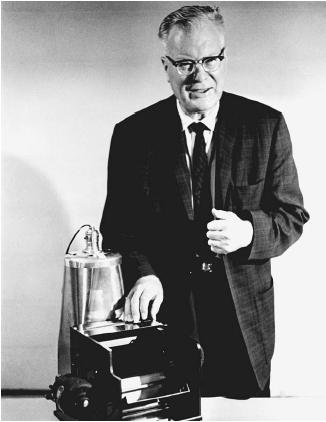
Chester Carlson (1906-68) invented xerography.  Eastman Kodak validated antitrust lawsuits against photocopier lessors (and others) that tie parts and service to the lease.

Eastman Kodak lives!  The Ninth Circuit today applied Eastman Kodak Co. v. Image Technical Services, Inc., 504 U.S. 41 (1992), to validate an antitrust complaint against a copier leasing company for hindering a competitor’s efforts to steal its customers.  Newcal Industries, Inc. v. IKON Office Solution, No. 05-16208 (9th Cir. Jan. 24, 2008).

The decision turned on whether Newcal Industries defined a proper "product market" under the Sherman Act.  Newcal alleged that IKON deceptively used contract extensions to prevent its lessees from taking their business elsewhere after their copier leases expired.  The "submarket" for supplying post-expiration replacement copiers and copier services, Newcal asserted, qualified as a relevant product market under Eastman Kodak, which upheld a product market consisting of competition for — ta da! — post-sale servicing of (Kodak) copying machines.

Contracts can’t define the product market.  IKON tried to distinguish Newcal’s complaint from the one in Eastman Kodak by citing two intervening court of appeals opinions — Queens City Pizza, Inc. v. Domino’s Pizza, Inc., 124 F.3d 430 (3d Cir. 1997), and Forsyth v. Humana, Inc., 114 F.3d 1467 (9th Cir. 1997).  The courts in Queens City and Forsyth both rejected product markets that existed only because the defendants (Domino’s and Humana) contractually required their customers (franchisees and health insurance policyholders) to buy goods (pizza ingredients) or services (acute hospital care) exclusively from them.  The courts believed that the packaging of benefits and burdens in the contractual relationships between the sellers and customers precluded treatment of the exclusivity requirements as establishing a relevant product market for antitrust purposes.

The Ninth Circuit found Newcal’s case "more like Eastman Kodak" than Queens City and Forsyth.  The panel said:

[T]he aftermarket here [for post-lease-expiration replacement copiers and copier services] is wholly derivative from and dependent on the primary market [for leasing new copiers].  The markets for pizza ingredients and paper cups would exist whether or not there was a market for pizza chain franchises, and the market for acute care hospitals would exist whether or not there was a market for health insurance.  But the market for durable micrographic equipment parts and services would not exist without the market for durable micrographic equipment, and the market for replacement copiers and lease-end services would not exist without the market for copier leases and copier services.

Newcal, slip op. at 982-83.  The crucial distinction appears to have consisted in the fact that IKON’s customers didn’t agree at the outset to buy a replacement copier or services from IKON after their leases expired.  The competition for that business thus could consitute a relevant product market.

What to do?  Newcal signals the continuing vitality of the Eastman Kodak doctrine and therefore the viability of antitrust claims against suppliers that strongarm customers into buying goods and services they could get cheaper from a competitor.

Two classes of people could bring such claims — (1) a businss that lost customers or sales as a result of the antitrust violation and (2) the violator’s customers, who overpaid because the violation hindered competition on price, quality, or other features.

Feedicon_4 Our feed enjoys contingent business law.  A lot.