Dissenting from the en banc Fifth Circuit’s refusal to require district courts to consider what we now call Batson challenges in jury selection, Judge Jerre S. Williams closed with this:

Ugly in its practice and insidious in its effects, invidious racial discrimination deserves no protection in any area of society, least of all in the administration of justice in the federal courts.

United States v. Leslie, 783 F.2d 541, 574 (5th Cir. 1986) (en banc) (Williams, J., dissenting). 

The Supreme Court granted certiorari, vacated the en banc decision, and remanded the case for further proceedings.  479 U.S. 1074 (1987).  The Fifth Circuit then returned the case to the district court and instructed it to conduct a Batson hearing.  United States v. Leslie, 813 F.2d 658 (5th Cir. 1987).

Blawgletter’s judge was right.  He so often was.

Barry Barnett

Feedicon_5 We miss Judge Williams.

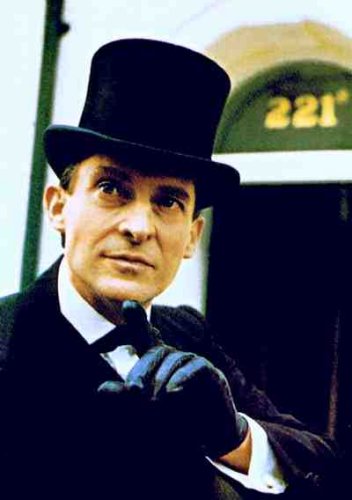
Sherlockholmes_2
Agency majority wants more detective work.

The Federal Communications Commission put off voting on a controversial finding in its annual report on competition in the cable industry, according to Bloomberg.

The finding would have triggered more regulatory authority, including the power to stop Comcast and Time Warner from bundling dozens of worthless channels that consumers don’t watch or want and charging out the wazoo for them.  FCC chairman Kevin Martin said he’ll get more data from cable companies and reschedule the vote for a few months from now.

Don’t expect Blawgletter to hold our breath.

The FCC staff will rewrite the annual report to delete the stuff about whether or not at least 70 percent of the more than 70 percent of people who have access to cable actually subscribe to it. 

We suspect that the 70/70 rule may serve as a proxy for proof that Big Cable controls half of all American subscribers.

Regardless of the 70/70 editing, we can hardly wait to see the final product.  It should include lots of juicy evidence on the growing might of Comcast and Time Warner anyway.  The truth will out!

Barry Barnett

Feedicon_4 Our feed likes Sherlock Holmes stories.

Have you ever wondered why your handbag costs so much?  How about your jogging suit?  Blue jeans?  Pillow?  Backpack?  Luggage?  UGG boots?

A new price-fixing lawsuit against the dominant makers of "apparel fasteners" — including zippers — may hold part of the answer. 

The case, Little Earth Productions, Inc. v. YKK Corp., No. 07-cv-04888-RBS (E.D. Pa.), accuses YKK, Prym, and Scovill of engaging in a "long-running worldwide conspiracy by Defendants and their co-conspirators to fix prices and allocate customers for fasteners and attaching machines." 

It follows the September 19, 2007, announcement by the European Commission’s antitrust enforcers that it imposed nearly $500 million in fines (€328.6 million) on the conspiring companies for their involvement in four separate cartels.  The first conspiracy started as far back as 1977, and the latest one didn’t end until 2003 at the earliest, according to the Commission’s press release.

The Little Earth complaint helpfully defines fasteners to include:

[S]nap fasteners, open prong fasteners, capped fasteners, hooks and eyes, rivets and burrs, post or prong rings, boot hooks, eyelets, tack buttons, sockets, backplates, studs, screw studs, posts, washers, grommets, caps, locking fasteners, and ‘notions" or small items of numerous kinds and types used for fastening material together in a wide variety of products int he garment, apparel, luggage, marine products and footwear industries.

Let us know if you’d like a pdf of the complaint.

Barry Barnett

Feedicon_3 Fastener remoulade, fastener gumbo, fastener kabobs, fastener soup, fastener salad . . . .

One of Blawgletter’s favorite legal journalists, Linda Greenhouse, writes today about the oral argument yesterday in LaRue v. DeWolff, Boberg & Assocs., Inc., No. 06-856 (U.S.).  For background, see "Reviving ERISA:  Justices Hear Argument in Key Pension Rights Case".

Ms. Greenhouse reports:

Several justices said it would not be easy to draw a distinction between individual and collective losses.  Justice Stephen G. Breyer offered a hypothetical example.  Suppose, he said, that a 401(k) plan consisted of 1,000 diamonds, and a corrupt trustee ran off to Martinique with half of them.  Why should it matter, Justice Breyer asked [defense lawyer Thomas P.] Gies, whether the diamonds came from one central safe deposit box or 500 individual ones labeled with participants’ names?

Ms. Greenhouse also notes that Justice Ruth Bader Ginsburg cast asparagus on a defense argument, stating that "it’s too late" for a 401(k) plan participant to get "equitable" relief once the fiduciary has lost or stolen the participant’s funds.

The WSJ likewise frets that a Court majority "seemed uncomfortable with barring employees from suing" and that justices who expressed concerns similar to Justice Breyer’s included not only Justice Ginsburg but also Justices David Souter, Antonin Scalia, and Samuel Alito.

You can read the transcript of the entire oral argument in LaRue here.  Hint:  For those anxious to get to the good stuff, the fun really starts on page 30.

We’ve scanned the transcript and count at least six votes for reversal of the Fourth Circuit’s pro-defense decision — Breyer, Ginsburg, Souter, Scalia, Alito, and Stevens.  The Chief Justice seemed, in our view, to pick nits, suggesting reluctance to hold for the employee/plant participant. 

Justice Clarence Thomas, per usual, made no comments and asked no questions.  Justice Anthony Kennedy also said nothing.

Paul Secunda at Workplace Prof Blog summarizes the whole argument and reaches the same conclusion we did:  that LaRue wins in a 6-3 vote.

Barry Barnett

Feedicon_2 Our feed loves this stuff.

Blawgletter serves as co-lead counsel in litigation against one of the two biggest cable service providers, Behrend v. Comcast Corp. (E.D. Pa.).  The lawsuit alleges that Comcast entered into swaps (trading subscribers in area A for ones in area B) and acquisition deals with competing providers.  The result?  Comcast and Time Warner now control half or more of all U.S. cable subscribers.  And they each have strangle-holds on subscribers within their "clusters" in different metropolitan areas with market shares approaching 100 percent.

What, you ask, does our antitrust case have to do with you just now?  At least two things.

In the first place, the swapping of subscribers and exits of competing cable providers have resulted in much higher prices, exclusive deals between the cable giants and programmers, and less consumer choice.  The NYT editors make the point nicely today:  "[T]he carriers and their packages of unwanted channels are obstacles to choice."  (Take that, Joe Nocera, NYT columnist and cable company apologist!)

In the second place, the Federal Communications Commission meets today to vote on whether to approve a cable competition study, which Congress requires the agency to produce each year.  The analysis concludes, for the first time, that cable systems reach at least 70 percent of U.S. households and that 70 percent or more of those households subscribe.  The 70/70 finding would trigger more regulatory authority by the FCC over the cable companies but would not require the agency to exercise it at all, much less in particular ways.

Comcast and TimeWarner have staged a furious assault on the leading supporter of the 70/70 determination, FCC chair Kevin Martin.  The WSJ as a result today calls the finding "in jeopardy" and "at risk".  The NYT reported yesterday that Mr. Martin, a Republican, has the support of one Democrat on the Commission but "is struggling" to get the other Democrat’s vote.  The Washington Post this morning sounds less gloomy.

The FCC planned to start the meeting today at 9:30 a.m. Eastern but just issued a notice postponing it until 11:00 a.m. Eastern — right about now.  We’ll let you know how it goes.

Barry Barnett

Feedicon Our feed has crossed its fingers.

The Ninth Circuit did something today that courts of appeal rarely do.  It held a district court clearly erred in its findings of fact following a bench trial.  Even more unusually, the court ordered entry of judgment in favor of the plaintiffsMiller v. Thane Int’l, Inc., No. 05-56043 (9th Cir. Nov. 26, 2007).

The case arose out of a corporate merger.  The deal provided that Reliant Interactive Media, a public company, would merge into Thane International, a private one.  Reliant shareholders thus would get  Thane stock in exchange for their Reliant shares. 

The Final Prosectus represented that Thane shares "have been approved for quotation and trading on the NASDAQ National Market" so long as the stock traded over-the-counter at $5 or more.  After the transaction closed, the stock traded above $8 per share.  But Thane management chose not to follow through with listing on NASDAQ, in part because industry-wide problems made it of doubtful value.  The price of the stock took a dive and stayed there.

The plaintiffs sued under section 12(a)(2) of the Securities Act of 1933 — a law far tougher than what the usual securities class action involves.  The statute provides "’virtually absolute liability’" for false statements, even innocent ones.  Miller, slip op. at 15141 (quoting In re Suprema Specialties, Inc. Securities Litig., 438 F.3d 256, 269 (3d Cir. 2006)).

The court rejected the finding that defendants didn’t misrepresent the listing of Thane shares on NASDAQ.  The Final Prospectus, while literally true, would mislead a reasonable investor into believing that the listing would happen automatically if, as happened, the stock sold for at least $5 in post-merger OTC trading.  The court also held the misrepresentation material, basically because rock beats scissors and NASDAQ is better than OTC.

The court remanded for consideration of the "loss causation" defense and for other proceedings consistent with the opinion.  Such as swallowing gall and wormwood.

Barry Barnett

Feedicon And yet paper covers rock.

The Supreme Court heard oral argument this morning in an important pension case under the Employee Retirement Income Security Act of 1974.  Apparently it went well for those who favor interpreting ERISA so that it actually provides a remedy for victims of pension plan fiduciaries’ misdeeds.

According to the report on Bloomberg.com, justices "signaled they will let participants in 401(k) retirement plans file lawsuits claiming their accounts were mishandled."

The case centers on whether victims of fiduciary breaches may sue breaching fiduciaries to recover losses to the plan itself and, through it, to individual pension account holders.  The employer and its supporters — including the U.S. Chamber of Commerce — argued that participants can bring a case for the plan if, but only if, every single participant sustained a loss to his or her individual account.  The argument suggests a standard that is practically impossible to satisfy, but the Fourth Circuit adopted it anyway.

The Bloomberg report says that "several justices questioned why the number of accounts affected should make any difference."  It quotes Justice David Souter as asking "why do we need more than one?"

Exactly.

Barry Barnett

Feedicon14x14 Our feed predicts a win for employees who need (and deserve) retirement income security.

The Dallas Morning News — Blawgletter’s home town newspaper — published an article about the Supreme Court of Texas on the front page of the Business section.  So?  The article suggests that the court may now have swung as far pro-big business defendant as it went pro-personal injury plaintiff in the 1980s and early 1990s.

The piece, by Eric Torbenson, doesn’t come right out and say that.  But "Critics:  Texas Supreme Court favors big business" does quote law professors and lawyers who have started noting — publicly — the high and growing percentage of the court’s decisions that favor civil defendants, especially large companies. 

That bidnesses have won between 82 and 87 percent of the time since 2005 (up from about 50-50 five years earlier) gets a mention of course but as something that critics complain about.  Ditto the fact that all the justices belong to the Republican party.

Non-critics defended the court, pointing out — rightly — that a simple win/loss tally, while suggestive, doesn’t tell you enough to assess the quality and fairness of the justices’ legal analysis.  We would also want to know things like:

  • What percentage of verdicts did the court overturn?
  • How often did the justices uphold class certification orders?
  • Did the court issue a lot of summary orders without hearing oral argument?
  • Did more than one or two of the justices receive the endorsement of the Texas Civil Justice League, which says it supports "pro-business" lawmakers but "qualified" judges?

We don’t know the actual answers but have the impression that the court tosses well over three-quarters of the verdicts it chooses to review, that the justices have never upheld class certification since the dawn of the 21st century, that the court summarily decides cases almost as often as it gives them full consideration, and that all nine of the sitting justices garnered the TCJL’s support.

Jury trials in Texas have dropped 55 percent since 1996, and Texas state courts have taken cases out of the hands of juries 81 percent more often than a decade ago.

When the News starts reporting on possible pro-business bias of any institution, our ears prick up.  Maybe others will take notice too.  We’re just sayin’.

Barry Barnett

Feedicon14x14

How will we know when we get exactly the right amount of civil litigation?

Several groups publish numbers on how much lawsuits cost Americans each year.  They also emphasize the millions that lawyers earn.  These yardsticks imply that we have too many legal actions.

Lawyer associations and consumer groups on the other hand tend to emphasize the unquantifiable value of justice and its essential role in American democracy and self-governance.

Who has it right?  Blawgletter says neither.  Let the jury decide.

Cases go to verdict so seldom any more that juries play just a tiny role in separating wheat from chaff, lawsuit-wise, and in establishing the line between arguable and frivolous.

The Vioxx cases illustrate the utility of trial by jury.  Drug maker Merck decided to try, rather than quickly settle, claims of heart damage and other injuries from taking the pain killer.  Merck won more verdicts than it lost, driving the potential cost of litigation way down and saving it many billions of dollars.

Those who doubt the effectiveness of the civil justice system do much worse than castigating rich contingent fee lawyers when they cast doubt on the intelligence, the fairness, the reliability of juries.  We think that, as in the Vioxx cases, more juror input makes sensible outcomes more likely rather than less.

Civil litigation has become nasty, brutish, and long.  Having trials will do much to reverse the trend — and maybe to reopen the court house doors to the natural supporters of civil justice, small businesses and the middle class.

Barry Barnett

Feedicon14x14_2

In his NYT Talking Business column today, Joe Nocera counts "the bundle of networks [that] cable delivers into your home" as "one of the blessings" of the cable industry.  Ha!

He writes that requiring cable giants like Comcast and Time Warner to let subscribers choose their channels "would be a consumer disaster."  Double ha!

His proof consists of the hypothesis that "a la carte will almost surely cost more than your current ‘exorbitant’ cable bill" because it would eliminate the "subsidizing" effect of bundling.  Obscure, niche, and — let’s face it — bad channels survive because the good ones in the bundle carry them.  Triple ha!

Blawgletter realizes that saying "ha!" over and over again doesn’t make much of a persuasive argument.  And yet we have a point, which will take us a few more paragraphs to lay out.

We ask first whether the cable colossi favor or oppose a la carte.  Answer:  They hate it with a passion.  That should tell you something.

Second, how do the behemoths of bundling benefit from same?  For starters, they use it to justify skyrocketing cable rates, which have risen far faster than inflation.  The more channels in the bundle, the lower charge per-channel — Comcastic!  If you get 200 channels of junk plus 20 that you may actually watch instead of only 100 junk channels, you pay less on average for each channel — wow!  And some regulators actually buy the argument.

Third, who cares if the price of ESPN quintuples — as Mr. Nocera posits it will — in an a la carte regime?  Will die-hard sports fans really suffer from having to choose between the droll repartee of ESPN’s celebrocasters and the possibility of falling in love with a cooking program while switching channels?

Fourth, why on earth does Mr. Nocera think that giving consumers more choice in the short term will in the longer term result in less?  He asserts that killing the bundling subsidy will wreak havoc on less popular or new channels, sending them to cable oblivion.  He asserts that but does nothing to substantiate it.  And we don’t believe a bit of it. 

For one thing, guess who does more and more programming these days?  Correct — the cable companies themselves.  And guess who decides whether to put the cable companies’ new programming into the bundle?  Right again.  The monopolists’ ability to discriminate in their own favor already constrains consumer choice.  A la carte would at least make the discrimination and its effects more visible.

Nor would a la carte spell the end of all bundling.  We see no reason why consumers couldn’t choose a bundle — or a combination of bundles — instead of selecting each and every channel they want.

Finally, we recall another monopoly that not so long ago bundled all its services under the sleepy eye of the Federal Communications Commission.  Ma Bell provided all Americans with a clunky, monochromatic, rotary-dial telephone; local service; directory assistance; and long-distance service, which (not coincidentally) subsidized local service in the name of universal service.  Now, of course, you can buy what you want from just about whichever company you like.  We pay the freight for encouraging universal telephone ownership in a fully transparent way.  Unbundling seems to work.

We suspect that Mr. Nocera’s aversion to a la carte results in part from the comforting notion that monopolists may act benevolently.  We admit the possibility but point out that Comcast and Time Warner know what Ma Bell did back in the day — that the power to limit output, including in the form of consumer choices, maximizes the monopolists’ profits at the expense of consumers. 

Who hates a la carte the most?  The ones whose ox it would gore.

Barry Barnett

Feedicon14x14 Yes, we do have a pending case against Comcast.