Hurricane Katrina did enormous damage — to homes, families, and lives; to commerce; and to political capital.  Probably worse, plenty of folks compounded the immediate injury by spreading or prolonging it.

An instance of such compounding occurred, according to a qui tam case against several insurance companies, when the insurers collaborated to file fraudulent proofs of loss with the federal government.  The emergency conditions that existed in the aftermath of Katrina "created a perverse incentive for WYO insurers [that provided both wind and flood coverage] to understate losses due to wind (which an insurer would be required to pay under the insured's homeowner's policy) and overstate losses due to flood, thereby shifting the loss from the WYO insurers to the federal government."  United States ex. rel. Branch Consultants v. Allstate Ins. Co., No. 07-31191, slip op. at 3 (5th Cir. Feb. 18, 2009).

Whistleblowers filed a qui tam case against more than a dozen insurers but suffered dismissal because another whistleblowing contingent filed a similar case first.  The Fifth Circuit reversed.  It held that the first-on-file case barred the later one only as to the same defendants and didn't eclipse analogous allegations against different defendants.

Blawgletter's partner Jonathan Bridges has a role in the Branch Consultants case and compliments the Fifth Circuit for its brilliant opinion.

Feed-icon-14x14 Our feed blows with the wind.

______________________________________

Bonus for looking down here:  Click on this link to find out what qui tam stands for.

StanfordRaid

You've likely read about the Securities and Exchange Commission actions against Stanford Group, including a fraud lawsuit in the Northern District of Texas, Dallas Division, and an FBI raid at Stanford's Houston headquarters.

You may not know, though, that the SEC sought and obtained an order that enjoins all creditors and other persons from commencing or continuing litigation involving the same subject matter and defendants "except in this court".

Feed-icon-14x14 Our feed hopes to see you in Big D. 

Dow Jones reports today:

Two days after authorities in Brazil raided Whirlpool Corp.'s (WHR) offices there, the U.S. Department of Justice confirmed Thursday that it is investigating possible antitrust violations in the multibillion-dollar refrigeration compressor industry, in conjunction with international authorities.

The story also discloses that Whirlpool and a competitor, Tecumseh Products, received grand jury subpoenas and that Tecumseh "said authorities appear to be focusing on pricing issues."

In a press release earlier today, Whirlpool announced:

On February 17, 2009, Whirlpool Corporation (NYSE: WHR) received a grand jury subpoena from the U.S. Department of Justice requesting documents relating to an antitrust investigation of the global compressor industry. Whirlpool Corporation subsidiaries in Brazil and Italy were visited on the same day by competition authorities seeking similar information.

Whirlpool Corporation has a strong corporate code of conduct, which requires full compliance with all applicable antitrust and competition laws. It will cooperate fully with the investigations. To the Company's knowledge, there have been no charges filed against the company or any of its employees. As the European Commission has noted, "The fact that the Commission carries out such inspections does not mean that the companies are guilty of anti-competitive behaviour; nor does it prejudge the outcome of the investigation itself."

Tecumseh Products said yesterday:

Tecumseh Products Company , a leading global manufacturer of compressors and related products, today announced that the Company is in receipt of a subpoena from the United States Department of Justice Antitrust Division and a formal request for information from the Secretariat of Economic Law of the Ministry of Justice of Brazil related to investigations by these authorities into the compressor industry. In addition, the Company has learned that the European Commission has also begun an investigation of the industry. These requests appear related to a pricing issue, and the Company intends to comply with them.

The Company said it does not expect the investigations to impact in any material respect its ongoing operations or ability to compete in the markets it serves.

Update:  Our newest favorite Australian trade publication, Hydraulics & Pneumatics, reports that Danish company Danfoss also "has had surprise visits by authorities at its offices in Nordborg, Denmark and Flensburg, Germany as well as at several facilities in US."

Feed-icon-14x14 Our feed compresses time.

Salmonella 
Salmonella bacteria live in animals' intestinal tracts.  The WSJ says kill the bug with public disapprobation — not prevention.

In February 1906 — 103 years ago — the muckraking writer and Socialist politician, Upton Sinclair, Jr., published The Jungle.  He dedicated the novel "TO THE WORKINGMEN OF AMERICA".  For you see he penned the book to educate Americans on "the inferno of exploitation" that plagued factory laborers (usually poor immigrants) at the turn of the 20th century.  He chose the meatpacking industry as the villainous user and abuser and the Chicago Stockyards as the central setting.

But his shot misfired.  "I aimed at the public's heart," he said, "and by accident I hit it in the stomach."  He meant that the Sturm und Drang of his characters should have upset Americans about labor conditions but that the muckraking masterwork horrified people about the stuff that goes into meat products.

Consider this passage from Chapter 9 of The Jungle:

It seemed that they must have agencies all over the country, to hunt out old and crippled and diseased cattle to be canned.  There were cattle which had been fed on "whiskey-malt," the refuse of the breweries, and had become what the men called "steerly" — which means covered with boils.  It was a nasty job killing these, for when you plunged your knife into them they would burst and splash foul-smelling stuff into your face; and when a man's sleeves wer smeared with blood, and his hands steeped in it, how was he ever to wipe his face, or to clear his eyes so that he could see?  It was stuff such as this that made the "embalmed beef" that had killed several times as many United States soldiers as all the bullets of the Spaniards; only the army beef, besides, was not fresh canned, it was old stuff that had been lying for years in the cellars.

The attention that The Jungle brought to the unsanitary, noisome, and disgusting conditions led to passage of Meat Inspection Act and the Pure Food and Drug Act of 1906.

The Peanut Corporation of America has burst into the public's imagination as the latest analogue to the vile meatpackers of The Jungle.  Its Blakely, Georgia, goober processing plant has so far killed nine people and sickened 637 more in 44 states.  The PCA facility shipped peanuts and peanut products that teemed with salmonella bacteria, which causes salmonellosis, typhoid fever, and paratyphoid fever in humans.  PCA also ran a peanut factory in Plainview, Texas, for four years without a state license.

Blawgletter intuited a connection between Chicago slaughterouses and peanut rendering plants when we spotted an editorial on February 18 in The Wall Street Journal.  The item, "Peanut Butter Justice", ends with a panagyric to the all-wise and self-correcting market.  It says:

The best food-safety enforcement tool is the one now being wielded against PCA and Mr. Parnell in the form of corporate self-destruction.  Their fate should be chastening to any company inclined to play fast and loose — and will do more to enforce food safety standards than any army of inspectors.

Hmm.  The solution to death-dealing, disease-spreading behavior consists in . . . self-regulation plus public humiliation and financial ruin when it fails? 

Leaving to one side the editors' elision of the key role of regulators and Congress in making PCA pay a price and the unbelievable asinity of PCA's response to the public health crisis it caused, how do the editors explain the fact that PCA weathered similar charges at least twice before?  And do they believe "food-safety enforcement" should depend on whether the guilty party fails to keep its misdeeds out of the newspapers?

Update:  Someone — whose name I won't mention — points out that the WSJ editorial didn't denounce regulation.  Indeed:

It simply argued that the company's bankruptcy, plus pending civil lawsuits (one would think you'd be cheered to see the WSJ in favor of consumer class actions for once!) and criminal charges sent a more salutary message, and would create a better enforcement/regulatory environment under continued FDA supervision (whose obvious failure the article mentions but you do not) than the new, hyperactive super-enforcement regime that Rep. DeLauro reportedly champions.

FeedIcon Our feed appreciates rhetorical questions.

An expert analysis of the loss causation element of a federal securities fraud claim must link the purchasers' loss with the fraud.  The expert must match the lie with an inflation in price (when the purchaser bought the security) and tie disclosure of the truth to a loss-producing drop (when the purchaser sold or as of the time of trial if he didn't unload the shares).  And he mustn't fail to account for other likely causes of ups and downs in the security's price.

The Tenth Circuit grappled with an expert's report on loss causation today and found the analysis wanting.  In re Williams Securities Litig. — WCG Subclass, No. 07-5119 (10th Cir. Feb. 18, 2009).

[Blawgletter's firm arrived late to the case but got into it in time to see it go the way of the dinosaurs.  Kismet?]

Feed-icon-14x14 Kiss something, anyway.

Bloomberg reports that Swiss bank USB AG will pony up $780 million "to avoid U.S. prosecution and settle regulatory claims that it helped thousands of wealthy Americans use Swiss bank accounts to evade taxes."

A Blawgletter sister publication, Barnett's Notes on Commercial Litigation, noted last year that Congress upped the contingent fee available for squealing on tax cheats:

Tom Herman, in his WSJ Tax Report column, noted recently that the Internal Revenue Service has "issued guidance" on whistleblower claims under a 2006 law.  The statute doubles the rewards available to individuals who squeal on tax cheats.

You can see the IRS's announcement here.  It includes links to Notice 2008-04, which describes relevant procedures, and Form 211, the "Application for Award for Original Information".

The new program allows bounties of between 15 and 30 percent of the extra that the IRS collects.  The old regime limited payments to 15 percent or less.

Qui tam cases under the False Claims Act require a claimant to file a lawsuit under seal.  The IRS program, by contrast, involves filing papers with the Whistleblower Office — a process that, at first blush, looks simpler and easier for the whistleblower but that now promises the same potential award levels. 

The release helpfully ends with the note that "[a]wards will be subject to normal tax reporting and withholding requirements."

Let's see . . . 30 percent of $780 million equals how much?

The Tenth Circuit today affirmed dismissal of an antitrust complaint that challenged a "destination" ski resort's sudden decision to start enforcing a restrictive covenant.  The covenant entitled the resort to bar land buyers from engaging in commerce at the resort. 

The Deer Valley resort — amidst the Wasatch Mountains in the Beehive State — sold patches of land in 1990 or so.  Christy and Cole Sports operated ski rental facilities on their patches.  But in 2005 the resort invoked its rights under the restrictive covenant and directed Christy and Cole Sports to cease and desist the rental operations.  The resort, you see, wanted to open its own ski kiosk in the same area and didn't want the competition.

The district court dismissed the case, and a unanimous panel of the Tenth Circuit okayed the order.  Christy Sports, LLC v. Deer Valley Resort Co., Ltd., No. 07-4198 (10th Cir. Feb. 18, 2009).  The part of the opinion Blawgletter sorta understands has to do with defining the relevant antitrust market.  The court held that the relevant market consists not of people who want to rent skis but of people who desire to go to a destination ski resort.  Disney World doesn't have to allow outside vendors to sell ice cream in the Magic Kingdom; Madison Square Garden needn't permit hot dog peddlers from 42nd Street hawk buns and weenies inside the arena; and a destination ski resort don't gotta suffer competition from interloping equipment rental firms.

Now for the baffling part, which seemingly addresses (and rejects) the plaintiffs-appellants' argument that they didn't have to prove a relevant market anyways:

Although Christy insists that it has shown anticompetitive effects by its allegations of a decline in quantity and increase in price of rental skis at the mid-mountain village, this is just a repackaging of the argument rejected above.  A resort operator's ability to reserve to itself the operation of ancillary businesses within the resort is not dependent on the quantity of output being as high or the price being as low as they would be if there were competition from third parties within the resort.  It depends, instead, on either the proposition that a market that involves only one component of an interrelated package of services is not a relevant market for purposes of the Sherman Act or that it is not anticompetitive conduct for a resort owner to refuse to invite competitors to supply ancillary services within its resort.  The fact (even if it is a fact, as the complaint alleges) that fewer skis will be available for rental and that prices for rental skis will be higher, does not refute either of these legal propositions.

Christy Sports, slip op. at 21-22.

We suppose Their Honors meant that Christy Sports and Cole Sports did, in fact, have to allege and establish the relevant market.  But, on our life, we can't decipher the court's explanation of why.  "A resort operator's ability to" stop competition in ski rentals "depends" either on "the proposition that a market that involves only one component of an interrelated package of services is not a relevant market . . . or [on the proposition] that it is not anticompetitive conduct for a resort owner" to stop competition in ski rentals. 

By which we imagine the court intends that a ski resort operator can stop ski rental competition if (a) competition for ski rentals doesn't define the relevant market or (b) stopping ski rental competition doesn't count as anticompetitive conduct.

It seems tautological to us.

Feed-icon-14x14 Perhaps if our feed skiied?

Blawgletter scanned a Fourth Circuit decision last week.  It looked dull. 

Something to do with a bankruptcy trustee's power to undo pre-bankruptcy transfers from a debtor.  Yowza!

But on second viewing, a wondrous thing twinkled from the electronic page – yet another way Congress aided and abetted the financially poison credit default swaps industry.

[Recall here that CDSs may have caused the financial meltdown that started in earnest last September.]

Federal bankruptcy law cuts a big swath of the U.S. Code.  It even owns its own title — lucky 11.  And does it go on for miles.  Section 101 alone hews more than 55 separate definitions into our legal firmament.

Which may explain why you didn't realize four years ago that Congress vastly expanded protections for a "swap agreement", which appears to include CDSs.  See 11 U.S.C. 101(53B).  The amendatory statute, you'll recall, bears the fetching — and inaccurate – name of Bankruptcy Abuse Prevention and Consumer Protection Act of 2005.

The legislative expansion broadened the definition of "swap agreement" to just about any type of derivative instrument.  The new scope in turn exempted lots more swap agreements from the bankruptcy "automatic stay", which generally stops creditors from enforcing obligations of the bankrupt entity, and prohibited actions under the Bankruptcy Code to set aside preferences and constructively fraudulent transfers involving a much wider variety of swap transactions.

The Fourth Circuit case arose from supply contracts that National Gas Distributors signed with several gas purchasers, including chemical giant E.I. du Pont, during the year before NDG filed for bankruptcy protection.  Apparently the contracts locked in the prices NGD could charge for future deliveries of gas — which price commitment proved a bad bet when spot gas prices rose.  The bankruptcy court concluded that the contracts didn't fit within the new "swap agreement" definition and that therefore NGD's trustee could pursue claims to avoid them. 

The Fourth Circuit praised the bankruptcy judge's paper (he made a "staunch effort") but gave him a failing grade anyway.  Congress didn't mean to pinch the scope of "swap agreement" to cover only instruments that trade on active markets and that don't result in physical delivery of a commodity.  No.  It purposed to "protect[] financial markets from the instability that bankruptcy might cause" if swap agreements didn't get special favors.  In re National Gas Distributors LLC (Hutson v. E.I. du Pont de Nemours & Co., Inc.), No. 07-2105 (4th Cir. Feb. 11, 2009).

We don't rightly know how granting even more preferences to complex financial instruments like CDSs could avoid "instability" in financial markets.  As best we can tell, the deregulation of CDS transactions in 2000 contributed mightily to the deep turmoil the markets now find themselves in.

Perhaps the law of getting consequences you don't intend applies?

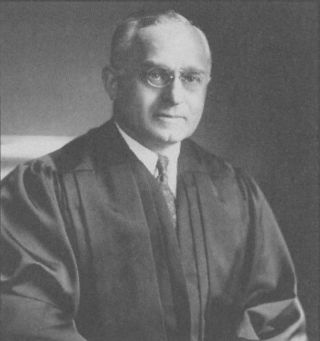
FelixFrankfurter

Felix Frankfurter (1882-1965) joined the Supreme Court directly from the Harvard Law School faculty, serving from 1939 to 1962.

The correlation between prior judicial experience and fitness for the functions of the Supreme Court is zero.

Adam Liptak, Sidebar:  Roberts Sets Off Debate on Judicial Experience, Feb. 16, 2009, The New York Times (quoting Frankfurter's "blunt assessment" in 1957 of trend towards appointing lower federal court judges to Supreme Court).

FeedIcon Happy President's Day!