Bell
For whom American Pipe tolls?

The pendency of a putative class action stops the clock on statutes of limitations for the benefit of putative members of the putative class — at least until a court negatives the putative.  So the Court held in American Pipe & Construction Co. v. Utah, 414 U.S. 538 (1974).  So people who fit the class definition can wait to sue until a court either refuses to certify a class or decertifies it.  But what about the situation where a class member jumps the gun by filing an individual case — which class action lawyers often call an "opt-out" because the person opts not to stay in the class — before the ruling on class certification but after the limitations period has expired?

The Tenth Circuit today joined the Second and Ninth Circuits in holding that the gun-jumper does get the benefit of American Pipe tolling.  State Farm Mutual Auto. Ins. Co. v. Boellstorff, No. 07-1241 (10th Cir. Sept. 12, 2008).

Contrast that with the Fifth Circuit’s decision earlier this week that a federal class action likely doesn’t toll limitations for class members who file individual cases in Texas state courts.

Feedicon14x14 It tolls for thee.

Autozone
Yeah — but which zone?

Okay.  Say you want to get a lube job for your automobile.  You don’t know where to go for service because, frankly, you don’t take all that good of care of the vehicle.  Plus you’re a cheapskate.  But the vibration and rattle you’ve begun to experience worries you.  And you’d prefer not to veer suddenly into oncoming traffic if these symptoms in fact signify a Serious Problem.

So, as you drive down the boulevard in suburban Chicago, you spot a sign that says "Oil Zone".  Whether you’ve done business with automotive parts-dispenser AutoZone or not, might you think that an association between Oil Zone and AutoZone exists?  Might the "Oil Zone" sign confuse you such that you associate with Oil Zone the goodwill that the fine people at AutoZone have built up through local and national advertising?

The Seventh Circuit answered yes for you today.  It held that the evidence raised a fact question as to the "likelihood of confusion" element of a trademark infringement claim.  (Mr. Strick probably didn’t help himself by also using "Wash Zone" and denying that he’d ever heard of AutoZone.)  It thus reversed a summary judgment against AutoZone in its lawsuit for transgression of its "AutoZone" trademark. AutoZone, Inc. v. Strick, No. 07-2136 (7th Cir. Sept. 11, 2008).

Rsslogo_3 Our feed thinks you really should get someone to check out that rattle.

Kerrmcgeeplatform
A Kerr-McGee platform in the Gulf of Mexico.  Hurricane Ike should reach it any day now.

The Tenth Circuit held today that "the transfer of information between a federal employee and a state government auditor who is under a duty of confidentiality is not a public disclosure and therefore does not deprive the courts of jurisdiction" under the False Claims Act.  United States ex rel. Maxwell v. Kerr-McGee Oil & Gas Corp., No. 07-1193, slip op. at 2 (10th Cir. Sept. 10, 2008).  (The FCA authorizes qui tam suits to recover damages and other relief on behalf of the federal government in return for a cut of the proceeds.)  The court accordingly reversed the post-verdict dismissal of the case and remanded for further proceedings — presumably to decide whether to enter final judgment on the jury’s $7.5 million award.

Bobby Maxwell, the qui tam relator, worked as a senior government auditor for the Minerals Management Service, a part of the U.S. Department of the Interior.  He discovered in the course of his work that Kerr-McGee (now Anadarko Petroleum), as lessee of offshore oil and gas properties, short-paid on its royalty obligations to the lessor — the federal government.  Never mind how that happened (okay, Kerr-McGee paid the royalty percentage on $X – $ Y when it should have paid it on $X — with the Y representing fees K-M forked over to the buyer).

After trial, in which Mr. Maxwell scored $7,555,886.28 for the feds, the district court reconsidered whether it had jurisdiction.  Why?  Because the FCA prohibits jurisdiction over claims "based upon the public disclosure of allegations or transactions in a . . . Government Accounting Office report, hearing, audit, or investigation . . . ."  31 U.S.C. 3730(e)(4).  And because someone else in the Minerals Management Service told an auditor for the State of Louisiana about the suspicion that K-M underpaid.  The court held that the email to the Pelican State auditor occurred in confidence and therefore didn’t count as a "public disclosure".

podcast-rss-logo.jpg
Our feed hopes you like our new RSS logo.  Which we’ll never use again.  Perhaps.

Enronlogo
Indeed.

Who says persistence doesn’t pay off?

Ask the 1,200 or so Enron investors who two days ago won reprieve from a death sentence on their claims for fraud.  Going on seven years after they tried to sue, the Fifth Circuit allowed them to try again in state court.  Newby v. Enron Corp., No. 07-20043 (5th Cir. Sept. 9, 2008).

The decision turned on whether Texas state law stops the running of limitations periods under several tolling doctrines.  The district court rejected all of the clock-stopping theories, but the Fifth Circuit held that the state courts ought to say whether one of them saved the fraud claims, to which a four-year statute of limitations applies.

The first of the pair concerned the effect of the plaintiffs’ filing of a motion in the district court, fewer than 20 days before expiration of the four-year period, for leave to bring state court cases (the court previously having enjoined plaintiffs from suing without its permission).  The district court held the motion untimely because, under the court’s local rules, it couldn’t (or at least normally wouldn’t) grant leave until 20 days after the filing.  The Fifth Circuit concluded that the state courts probably wouldn’t agree with that analysis and so directed the district court to grant the motion for leave as to the fraud claims.

The court also discussed a second doctrine in which the filing of a putative class action suspends the running of limitations.  Under American Pipe & Construction v. Utah, 414 U.S. 538 (1974), and progeny, members of the inchoate class may wait to file individual lawsuits without risking the bar of limitations.  The Fifth Circuit doubted that Texas law recognizes American Pipe tolling in favor of people who opt out of a federal class action.  But it said that "the Financal Institutions are free to pursue this argument with the Texas courts, so the state courts can clarify the reach of Texas’s tolling rules."  Newby, slip op. at 12.

Blawgletter confesses to confusion over the court’s statement that the "Financial Institutions" — the defendants — could raise American Pipe with the Texas courts.  Why would they want to?  They already won on that point!  And presumably the court believed that, because of its affirmance as to claims involving two and three year limitations periods, the plaintiffs can’t reargue to a state court that American Pipe saves those claims, too.  So we don’t understand the court’s invitation to state courts to "clarify the reach of Texas’s tolling rules."

The court could’ve, of course, certified the American Pipe question to the Supreme Court of Texas.  We hope it does.

Feedicon Hope abides.

Vioxx

The sometimes icy litigation stream that finds it headwaters in the pain-killer Vioxx loosed a freshet today, when the Third Circuit vacated dismissal of a securities fraud complaint against the nonsteroidal anti-inflammatory’s maker, Merck & Co.  The 2-1 majority held that public disclosures and speculations didn’t put investors on "storm warnings" notice of an association between taking Vioxx and having a heart attack and, therefore, of the possibility that the market price of Merck stock overstated its true value.  The district court thus erred in liquidating the case as untimely under the two year statute of limitations. In re Merck & Co., Inc. Securities, Derivative & ERISA Litig., No. 07-2431 (3d Cir. Sept. 9, 2008).

Feedicon Asprin, please.

Trtrustbusting
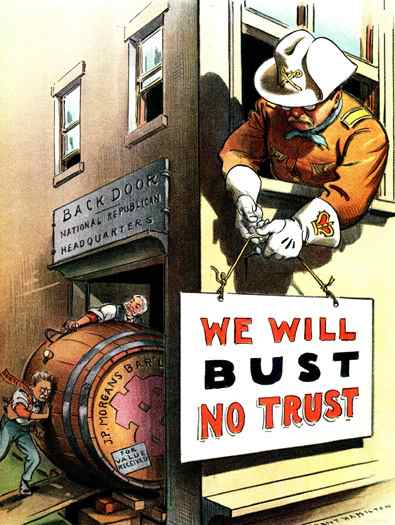
The struggle over antitrust policy goes ever on.

A majority of the Federal Trade Commission Commissioners today disagreed with a report by the Department of Justice on misbehavior by firms in their acquisition and wielding of monopoly power.  The FTC and its Competition Bureau share responsibility for enforcement of federal antitrust law with the DOJ’s Antitrust Division.

According to the Commissioners’ statement, the recommendations in Competition and Monopoly:  Single-Firm Conduct Under Section 2 of the Sherman Act furnish "a blueprint for radically weakened enforcement of Section 2 of the Sherman Act."

Blawgletter hasn’t studied the report (in all its 215-page glory) and so can’t comment on who has the better side of the argument.  But our eye did wander to an eight-page appendix listing the testifiers and opiners who contributed to the effort.  We counted a Great Many government lawyers, Quite a Few academics, a Dozen or So private-practice economists, a Slew of defense firm lawyers, plus a Big Gob of corporate general counsel folks (including that paragon of antitrust enforcement, Intel). 

We saw one lawyer who tends to represent plaintiffs in antitrust lawsuits.  One.  Not to mention zero consumer advocate types.

Feedicon14x14_2 Our feed is just saying.

Peter S. Vogel has launched Vogel IT Law Blog.  Peter serves as Chair of the Electronic Discovery Team and co-Chair of the Technology Industry Team at Gardere Wynne Sewell LLP.  Today he writes about the weirdness of the Jerry Seinfeld-Bill Gates commercial that features the pair fitting Bill with The Conquistador at Shoe Circus! in a mall and munching churros.

Peter also produced a WatchIT video on e-discovery.  You may need to subscribe to watch it.

Blawgletter says check it out.

Feedicon14x14 Happy Monday!

Abrahamlincoln
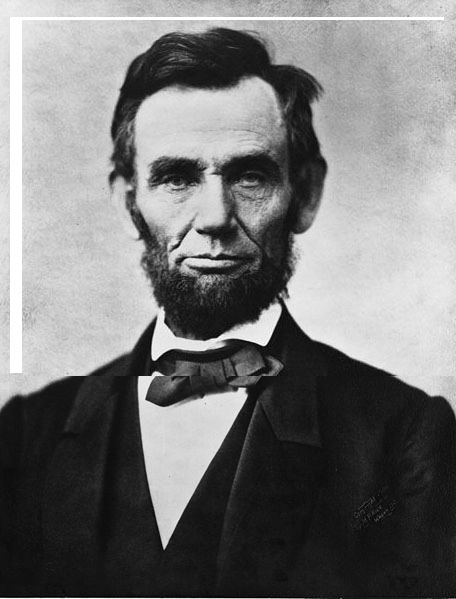
The first Republican president.

Extemporaneous speaking should be practiced and cultivated.  It is the lawyer’s avenue to the public.  However able and faithful he may be in other respects, people are slow to bring him business if he cannot make a speech.  And yet there is not a more fatal error to young lawyers than relying too much on speech-making.  If any one, upon his rare powers of speaking, shall claim an exemption from the drudgery of the law, his case is a failure in advance.

[Hat tip to Patrick A. Malone, who wrote the (excellent!) "Lessons for Trial Lawyers from Lincoln’s Second Inaugural Address" in the summer issue of Litigation.]

Feedicon14x14 The "malice toward none" one.

Mockturtle
Mock trials don’t usually involve mock turtles.

Blawgletter just returned from two days of mock trying an antitrust class action.  So we thought we’d share a few thoughts about the experience:

  1. Fear of embarrassing yourself in front of strangers does a nice job of motivating you to dig into the details of your case.
  2. You learn a lot more about your case if you take your side in one mock trial and the other side’s side in another.
  3. Mock juries reliably identify the one or two facts on which your case pivots.
  4. Mock juries also do a good job of sizing up witnesses they see on video.
  5. They generally don’t give sound predictions of damage awards.
  6. Jurors say nice things about presenting lawyers whose side they agree with and unpleasant things about those on the side they dislike.
  7. Pay little attention to individual jurors’ comments about their thinking, including about specific types or pieces of evidence.  The process isn’t purely logical and intellectual; it’s also emotional, irrational, and collective.
  8. Don’t let the results go to your head.  Don’t start eating your own dog food, believing your own bs, or smoking your own hemp. 
  9. Finally, beware the hormonal stirring you feel from the simulation of courtroom battle.  Think with that wrinkly organ in your noggin’, not your glands.

Feedicon14x14 We won, by the way.

Bigboy
The Hon. Richard Posner had a different Big Boy in mind.

A Seventh Circuit panel split today on the question of whether a "no reliance" — or "big boy" — clause defeated a claim alleging fraud in connection with negotiation of a release. 

The majority focused on contract language in which the parties represented that they "are relying on their own judgment, belief and knowledge and the counsel of their attorneys" and that they "are not relying on representations or statements made by the other party or any person representing them except for the representations and warranties expressed in this Release."  But the words themselves didn’t remove the question of fraud from the jury.  No.  The language plus the fact that the putative fraud victim (a large South American company with skads of Brazilian and New York abogados) "is a big boy [that] acted through counsel" did.  Extra Equipamentos e Exportacao Ltda. v. Case Corp., No. 06-4389 (7th Cir. Sept. 3, 2008) (applying Illinois law).

[Hat tip to Blawgletterati Edward Wiest for catching that the link to the opinion didn’t work — until now!]

Feedicon14x14 Thank you, Judge Posner.