Unnecessarynoise
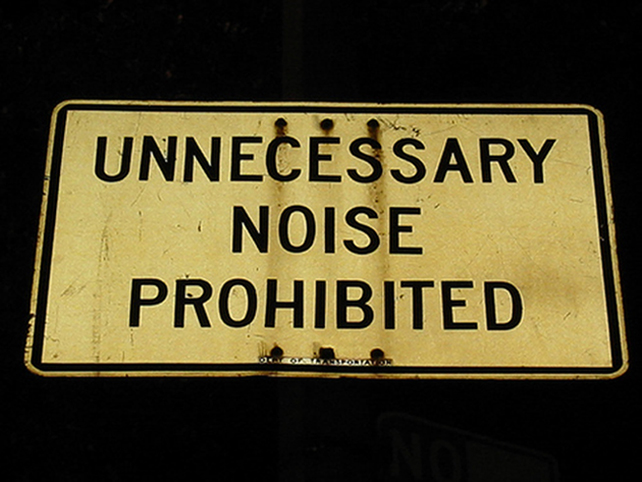
The sign owner dislikes needless racket.  Nature abhors a vacuum.  The law hates superfluity.

The Federal Circuit today held that a patentholder didn’t release future patent infringement claims despite release language that . . . released future patent infringement claims.  The saving grace?  That the parties’ lawyers, while drafting a settlement agreement that resolved patent litigation in New Jersey and another one relating to a patent case in Massachusetts, forgot to conform the two instruments so that both limited releases to claims that "were or could have been asserted" in the pending lawsuits. 

Actually, that grace didn’t quite save the patentholder.  The "were or could have been asserted", the court noted, seems to cover any claim that existed at the time of the settlements — a group that included the patent infringement claim at issue in the case before the court.  So the court looked to extrinsic evidence to determine the parties’ intent and concluded that they meant the releases (a) to say the same thing and (b) to cover only the then-pending New Jersey and Massachusetts claims.  Howmedica Osteonics Corp. v. Wright Medical Technology, Inc., No. 07-1363 (Fed. Cir. Sept. 2, 2008).

Blawgletter wonders at the court’s stretch.  We could go along with the confusion about two simultaneous settlement agreements between the same parties — although we don’t feel as much sympathy for the lawyers who didn’t double-check the final versions before letting their clients sign them.  But we marvel at the court’s treatment of the limitation of the releases to claims that "were or could have been asserted" in the pending cases.  It doesn’t seem ambiguous to us.  Nor does it, to us, imply a further restriction to the claims already before the New Jersey and Massachusetts courts.  That construction renders the words, er, superfluous.

Feedicon14x14_3 And we all know what that should mean.

Cigarettes
Did this man pay the City of New York tobacco tax?

A 2-1 panel of the Second Circuit today reversed dismissal of claims arising from Internet merchants’ allegedly fraudulent failure to report sales of cigarettes to customers within the City of New York.  The allegedly deceptive conduct deprived the city of tax money — dollars that the municipality would have collected had the merchants disclosed the sales to the State of New York, which in turn would’ve collected city taxes from the merchants. 

The district court dismissed the Big Apple’s claims on various grounds, including that the alleged scam affected the city too remotely to allow compensation under the Racketeer Influenced and Corrupt Organizations Act.  The majority reversed dismissal of the RICO claims, upheld the tossing of common law fraud claims, and certified to the New York Court of Appeals legal questions on standing to pursue state law statutory and public nuisance claims.  City of New York v. Smokes-Spirits, Inc., No. 06-1665-cv (2d Cir. Sept. 2, 2008).

Feedicon14x14 Can you say rehearing en banc?

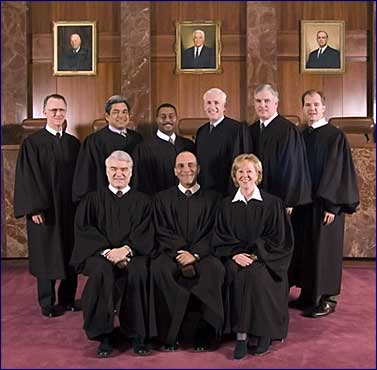
Texassupremecourt
Membership on the Supreme Court of Texas has stabilized since mid-2005.

Wow.  The High Nine in Austin opened the decisional floodgates today.  Lookie here for the August 29 Weekly Orders.

Three of the 22 opinions involved Blawgletter’s law firm.  Our dear clients prevailed in all three:

  • In re Poly-Am., L.P., No. 04-1049 — Unconscionable limit on statutory remedies, where severable from remainder of arbitration clause, doesn’t prevent order compelling arbitration; arbitrator should rule on enforceability of fee-splitting, discovery-restricting, and other provisions.
  • Forest Oil Corp. v. McAllen, No. 06-0178 — Disclaimer in settlement agreement of reliance “upon any statement or any representation of any agent of the parties” defeated challenge to arbitration clause.
  • Zurich Am. Ins. Co. v. Nokia, Inc., No. 06-1030 — Commercial general liability policy covering claims for "bodily injury" required insurers to defend Nokia against lawsuits alleging brain damage from exposure to signals emanating from cellular telephone handsets.

Other noteworthy features of the end-of-August deluge include:

  • Two of the cases pended in the court since 2004, four since 2005, and five since 2006.
  • The decision in the oldest case, Columbia Medical Center of Las Colinas, Inc. v. Hogue, No. 04-5075 (Tex. Aug. 29, 2008), comes three years and four months after the court heard oral argument (on April 12, 2005).
  • In another oldish case, involving loss of natural gas through drainage, the court discusses the elements of trespass quare clausum fregit, the law of capture, and error in admitting an irrelevant memo that referred to the plaintiffs’ ancestors as "mostly illiterate Mexicans".  Coastal Oil & Gas Corp. v. Garza Energy Trust, No. 05-0466 (Tex. Aug. 29, 2008).

Feedicon14x14 A happy Friday to you and you and you.

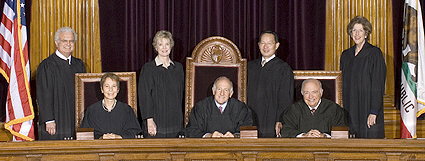
Californiasupremecourt

The Supreme Court of California — the most influential state high court in our nation — held this week (1) that, contrary to the U.S. Supreme Court’s ruling under the federal Arbitration Act, parties may contract for a searching review of arbitration awards under the California Arbitration Act and (2) that the CAA requires courts, instead of arbitrators, to decide whether a dispute may proceed as a class arbitration. Cable Connection, Inc. v. DIRECTV, Inc., No. S147767 (Cal. Aug. 25, 2008) (rejecting Hall Street Assocs., LLC v. Mattell, Inc., 128 S. Ct. 1396 (2008)).

The ruling follows a long string of the Court’s decisions limiting the ability of corporations to impose arbitration on consumers.

Applying a combination of federal enactments arising from abolition of the gold standard during the Great Depression and current Ohio contract law, the Sixth Circuit today reversed a decision that struck down a lease clause requiring payment of rent "in gold coin of the United States of the present standard of weight and fineness."  Such gold clauses, the court noted, served as a hedge against inflation — especially, as in this case, the contract (a 1912 lease for downtown Cleveland property) provided for no escalation in (rent) payments above $35,000 per annum. 

The court recognized that a 1933 Act of Congress barred enforcement of gold clauses (and made ownership of the precious metal illegal) but also that a 1977 enactment revived enforceability for obligations that "issued" after the effective date.  Because predecessors to the current lessor and lessee entered into a "novation" of the original lease but adopted the original terms of it (including of course the gold clause), the court concluded, the lease entitled the landlord to demand and receive the 2008 equivalent of $35,000 in 1912 gold coin.  216 Jamaica Avenue, LLC v. S&R Playhouse Realty Co., No. 07-3967 (6th Cir. Aug. 27, 2008).

The court ended its discussion of the merits — which analysis Blawgetter found quite interesting — with an observation on the equities.  On the one hand, Their Honors said (per Judge Sutton), the landlord wanted many times the $35,000 that the previous owner collected for many decades, but on the other hand the tenant desired to pay but a small fraction of the leasehold’s present value.  "As a matter of sheer economics," the court wryly noted, "it is hard to say which party has the sharper elbows."  Id. slip op. at 7.

Feedicon_3 For avoidance of doubt, our feed supports sharp golden elbows.

Today Blawgletter again has the Great Honor of presenting Thoughtful Comments by an Eminent Lawyer on a Topic of High Interest.  Ron Woessner — Senior Vice President and General Counsel of Zix Corporation — writes about what he sees as the incongruity between the American Bar Association’s approval of entrusting confidential communications to regular email as a matter of professional ethics and the legal, reputational, and other risks of that practice.  Here you have his thoughts in their entirety:

Ediscovery
Zeroes and ones again — more joy!

On May 6, 2008, I guest-posted on Blawgletter a discussion of the 1999 opinion of the ABA’s Ethics and Professional Responsibility Committee.  The opinion holds that an attorney may transmit confidential client information over the Internet via unencrypted email without violating the rules of professional responsibility.  The basis for the ABA’s decision was that unencrypted email has a reasonable expectation ofp rivacy from a technological and legal standpoint — similar to the expectation of privacy for mail, phone, and facsimile communications.

The previous post asserts that the basis for the ABA opinion is no longer valid, given what we know today about the inherent privacy and security vulnerabilities of unencrypted email.  Recent hacker attacks and legal developments further undermine the ABA Committee’s rationale and underscore that unencrypted email messages are potentially as vulnerable as a postcard to a third party’s prying eyes.

In July 2008, a description was published on the web of a technical flaw in domain name servers (DNSs) — the Internet computers that translate human-readable addresses (such as www.zixcorp.com) into machine-readable addresses (like the corresponding 63.71.15.25).  The flaw opens DNSs to hacker attack.  One of the many web articles on the subject (this one from Wikipedia) appears here.

The DNS flaw can be exploited, via a "cache poisoning attack," by hackers in either of two ways.  First, hackers misdirect an Internet user’s browser to a rogue website that looks and feels like the legitimate website.  For example, an Internet user may be attempting to navigate a bank website to use the personal banking feature; but, while the user believes she is visiting her bank’s website, the hacker is secretly capturing her user name and password information at the rogue site.

The second way hackers can exploit the DNS flaw involves email.  DNSs translate the domain name of email addresses — the part following the @ — into computer-readable form.  In this scenario,the hacker’s atack miscdirects email messages directed toward, say, xyzlawfirm.com to a rogue email computer server.  The rogue then secretly copies the email messages before forwarding them to the intended recipient.  Neither the email sender nor the addressee realizes that anything untoward has happened.

Unencrypted email messages are also vulnerable to other well-documnted hacker attacks.  A discussion of these additional dangers are beyond the scope of this blawg post.

Not only is unencrypted email inherently vulnerable to diversion by hackers, but it may not even enjoy legal protection against attack.  As The Washington Post reported on August 6, the Ninth Circuit Court of Appeals is reviewing a California district court decision in the case of Bunnell v. Motion Picture Ass’n of Am., 2:06-cv-03206-FMCJCx (C.D. Cal. Aug. 22, 2007).

Bunell involves claim that a hacker broke into third party firm’s email server and secretly copied unencrypted company emails.  The alleged hacker then provided the emails to the Motion Picture Association of America, which allegedly paid $15,000 for them.

The district court ruled that an intrusion into a third party’s email server and surreptitious copying of the unencrypted emails did not violate the 1968 Wiretap Act, which protects against the "interception" of certain electronic communications.  The court determined that the emails were copied while being "stored" on an email server for a few milliseconds during transmission.  The court reasoned that, since the emails were being stored at the time of their copying, they were not in transit and therefore there was no "intercept" and, hence, no violation of the Act.

If the Ninth Circuit affirms in Bunnell, a serious question would arise as to the continuing validity of the ABA’s premise that email has the same expectation of privacy from a legal perspective as traditional forms of communication.  Moreover, regardless of what the appeals court decides, the Bunnell case illiustrates that the legal protections affored unencrypted emails are not ironclad.  See, e.g., Scott v. Beth Israel Medical Center, Inc., 847 N.Y.S.2d 436 (N.Y. Sup. Ct. Oct. 17, 2007) (refusing to bar discovery of unencrypted emails that client sent to attorney using employer’s computer and email system).

Bunnell also illuminates that emails often contain valuable information that is worth stealing.  Statistics show that typically between two percent and four percent of emails originating from banking institutions contain personal financial information.  The credit card information, ba account iformation, and Social Security numbers have a tangible and calculable black market value.  According to a Symantec Global Internet Security Threat Report in April 2008, the black market will pay $0.40 to $20 per credit card, $10 to $1,000 per bank account, and $1 to $15 for identity information (such as Social Security numbers).

What valuable information might a law firm’s emails include?  Consider the value of a message from a deal lawyer who specializes in mergers and acquisitions:

Joe — to confirm our conversation, the Board of Directors voted today to approve XYZ Company’s acquisition offer.  XYZ will exchange 10 shares of its publicly-traded stock for every three shares of the target’s stock.  The public announcement will occur immediately after the signing of the definitive acquisition agreement.  Please call me to discuss the timetable.

How much would this attorney-client email exchange be worth to unscrupulous investors?  To quote the MasterCard commercial — "priceless".

Encryption keeps email safe from prying eyes, regardless of whether the eyes belong to a hacker or to internal personnel.  Email encryption services today are inexpensive and readily installed.  They provide "send to anyone" capabilities.  Encrypted emails can even be sent and received via BlackBerry or other handheld device.

In short, there are no material costs, technology problems, or work flow barriers that prevent the legal community from encrypting emails.  Given this, if interception of a sensitive attorney-client communication harms a client, a claim of legal malpractice could readily be envisaged using the legal framework of the traditional cost/benefit balancing analysis.

The logical defense by an attorney caught in this situation would be to argue that the standard of care was not breached since encrypted email is not (currently) the prevailing practice in the legal community.  This defense might not prevail.  See Helling v. Carey, 519 P.2d 981 (Wash. 1974) (holding that failure to use medical technology that exceeded "prevailing standard of practice" supported malpractice claim because it so obviously helped prevent serious injury).

In addition to risking potential negligence (malpractice) claims, failing to encrypt emails may expose the sender to possible fines and penalties.  Federal regulators are now assertively enforcing existing regulations and assessing fines and penalties against senders of email that contain personal health information, which is protected from disclosure by the Health Insurance Portability and Accountability Act of 1996, or personal financial information, which the Gramm-Leach-Bliley Financial Modernization Act of 1999 protects from disclosure.

Given the foregoing, attorneys who use unencrypted email for sensitive email communications risk public embarrassment, reputational injury, and financial liability, regardless of the ABA’s view that it is legally ethical to do so.

Ronald A. Woessner

We don’t necessarily agree with Ron’s assessment but appreciate his views on this Hot Topic and hope they Spur Debate.

Feedicon14x14 Thanks, Ron!

Pedant
Pedants care about distinctions without differences.  Or do we?

Merriam-Webster’s Online Dictionary offers five definitions (plus three sub-definitions) for the adjective "verbal":

1 a: of, relating to, or consisting of words <verbal instructions> b: of, relating to, or involving words rather than meaning or substance <a consistency that is merely verbal and scholastic — B. N. Cardozo> c: consisting of or using words only and not involving action <verbal abuse>

2: of, relating to, or formed from a verb <a verbal adjective>

3: spoken rather than written <a verbal contract>

4: verbatim, word-for-word <a verbal translation>

5: of or relating to facility in the use and comprehension of words <verbal aptitude>

Just one — the third — covers verbal explicitly in its legal aspect.  And it deploys the word in the way that irritates purists like Blawgletter.

We never say "verbal contract" when we mean an oral one.  But does parking verbal in front of "contract" or "agreement" really deserve condemnation?  Calling a document "verbal" doesn’t introduce ambiguity; we know the person means "oral", "unwritten", or "parol" and not simply that the document uses words.

So why does it annoy?  Because, we think, it offends a lawyerly preference for precision.  And we respectfully recommend that you insist on precision in your own word work if for no other reason than that failure to do so will bother the language curmudgeons who read or audit your verbal constructions.  Including judges.

But note that the detection of inconsequential errors in others profits you nothing.  Pointing it out gains you even less — winning you no friends, influencing you no people favorably, and pegging you as a hopeless pedant.

Feedicon14x14 Our feed shuns verbal pedantry.