The Third Circuit held today that a dual U.S. and non-U.S. citizen who domiciles overseas fails to satisfy the requirements for "diversity" and "alienage" jurisdiction in federal courts.  The defendant-in-question — Charles Lubar, a partner in Morgan, Lewis & Bockius — lives in London, where he holds British citizenship and serves as President of the local Yale Club.  But he had utterly nothing to do with the dispute, which seems to relate to Clifton Swiger’s unhappy employment by and unsatisfying litigation with a ML&G client, Allegheny Energy.

The district court dismissed for lack of subject matter jurisdiction, and the Third Circuit affirmed.  A partnership (like ML&B) doesn’t count for purposes of diversity and alienage jurisdiction; only its partners do.  And a dual American-British citizen who resides and plans to stay in a non-U.S. location doesn’t have any "State" citizenship under the grant of diversity jurisdiction.  His or her U.S. citizenship, moreover, overwhelms allegiance to a foreign power under the alienage prong.  The partner’s status defeated the complete diversity/alienage requirement and required dismissal for want of jurisdiction.  Swiger v. Allegheny Energy, Inc., No. 07-1706 (3d Cir. Aug. 25, 2008).

All of which took Blawgletter back to a case we read in law school — by happenstance the same one at which Mr. Lubar matriculated.  The Memorandum Order in United States ex rel. Mayo v. Satan and His Staff, Misc. No. 5357 (W.D. Pa. Dec. 3, 1971), describes a pro se claim against Beezlebub for causing "misery" from placement of "deliberate obstacles in plaintiff’s path" and for causing "plaintiff’s downfall."  United States District Judge Weber, in dismissing the lawsuit, remarked on the question of jurisdiction:

While the official records disclose no case where this defendant has appeared as a defendant there is an unofficial account of a trial in New Hampshire where this defendant filed an action of mortgage foreclosure as plaintiff.  The defendant in that action was represented by the preemininent advocate of that day, and raised the defense that the plaintiff was a foreign prince with no standing to sue in an American Court.  This defense was overcome by overwhelming evidence to the contrary.  Whether this would raise an estoppel in the present case we are unable to determine at this time.

Feedicon14x14 Summer ends September 22!

The Judicial Panel on Multidistrict Litigation has churned out a slew of Transfer Orders following its hearing session on July 31 in San Francisco.  The Panel next convenes on September 25 at Blawgletter’s (law school) alma mater.  Check out the Notice of Hearing Session and Hearing Session Order.

How did the July session shake out geographically?  Let’s have a look:

District of New Jersey landed In re Toshiba Am. HD DVD Mktg. and Sales Practices Litig., MDL No. 1956.

Northern District of Illinois snagged In re Aftermarket Filters Antitrust Litig., MDL No. 1957.

In re Panacryl Sutures Products Liability Litig., MDL No. 1959, went to the Eastern District of North Carolina.

The Panel shipped In re Puerto Rican Cabotage Antitrust Litig., MDL No. 1960, to — surprise! — the District of Puerto Rico.

District of Maryland garnered In re Municipal Mortg. & Equity, LLC Securities and Derivative Litig., MDL No. 1961.

In re The Bear Stearns Cos. Inc. Securities, Derivative and Employee Retirement Income Security Act (ERISA) Litig., MDL No. 1963, moseyed to the Southern District of New York.

In the Western District of Missouri shall In re Bisphenol-A (BPA) Polycarbonate Plastic Products Liability Litig., MDL No. 1967, proceed.

The Southern District of West Virginia got In re Digitek Products Liability Litig., MDL No. 1968.

Up to the Western District of Washington did the Panel ship In re Hawaiian and Guamanian Cabotage Antitrust Litig., MDL No. 1972, and In re Hawaiian Cabotage Antitrust Litig., MDL No. 1970.

And, finally, as we reported a few days ago, in the Western District of Kentucky the Panel centralized the cases constituting In re Countrywide Financial Corp. Mortg. Lending Practices Litig., MDL No. 1974.

To summarize:

  • "Western" Districts tied plain Districts with three litigations.
  • "Southern" Districts came in second with two.
  • "Eastern" and "Northern" Districts finished last with just one apiece.
  • Two of the winners have two geographical designators in their names — the Eastern District of North Carolina and the Southern District of West Virginia.
  • Just two of the litigations went to Districts that lie west of the Mississippi.

Feedicon14x14 Have a t-rific weekend.

The Federal Communications Commission yesterday popped Comcast Corporation for ice-picking Internet service customers that it suspected of watching non-Comcast video. The largest cable operator on Earth sent fake instructions that had the effect of aborting transmission and receipt of streaming movies and other programming. As the (frequently but not always clueless) FCC pointed out:

Peer-to-peer applications, including those relying on BitTorrent, have become a competitive
threat to cable operators such as Comcast because Internet users have the opportunity to view high-quality
video with BitTorrent that they might otherwise watch (and pay for) on cable television. Such video
distribution poses a particular competitive threat to Comcast’s video-on-demand (“VOD”) service.
“VOD… operates much like online video, where Internet users can select and download or stream any
available program without a schedule and watch it any time, generally with the ability to fast-forward,
rewind, or pause the programming.” Comcast has recently placed asignificant emphasis on expanding
its VOD business, and its VOD revenues have experienced robust growth. Moreover, Comcast has
“begun incorporating its VOD content online through sites competing directly with BitTorrent protocol
sites.”

The Federal Circuit today upheld a summary judgment against the holder of a patent on a "Method and Apparatus for Ink Jet Printing on Rigid Panels".  The court held that an earlier patent "anticipated" several claims in Leggett & Platt’s Patent No. 6,755,518 and that disclosures in the old patent made claims in the ‘518 patent "obvious".  The patents, as best Blawgletter can tell, relate to squirting ink and then quickly drying it with "cold" ultraviolet radiation.  Sounds nifty.  Leggett & Platt, Inc. v. Vutek Inc., No. 07-1515 (Fed. Cir. Aug. 21, 2008).

Feedicon14x14 Our feed burns easily.

Coupons
How about a few coupons?

The Ninth Circuit today upheld a $3.5 million antitrust verdict and judgment against one of the two dominant publishers/arrangers of Sunday newspaper coupon inserts. 

The fight involved an upstart company, Theme Promotions, that specialized in coupons linking product A (Equal sweetener, for example) and product B (Maxwell House Coffee, for instance).  The old-line defendant, News America Marketing, competed directly with Valassis Communications for coupon insert customers; and Theme preferred to do business with Valassis.  News America responded to the threat by putting into its contracts with coupon-issuers a provision that prohibited them from inserting coupons through Theme (and, hence, Valassis). 

The jury found that the new prohibition unreasonably restrained trade and awarded Theme actual ($1 million) and punitive ($2.5 million) damages.  The Ninth Circuit affirmed, holding that the evidence raised a fact issue as to the relevant market and the unreasonableness of the exclusive-dealing requirement in News’s contracts with potential Theme customers.  Theme Promotions Inc. v. News Am. Mktg. FSI, No. 06-16230 (9th Cir. Aug. 20, 2008).

Feedicon Our feed wonders what happened to the Blawgletter redesign plan.

Blawgletter hesitates, prudently we think, to criticize the rulings of judges, especially those of the near-omnipotent federal kind.  And yet yesterday a ruling by the Seventh Circuit tempted even the cautious us.

The case, we think, related to caps.  The plaintiff, American Needle, once proudly stitched National Football League teams' logos onto headgear, but the NFL halted logo-stitching permission when a big-time athletic soft goods supplier (Reebok) agreed to pay lots of money for exclusivity.  American Needle thus went the way of the dinosaurs, cranium-covering wise, and sued the NFL and others for shutting AN out of the logo-stitching biz.

The district court granted summary judgment on AN's antitrust claims, holding that the NFL teams worked as a unit to protect their intellectual property and therefore couldn't possibly conspire to hinder competition for use of the NFL IP.  The court thus extended the rationale of Copperweld Corp. v. Independence Tube Corp., 467 U.S. 752 (1984), in which the Court held as a matter of law that a subsidiary corporation can't conspire with its parent.The Seventh Circuit affirmed.  It held that a professional sports organization enjoys antitrust immunity when its members jointly strive to exploit intellectual property that the league's very existence makes valuable.  "Simply put", the court simply put its ruling, "nothing in section 1 [of the Sherman Act] prohibits the NFL teams from cooperating so the league can compete against other entertainment providers."  Am. Needle Inc. v. Nat'l Football League, No. 07-4006, slip op. at 17 (7th Cir. Aug. 18, 2008).

Does that explain anything?  No.  No.  No.

Section 1 prohibits all contracts and conspiracies in restraint of trade.  Copperweld held that the owner of a corporation can't conspire with the thing the owner owns; they are legally one.  But extending that to say that the Dallas Cowboys = New England Patriots, the Cincinnati Bengals = Miami Dolphins, and the Green Bay Packers = New York Jets and that the teams have no existence, no consciousness, no purpose IP-wise beyond milking the baseball cap trade for all it's worth strikes us as — to use the Seventh Circuit's word — "silly".

Perhaps American Needle's case deserved to fail for another reason.  But, please, let's not start giving sprawling enterprises a pass by pretending that they're the same as their ever-bickering owners.

Feedicon Does Jerry Jones even talk with Al Davis?

In Henry IV, Shakespeare has the braggart Glendower claim that "I can call spirits from the vasty deep."  Glendower’s equally pompous cousin Hotspur replies with "[w]hy, so can I, or so can any man.  But will they come when you do call for them?"

Indeed.

Today the Second Circuit upheld the vast depth of district courts’ discretion in awarding fees to class counsel under the Private Securities Litigation Reform Act.  Counsel for a class of Nortel Networks investors asked for an award equal to 8.5 percent of a settlement that exceeded $1 billion in cash and stock.  A similar securities fraud case against the same company, counsel pointed out, resulted in an eight percent award.  Plus the lead plaintiff, a public pension fund, strongly supported the 8.5 percent request.  But the district court allowed only three percent — about $34 million on almost $17 million in time.

The Second Circuit summoned the spirit of Broad Discretion.  The panel admitted it had "little doubt" about the chintziness of the award and conceded that the disparity in the awards from the two cases against Nortel "troubled" their honors.  But the district court did offer an analysis of the relevant factors.  Pretty much therefore, the court concluded, "the fee award here does not fall outside the bounds of the district court’s discretion."  In re Nortel Networks Corp. Securities Litig., No. 07-0757-cv, slip op. at 9 (2d Cir. Aug. 19, 2008).

Feedicon14x14 Henry IV’s forces kilt Henry "Hotspur" Percy.

Antoninscalia
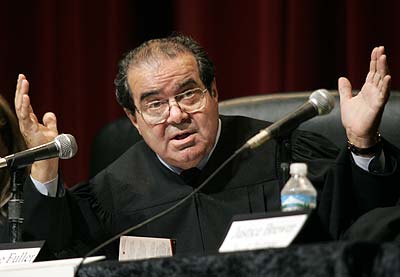
Antonin Scalia in judicial mode.

The online ABA Journal includes this quotation from Associate Justice Antonin Scalia‘s recent speech to a gathering of the American Society of Legal Writers:

It became clear to me [while an instructor at U. Va. law school], as I think it must become to clear to anyone who is burdened with the job of teaching legal writing, that what these students lacked was not the skill of legal writing, but the skill of writing at all. To tell the truth, at as late a stage as law school, I doubt this skill can be taught.

What I hoped to have conveyed to my charges in those years were merely the prerequisites for self-improvement in writing, which are two things. Number one, the realization—and it occurred to my students as an astounding revelation – that there is an immense difference between writing and good writing. And two, that it takes time and sweat to convert the former into the later.

The snippet reminded Blawgletter of a comment from a judge friend on the elegant concurrence on August 14 by Senior Circuit Judge John T. Noonan, Jr.  His Honor compared Judge Noonan’s style to that of Oliver Wendell Holmes, Jr.  Dead on, we say.  Good writing is good writing — even when it wears legal garb.

Feedicon And our feed says amen.

Yesterday, the Fifth Circuit affirmed an award of $446,777.12 in attorneys’ fees despite the fact that it included charges for an initial mistrial.  The plaintiffs, eight employees of a railroad, sued for race discrimination.  Their first trial ended in a jury deadlock, but they won the next time around.  The second jury awarded each of them $125,000 in punitive damages for a total of $1,000,000.  The court then added the fee award.  The Fifth Circuit held that the court properly included the mistrial fees because the plaintiffs in fact prevailed on their hostile work environment claim and didn’t cause the mistrial.  Abner v. The Kansas City S. Ry. Co., No. 07-30674 (5th Cir. Aug. 14, 2008).

Today, the Federal Circuit applied the "case or controversy" test of MedImmune, Inc. v. Genentech, Inc., 127 S. Ct. 764 (2007), in upholding dismissal of a lawsuit seeking a judgment declaring non-infringement of patents.  The court noted that the patent-holder hadn’t threatened the plaintiff with suit or caused it any injury by its hovering menace as an active enforcer of its patent rights.  Prasco, LLC v. Medicis Pharmaceutial Corp., No. 07-1524 (Fed. Cir. Aug. 15, 2008).

Feedicon14x14 It’s beer-thirty on a Friday, y’all.

Drams
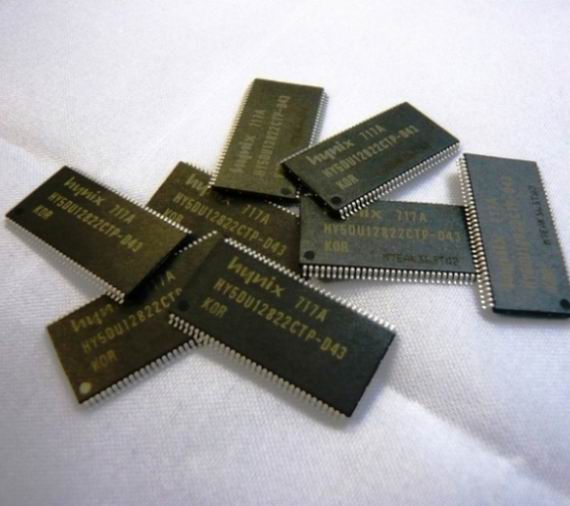
Chinese DRAMs.  Xie xie.

Today the Ninth Circuit dealt a death blow to a price-fixing case against foreign and domestic makers of those silicon-and-metal dealies that enable your computer to remember megabytes and even gigabytes of stuff and to recall it on command.  The reason?  The putative class of buyers all bought their dynamic random access memory chips outside the U.S. of A.  Centerprise Int’l, Ltd v. Micron Tech., Inc., No. 06-15636 (9th Cir. Aug. 14, 2008).

The overseas locus of the DRAM purchases matters because Congress cut the potential reach of U.S. antitrust law in the Foreign Trade Antitrust Improvement Act of 1982, 15 U.S.C. §§ 1-7.  The Supreme Court put meat on the FTAIA bone in F. Hoffman-La Roche Ltd. v. Empagran S.A., 542 U.S. 155 (2004).  The Empagran Court held that non-domestic purchases generally don’t satisfy the FTAIA’s "domestic injury" requirement for violations involving international or foreign commerce.  The Court didn’t set a standard for assessing whether antitrust claims involve the "direct, substantial, and reasonably foreseeable [domestic] effect" that the FTAIA demands.  15 U.S.C. § 6a. But two courts of appeals later did, and both adopted a "proximate cause" or "direct cause" test.  The in-U.S. "effect" of an antitrust violation thus must proximately cause the outside-U.S. injury.  See Empagran S.A. v. F. Hoffmann-La Roche, Ltd., 417 F.3d 1267, 1271 (D.C. Cir. 2005); In re Monosodium Glutumate Antitrust Litig., 477 F.3d 535, 539 (8th Cir. 2007).

The Ninth Circuit agreed with its sister circuits and likewise chose proximate cause as the determinant of a sufficient causal connection.  It also, like its sisters, held the complaint deficient for alleging little more than that the foreign price-fixing wouldn’t and couldn’t have succeeded unless the domestic price-fixing did, too.  Mere "but for" causation just doesn’t cut it.

Which brings us to our Quote of the Day:  John T. Noonan, Jr.  Senior Circuit Judge Noonan wrote an enlightening and snappy concurrence.  Blawgletter reproduces it here in its pithy entirety:

There is such a thing as "cause in fact," that is, an event that, not necessarily alone, brings about a given result.  A "but for" cause is a cause in fact.  A "legal cause" is a cause in fact that is recognized in law as creating liability.  A "proximate cause" is a legal cause.  What turns cause in fact into a legal cause is a value judgment that the cause in fact creates an unreasonable risk of injury to a protected interest.  What is an unacceptable risk and what is to be protected depend on the values of the society.

As Cardozo’s famous opinion in Palsgraf make clear, that is how causation is often considered in the law of negligence.  Antitrust law, apparently, still offers "proximate" as if it provided something more than a label for a judgment that the conduct in question is foreseeably harmful to a social interest worthy of protection.

In the instant case, it would seem that reasonably prudent persons in the position of the defendants would see that their actions setting prices in the United States would negatively affect customers in the United States and elsewhere.  But it has been the judgment of Congress and the Supreme Court that the economic interests of consumers outside the United States are normally not something that American law is intended to protect.  Hence it is difficult to persuade a court that injury to foreign consumers has been "caused" by price-fixing in the United States.  It’s so difficult that amendment of the complaint becomes futile and jurisdiction itself is found not to exist.  We reach this vanishing point not from guidance in words like "proximate" or "direct" but from a strong sense that the protection of consumers in another country is normally the business of that country.  Location, not logic, keeps Centerprise’s claim out of court.

Centerprise, slip op. at 10661-62.

Feedicon14x14_2 Pithy core.