Do federal securities laws make your head hurt?

Sometimes they cause Blawgletter's synapses to misfire.

Take today. In Nuveen Municipal High Income Opportunity Fund v. City of Alameda, No. 11-17391 (9th Cir. Sept. 19, 2013), the ruling turned on what our securities-lawyer friends call "loss causation". Which they contrast with "transaction causation".

Stay with us, people.

The "transaction" kind of causation differs from the "loss" type in pretty much the same way that "but-for causation" differs in tort cases from "proximate causation". But-for means simply that without A (e.g., running a red light), B (e.g., a car crash) wouldn't have happened.

Here it turns a little philosophical. What if the A (running a red light) took place at an intersection three blocks away from where the car crash occurred but involved the car that ran the red light? A still caused B in the sense that B wouldn't have transpired but-for A.

Yet we sense that the remoteness matters. It doesn't feel "proximate" enough, maybe.

So back to transaction and loss causation. Lies about an issue of municipal bonds, for instance, may induce you to buy the bonds, but that doesn't imply that the misrepresentations caused the price of the bonds to tank later. You wouldn't have suffered the loss but-for the false statements or omissions, but maybe something else intervened (e.g., a fireball destroyed the city). Perhaps the fibs simply stopped mattering with the passage of time or proved true despite their initial falsity. Something else, in other words, constituted the "proximate" cause of your "loss" (the difference between what you paid and what you got).

The Ninth Circuit applied the loss causation rule to bonds that the City of Alameda had issued years ago to finance a cable and Internet system. The panel held that Nuveen's complaint failed to link the drop in the bonds' value to the true conditions that it claimed the City misrepresented — things like "access to apartment buildings, success of competitors, programming expenses, and inflated subscriber projections". Nuveen Municipal, slip op. at 22. Under Dura Pharmaceuticals, Inc. v. Broudo, 544 U.S. 336 (2005), the panel ruled, the district court properly granted summary judgment for the City.

Bonus:    Posts on loss causation here and here.

Extra bonus:    Post that includes a superb critique by John T. Noonan, Jr., here.

Chinese DrywallRoger Chadderdon's firm, Cataphora, won a breach-of-contract case against a bunch of lawyers who had hired the firm to provide "litigation support".

The lawyers served on the Plaintiffs' Steering Committee in a massive case that the Judicial Panel on Multi-district Litigation sited in New Orleans. See In re Chinese-Manufactured Drywall Products Liabiity Litig., No. MDL-2047 (E.D. La.).

They defended themselves on the ground, likely among others, that Cataphora "had surreptitiously included [in its contract with them] a provision calling for the company to receive a 'success fee.'" Herman v. Cataphora, Inc., No. 12-30966, slip op. at 2 5th Cir. Sept. 17, 2013).

Let us pause now to think about what a success fee means in the context of litigation support as well as how one might insert a success fee clause into a contract surreptitiously with a bunch of lawyers.

Ha!

Chadderdon chose to Gloat about the win, which Cataphora obtained from a jury in the Northern District of California. But Chadderdon did so in a talk with Above the Law's Christopher Danzig (now an ATL ex-pat). And, in the course of the Gloating, Chadderdon used words like "hypocrites", "screwed", and "kicked their ass".

The bragging prompted two of the lawyers to Sue for libel. They did so in the Pelican State. Chadderdon and Cataphora moved to dismiss for want of personal jurisdiction. And they won.

The Fifth Circuit upheld the order. The panel ruled that the lawyers hadn't met the "focal point" test of Calder v. Jones, 465 U.S. 783 (1984), largely because the bad-mouthing (if any) took place in the Golden State, not the Pelican one.

The court none the less vacated the district court's order. Go west, the panel instructed, because sending the case there would serve the interest of justice under 28 U.S.C. 1406(a), partly because a transfer could avoid statute of limitations concerns. Herman, slip op. at 9.

American Airlines New AirplaneBlawgletter has the Vague Notion that bankruptcy law dislikes some kinds of contract clauses. Take your ipso factos, which trigger some change in the contract's status simply because a party filed for bankruptcy relief. Don't laws that aim to treat creditors fairly tend to frown on such efforts to get a Leg Up as the price for seeking protection under the Bankruptcy Code?

Apparently not.

The Second Circuit ruled, in an appeal stemming from the bankruptcy of American Airlines's parent, AMR Corp., that ipso facto clauses do NOT, ipso facto, run afoul of bankruptcy law.

The ipso facto provisions in question appeared in Indentures. The Indentures set out terms and conditions for borrowing money to finance the purchase of air frames and jet engines. The Indentures called for automatic acceleration of the debt — making it come due all at once — if and when the borrower filed for bankruptcy protection. They also — to the chagrin of the Trustee, U.S. Bank — barred the Trustee from demanding and getting a "Make-Whole" payment upon acceleration of the debt. The Make-Whole thing would have given U.S. Bank all the principal AND interest that the borrower would have paid over the life of the loans in one gigantic lump sum.

Not fair, we hear U.S. Bank yelling, in that husky banker's voice. AMR got to avoid paying us Make-Whole money by filing under chapter 11 and then refinancing its debt to us at cheaper interest rates. We want our money! Little banker's fist shaking in rage.

But the Second Circuit said no, affirming the bankruptcy court. U.S. Bank Trust Nat'l Ass'n v. AMR Corp., No. 13-1204-cv (2d Cir. Sept. 12, 2013). The ban on ipso facto clauses applies only to "executory" contracts, the panel said, but we do not learn why the loans didn't qualify (although we gather U.S. Trust had done about all it needed to do when it loaned the money).

Does a law firm have a duty in tort to squeal on management to the board of directors?

Not in Illinois, the Seventh Circuit ruled last week. Peterson v. Winston & Strawn, LLP, No. 12-3512, slip op. at 4-5 (7th Cir. Sept. 6, 2013) (affirming dismissal of malpractice complaint).

The panel also cited its doubts that the board would have cared:

One of the four directors lived in Hong Kong and the other three in the Bahamas. Nothing in the complaint suggests that any of the four ever exercised any responsibility over the Funds other than to delegate all powers and duties to [fund founder Gregory] Bell. The Trustee might have bolstered his claim by conducting an investigation into the four directors' careers and learning how they had responded if or when other firms with which they were affiliated had encountered troubled investment or balky borrowers (Petters’s ventures fit both descriptions). But the Trustee conceded oral argument that he had not conducted any pre-filing investigation, and he did not ask for discovery in order to learn whether the directors were independent of Bell in any realistic sense.

Id. at 6.

The patent assignment says the assignor — the Inventor — will receive a share of any "recovery of damages" from litigation of the heart-stent patent that he assigned.

The assignee — let's call it Scimed — sues an infringer — which we'll call Cordis. Cordis in turn brings an action against Scimed, accusing it of Even Worse Infringement.

The parties settle. The accord calls for Scimed to pay Cordis $1.75 billion. All concur that the net to Cordis takes account of damages that Cordis owes Scimed. It offsets those damages.

Does Inventor have a good claim against Scimed for a share of the "recovery"?

Perhaps, the Third Circuit held today. The panel ruled, by a 2-1 vote, that the assignment agreement had an ambiguity (as to what counts as a "recovery") and that Inventor just might have a point that Scimed circumvented his right to a share of the (on-its-face-negative) "recovery" by using a setoff to obscure the damages that Scimed in truth actually got. Jang v. Boston Scientific Scimed, Inc., No. 12-3434 (3d Cir. Sept. 5, 2013) (applying Massachusetts law).

A Seattle jury today hit Motorola with a $14 to $15 million damages award for bad faith in negotiating to license patents that Microsoft's Xbox and Windows products infringe.

The dispute involved patents that Microsoft holds on technologies relating to wireless local area networks and video coding.

Two standard-setting organizations (SSOs) incorporated the Motorola technologies into standards that they set — H.264 and 802.11 – making the patents "standard-essential". Anyone who practices the standards necessarily infringes standard-essential patents (SEPs).

Motorola had promised the SSOs to license the patents on a "reasonable and non-discriminatory basis" — which goes by RAND, although Europeans tend to add "fair" to the front of RAND, rendering it FRAND.

Microsoft accused Motorola of breaking its RAND/FRAND promise, partly by using the SEPs to persuade a German court to enjoin Microsoft from distributing infringing products in Deutscheland. It sought $29 million in damages — $23 million for moving a distribution center from Germany to the Netherlands and $6 million in legal expenses. Microsoft also fussed about Motorola's opening offer of a 2.25 percent royalty rate.

The jury cut the amounts to $11 million and $3 million, respectively.

The verdict post-dates a ruling by U.S. District Judge James L. Robart on reasonable royalty rates for the SEPs at issue in April. Judge Robart set the rates as follows:

  • The RAND royalty rate for Motorola's H.264 SEP portfolio is 0.555 cents per unit; the upper bound of a RAND royalty for Motorola's H.264 SEP portfolio is 16.389 cents per unit; and the lower bound is .0555 cents per unit. This rate and range are applicable to both Microsoft Windows and Xbox products. For all other Microsoft products using the H.264 Standard, the royalty rate will be the lower bound of .0555 cents.
  •  

  • The RAND royalty rate for Motorola's 802.11 SEP portfolio is 3.471 cents per unit; the upper bound of a RAND royalty for Motorola's 802.11 SEP portfolio is 19.5 cents per unit; and the lower bound is 0.8 cents per unit. This rate and range are applicable to both Microsoft Windows and Xbox products. For all other Microsoft products using the 802.11 Standard, the royalty rate will be the lower bound of 0.8 cents per unit.

Blawgletter has a couple of thoughts.

First, Motorola couldn't use the David v. Goliath angle very well, partly because Microsoft brought suit first and assumed the plaintiff's side of the "v." and partly because the jury knew that another gigantic company, Google, controls Motorola.

Second, we doubt the verdict turned on the opening demand for 2.25 percent by Motorola. It seems instead to have resulted from the fact that Motorola got the German injunction.


The Second Circuit has upheld rules that aim to ease the process for vendors of video content to complain to the Federal Communications Commission about bias by Comcast, Time Warner, and other cable giants in favor of their own video content. Time Warner Cable Inc. v. Federal Communications Comm'n, No. 11-4138(L) (2d Cir. Sept. 4, 2013).

The panel cited the fact that Comcast still holds big market shares (60 percent or more) in places like Philadelphia and Chicago and therefore could use its bottleneck status to force non-Comcast video sources to accept worse terms than Comcast provides to its affiliates.

The cable companies griped that the first amendment gave them the right to favor their own content as a matter of free speech. The court held that "intermediate scrutiny" applied to the complaint and that the 2011 FCC rules did a good enough job of trying to serve the congressional goal of preventing unfair use of market power by Comcast, et al. You don't have a free speech right to hurt competitors, the court seemed to say.

The rules the panel upheld, by the way, differ from the ones that govern the now-over fight between Time Warner and CBS over "retransmission consent", which applies only to broadcast programming. 

The Seventh Circuit, per Judge Richard Posner, has put the kibosh on an effort to kill a pair of class actions over moldy Kenmore washing machines. Butler v. Sears, Roebuck & Co., No. 11-8029 (7th Cir. Aug. 22, 2013). In doing so, the court gave the back of its hand to those who claim that Comcast Corp. v. Behrend, 133 S. Ct. 1426 (2013), wrought a Sea Change in class action Law.

The Supreme Court had vacated the Seventh Circuit's affirmance of class certification in the case against Sears and remanded to the court of appeals for Further Thought in light of Comcast. Sears, Roebuck & Co. v. Butler, 133 S. Ct. 2768 (2013).

Sears urged on remand that Comcast "rejects the dissenting view that 'economies of time and expense' override rigorous compliance with the predominance requirement". Sears' Circuit Rule 54 Statement, Butler v. Sears, Roebuck & Co., No. 11-8029, Doc. No. 30, at 5 (7th Cir. July 29, 2013). The panel responded thus:

Sears argues that Comcast rejects the notion that efficiency is a proper basis for class certification, and thus rejects our statement that "predominance" of issues comon to the entire class, a requirement of a damages class action under Rule 23(b)(3), "is a question of efficiency." 702 F.3d at 362. But in support of its argument Sears cites only the statement in the dissenting opinion in Comcast that "economies of time and expense" favor class certification, 133 S. Ct. at 1436 — a statement that the majority opinion does not contradict. Sears is wrong to think that anything a dissenting opinion approves of the majority must disapprove of.

Butler, slip op. at 6-7. The enemy-of-my-enemy idea – a "triadic interaction" rule that never did have much logic behind it — did not sway their honors.

The court went on to reject two broad readings, common in defense circles, of Comcast. The first dealt with Sears's claim that "permutations" in what caused the washers to stink and in the amount of class members' stink-damages meant common issues couldn't predominate under Rule 23(b)(3). Sears' Circuit Rule 54 Statement at 6. The panel replied that "it was not the existence of multiple theories in [the Comcast] case that precluded class certification; it was the plaintiffs' failure to base all the damages they sought on the antitrust impact — the injury — of which the plaintiffs were complaining."* Butler at 7. Complexity in the theory of harm thus does not doom class treatment so long as the class ties the harm to class damages.

The panel also held that a total absence of class-wide damages doesn't prevent certification of a class under Rule 23(b)(3). The thinking went like this:

Sears thinks that predominance is determined simply by counting noses: that is, determining whether there are more common issues or more individual issues, regardless of relative importance. That’s incorrect. An issue “central to the validity of each one of the claims” in a class action, if it can be resolved “in one stroke,” can justify class treatment. Wal-Mart Stores, Inc. v. Dukes, 131 S. Ct. at 2551. That was said in the context of Rule 23(a)(2), the rule that provides that class actions are permissible only when there are issues common to the members of the class (as of course there are in this case). But predominance requires a qualitative assessment too; it is not bean counting. In Amgen Inc. v. Connecticut Retirement Plans & Trust Funds, 133 S. Ct. at 1196, the Court said that the requirement of predominance is not satisfied if “individual questions…overwhelm questions common to the class,” and in Amchem Products, Inc. v. Windsor, 521 U.S. 591, 623 (1997), it said that the “predominance inquiry tests whether proposed classes are sufficiently cohesive to warrant adjudication by representation.” And in In re Inter-Op Hip Prosthesis Liability Litigation, 204 F.R.D. 330, 345 (N.D. Ohio 2001), we read that “common issues need only predominate, not outnumber individual issues.” Or as we put it in Messner v. Northshore University Health System, 669 F.3d 802, 819 (7th Cir. 2012), “Under the district court’s approach [which our decision in Messner rejected], Rule 23(b)(3) would require not only common evidence and methodology, but also common results for members of the class. That approach would come very close to requiring common proof of damages for class members, which is not required. To put it another way, the district court asked not for a showing of common questions, but for a showing of common answers to those questions. Rule 23(b)(3) does not impose such a heavy burden."

It would drive a stake through the heart of the class action device, in cases in which damages were sought rather than an injunction or a declaratory judgment, to require that every member of the class have identical damages. If the issues of liability are genuinely common issues, and the damages in individual hearings, in settlement negotiations, or by creation of subclasses, the fact that damages are not identical across all class members should not preclude class certification. Otherwise defendants would be able to escape liability for tortious harms of enormous aggregate magnitude but so widely distributed as not to be remediable in individual suits. As we noted in Carnegie v. Household Int'l, Inc., 376 F.3d 656, 661 (7th Cir. 2004), “the more claimants there are, the more likely a class action is to yield substantial economies in litigation. It would hardly be an improvement to have in lieu of this single class 17 million suits each seeking damages of $15 to $30…. The realistic alternative to a class action is not 17 million individual suits, but zero individual suits, as only a lunatic or a fanatic sues for $30” (emphasis in original).
The present case is less extreme: tens of thousands of class members, each seeking damages of a few hundred dollars. But few members of such a class, considering the costs and distraction of litigation, would think so meager a prospect made suing worthwhile.

There is a single, central, common issue of liability: whether the Sears washing machine was defective. Two separate defects are alleged, but remember that this class action is really two class actions. In one the defect alleged involves mold, in the other the control unit. Each defect is central to liability. Complications arise from the design changes and from separate state warranty laws, but can be handled by the creation of subclasses. See, e.g., Johnson v. Meriter Health Services Employee Retirement Plan, supra, 702 F.3d at 365 (10 sub-classes). These are matters for the district judge to consider in the first instance, and Sears will be able to present to her he evidence it’s obtained since the district judge ruled on certification almost two years ago.

Butler at 8-11.

To which we say — amen!

________________________

*The evidence in Comcast in fact did tie the harm from Comcast's conduct to the class's damages. But the majority said it didn't. The Seventh Circuit implies that it agrees with Blawgletter on that point. See Butler at 8 (stating that "the class in Comcast was (in the view of the majority) seeking damages beyond those flowing from the theory of antitrust injury alleged by the plaintiffs") (emphasis added). Sadly, the ruling by the 5-4 majority in Comcast counts more than the views of Blawgletter, the district court, the majority on the Third Circuit, the four dissenting justices, and the Butler panel.


AdamSmithBlawgletter has lately started scanning news reports about the U.S. Justice Department Antitrust Division's bid to block the minnow-eats-whale merger of U.S. Airways and American Airlines. Wowsers.

Let's start by saying we've found that the biz reporters have a not-very-good grasp of antitrust law. A terrible one in fact. They seem to think that whatever business wants, business ought to get. If it makes business sense, antitrust law should promote it, not try to stop it. Which fact we suppose shouldn't surprise anyone.

But still.

Just yesterday, the local paper here issued a paean in favor of the pending hook-up. The ink-stained wretch who wrote the item praised U.S. Air's CEO Doug Parker for making "the right call" by over and over again calling for . . . less competition — or, in the item's telling, "industry consolidation".

The piece deems Parker "visionary" for wanting to cut the number of carriers and reduce airline capacity. It also credits Parker for wanting to gobble up Delta in 2007 — in spite of the fact that the deal would have happened just in time for the Great Recession, whose onset swung Delta itself from a $1.6 billion profit to an $8.9 billion loss in the year after its 2008 merger with Northwest Airlines. Parker dodged a bullet, if you ask us.

The author even dismisses as merely "embarassing" and "bone-headed" an email that Parker sent the Delta CEO to complain about a "triple miles" offer that the rival carrier had made. He says "most other[]" moves that Parker tried, by contrast, "made business sense". See Complaint ¶ 45.

Well, uh.

Hmmm.

Illegally buying up the competition to gain market power also makes "business sense" — ask John D. Rockefeller. Also inquire of AT&T, which tried to snag rival T-Mobile but failed after the DOJ moved to block the deal in court.

(The same newspaper, by the way, predicted Dire Consequences for T-Mobile if AT&T's bid failed — a forecast that has proved dismally wrong.)

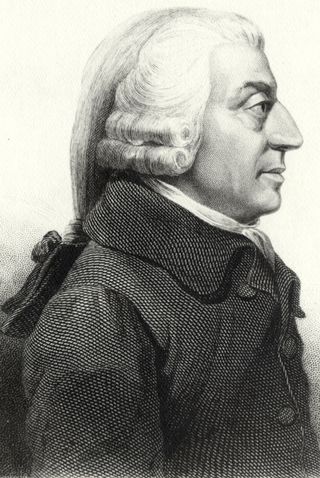
Thwarting competition almost always makes terrific business sense. That explains why it happens so often. As Adam Smith wrote:

People of the same trade seldom meet together, even for merriment and diversion, but the conversation ends in a conspiracy against the public, or in some contrivance to raise prices.

Antitrust laws exist to protect competition from conspiracy, to purge markets of unfair monopolies, and shield the public from bad service and high prices. Who cares about airline passengers? Reading the pro-merger, pro-CEO item we just went through, you'd think The Dallas Morning News does not.