You can now see the February 2008 issue of Barnett’s Notes on Commercial Litigation.  Which actually won a grand prize award last year for law firm newsletters.

The new issue — available via email subscription — features:

  • Affidvaits Cast Light on Dark Chocolate Plot.  Did confectionary giants fix prices on the food of the gods?
  • Did You Know?  A new law encourages an unlikely source of help for the tax man — private citizens.
  • Depression Confession.  Help for lawyers who suffer.
  • Un-Subpriming the Investment Pump.  Wall Street and friends have made a fine mess of credit markets.  Guess who gets to clean it up?
  • Hot Lunch.  A tort reform group positions itself to sue anybody who dares use its "judicial hellhole" trademark.
  • The Cycle.  Cartoon.
  • Blawgletter Roundup.  Links to favorite recent posts.
  • Links & Info.  Er — links and info — what else?

Happy New Year!

Feedicon14x14 Subscribe to Blawgletter — it’ll tickle your innards!

Yesterday, Blawgletter listed our 10 most popular posts in our inaugural year. Please indulge us now as we reveal the 10 we enjoyed writing most:

10. Banishing Jury Trial.

9. Frosty Bites Nips Dippin’ Dots in Patent Case.

8. Does Tort Litigation Kill People?

7. Tort-O-Rama:  WSJ Attacks "Tort Bar", Tries to Steal Its Lunch Money.

6. Blawg Review No. 118.

5. Voir Dire and Tort Reform.

4. Euripides Pants, Euminides Pants.

3. They Will Be Killed by Us.

2. Antitrust Division Disbands, Declares Competition Safe.

1. Right-Sizing Civil Lawsuits.

Now our start-up year stats:

  • 173,688 views-and-clicks — a daily average of 475.
  • 1,745 high on December 21 and a daily average of 925 in December.
  • 43rd "all time" rank out of 2278 law blogs on Justia.com.

Thank you for viewing and clicking.  We couldn’t have done it without you.  And we’ll have even better stuff in 2008.

Happy New Year one and all!

Feedicon Does email work for you?

Platinum Equity plans to end its pact with PPG Industries to buy PPG’s automotive glass bidness.  PPG press release here; WSJ article here.  Platinum feels so strongly about the justness of its position that it sued PPG in Manhattan to get a judicial declaration that it could walk away from the $500 million deal.

PPG begs to differ.  "While PPG does not comment on the specifics of litigation, the company stated that it intends to vigorously enforce its rights under its agreements with the Platinum group." 

Split infinitive notwithstanding, those sound like fighting words.

The EDGAR database doesn’t seem to have the agreement between Platinum and PPG, although the September 13 press release notes that it includes "customary" closing conditions.  And, as we’ve heard time and again this year, merger agreements — if not asset purchase agreements — customarily include a condition that no "Material Adverse Effect" has occurred.

Results of litigation over MAE clauses have, shall we say, varied — a win for a seller in Tennessee and a victory for a buyer with cold feet in Delaware.

Feedicon_2 Get Blawgletter by email.

Blawgletter posted 850 items in 2007 (so far), but only a small fraction can make it to this list.  Only you, dear viewers and clickers, could determine the top 10.  They are:

10.  Patent Patent Invalidity.

9.  Blackwater as Leviathan.

8.  Insurance Coverage for Directors and Officers?  Eighth Circuit Says Yep.

7.  Big Pharma Wins Round in Patent Fight Against Generics.

6.  Federal Circuit Reverses Patent Priority Ruling.

5.  A Question About e-Discovery.

4.  Trustee’s Sitting Promotes Creditor’s Standing.

3.  Reprising Blawg Review No. 118.

2.  Beer Pong and the Law.

1.  Third Circuit Reinstates "Patent Hold Up" Monopolization Claim.

Feedicon Blawgletter averages almost 1,000 views and clicks a day.  Thanks!

Section 1083 of the new defense appropriations bill, H.R. 1585, would sure enough have exposed the Iraqi government’s U.S. assets to claims arising from the regime of Saddam Hussein, as the White House’s Memorandum of Disapproval today notes.

The Foreign Sovereign Immunities Act of 1976 generally exempts bank accounts, high-rise condominiums, and other assets of — you guessed it — foreign sovereigns from the risk of a U.S. court judgment.  The exemption aims to avoid needless affronts to the dignity of your Frances, your Canadas, and your Russias, but it doesn’t apply to countries that the U.S. government has declared supporters of terrorism — a category that includes Iraq under Hussein.  We needen’t worry so much, Congress felt, with encouragers and abetters — however sovereign — of al-Quaida, the Taliban, and their ilk.

Blawgletter has no quarrel with the idea that section 1083 would’ve tied up Iraq’s U.S. assets so that victims of Hussein’s brutality might recover damages against them.  Nor do we doubt the foreign policy implications of same or even the wisdom of vetoing the entirety of H.R. 1585 to prevent section 1083 from becoming law.

We note only that immunizing Iraq’s assets represents a cost of war — one that we expect few, if any, will remember to include in the tally and a cost that will likely fall to the victims themselves.

Feedicon14x14 Cost?  You can’t handle the cost!

Finishlinelogo
Will a merger finish Finish Line?

Blawgletter read this morning that a Tennessee trial judge yesterday ordered footwear-retailer Finish Line to keep its promise to buy rival Genesco for $1.5 billion.  WSJ article here; Bloomberg here.

Then we read the court’s 43-page Memorandum Opinion and Order, which Genesco kindly posted on its website.  Our conclusions?  Let’s just say that Chancellor Ellen Hobbs Lyle didn’t earn Phi Beta Kappa and Tennessee Law Review honors for nothing.

Her Honor found and concluded that:

  • Genesco and its adviser Goldman Sachs chose not to volunteer to Finish Line and its adviser UBS information about a sizable dip in Genesco’s financial performance during May 2007.  But the parties’ Merger Agreement, and the procedures the parties followed in due diligence, excused Genesco from any obligation to correct misimpressions by Finish Line.  Thus no fraud defense.
  • Genesco had, but failed to carry, the burden of showing that no "Material Adverse Effect" happened after the parties inked the Merger Agreement on June 17, 2007.  The MAE didn’t matter because the Merger Agreement included a carve-out for an MAE that resulted from a downturn in general economic conditions instead of circumstances specific to Genesco.  Because Genesco’s problems stemmed from a general economic downturn, Finish Line had no MAE defense.

The gist of the decision gets this summation near the end:

The transaction in issue is not a handshake deal; it does not come within the Lonesome Dove frontier standards of dealing.  The merger in this case was a highly negotiated transaction, with teams of lawyers, advisors and handlers being paid enormous sums to orchestrate the procedure for obtaining information, the production of information, and the use and reliability of information.  This milieu is UBS’s home territory.  UBS was advising Finish Line.  There was, then, no inequality of bargaining power nor oppression.  As Professor Hitscherich testified, the provisions contained in the Merger Agreement are standard.  Under these circumstances, the Court finds it[] does not offend the conscience to enforce performance of the Merger Agreement.

Genesco, Inc. v. The Finish Line, Inc., No. 07-2137-II(III), slip op. at 41-42 (Tenn. Chanc. Ct. Dec. 27, 2007).

Finish Line may yet walk the deal.  Chancellor Lyle acknowledged the possibility that "the combined companies would result in an insolvent entity" but left that question of insolvency to a court in New York.

Congratulations to our former partner Jonathan Shaw for his part in the big trial win.  Also to our friend Jonathan Schiller.

Feedicon_2 Our feed enjoys enforcing merger agreements.

Chineseyear2008
Year of the Rat starts next Tuesday.

As 2008 draws nigh, the federal courts keep at their judicial business.  Why, these interesting and important appellate decisions in commercial cases came out just this week:

  • Disability Insurance.  New York Insurance Law section 3234(a)(2) allows disability insurers to "toll" benefits for disabilities that disable the insured during the first 12 months of coverage but arise from a pre-existing condition.  But it also disallows absolute bars to coverage, presumably requiring payment of benefits for disabilities that persist after the first 12 months.  Benesowitz v. Metropolitan Life Ins. Co., No. 05-6382-cv (Dec. 28, 2007).
  • Subpoenas to Non-Resident Non-Americans.  U.S. district courts may enforce a subpoena for a Rule 30(b)(6) deposition against a foreign corporation even if the courts lack personal jurisdiction over the alien entity.  Proper service of the subpoena obviates the need for jurisdiction.  Rosenruist-Gestao E Servicos LDA, v. Virgin Enterprises Ltd., No. 06-1588 (4th Cir. Dec. 27, 2007).  Circuit Judge Wilkinson dissented — with vigor.
  • Failure to Fix Bad Credit Report.  A jury properly found a credit reporting agency liable under the Fair Credit Reporting Act to a victim of identity theft for failing to correct false information about her credit history.  The court reduced the award for mental anguish to $150,000 from $250,000 and directed the district court on remand to allow the defendant to submit an opposition to the plaintiff’s application for attorneys’ fees under Rule 54(d)(2)(C).  Sloane v. Equifax Information Services, LLC, No. 06-2044 (4th Cir. Dec. 27, 2007).
  • Contempt Against Non-Party.  The bankruptcy and district courts erred in holding a non-party in contempt without first giving her personal notice in compliance with Bankruptcy Rule 7004.  In re Teknek, LLC, No. 07-1498 (7th Cir. Dec. 28, 2007).
  • Patent Infringement by Google’s AdSense and AutoLink Products.  The district court construed "data reference" too narrowly and thus shouldn’t have granted summary judgment of non-infringement on two patents as to Google’s AutoLink product.  The rest of the summary judgment for Google survived attack.  Hyperphrase Technologies, LLC v. Google, Inc., Nos. 2007-1125 & 2007-1176 (Fed. Cir. Dec. 26, 2007) (non-precedential opinion).

Feedicon Happy Friday — and happy almost new year.

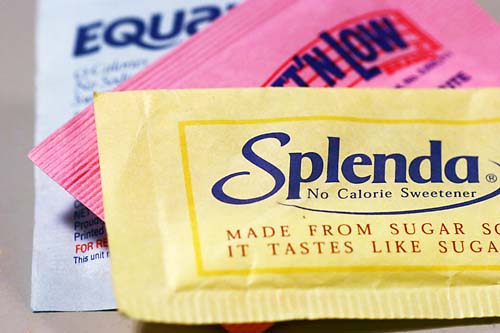
Splenda
Yellow packaging alone doesn’t equal trade dress infringement.

On Monday, the Third Circuit rejected a finding of no substantial similarity between the trade dress of Splenda, the leading "sucralose" sweetener, and that of some grocery chains’ knock-offs.  The fake Splenda packaging looked to the court of appeals just too much like Splenda’s — particularly including the yellow color of the packets.  McNeil Nutritionals, LLC v. Heartland Sweeteners, LLC, No. 07-2644 (3d Cir. Dec. 26, 2007).

Other stores’ private-label sucralose products escaped, mainly because the packages made the stores’ recognizable names (e.g., Safeway and Food Lion) more prominent.

The unanimous panel remanded for consideration of whether the Splenda-maker, McNeil Nutritionals, satisfied the other requirements for a preliminary injunction.

Feedicon14x14 Our feed tastes best with Splenda.

Tom Herman, in his WSJ Tax Report column today, notes that the Internal Revenue Service "recently issued guidance" on whistleblower claims under a 2006 law.  The statute doubles the rewards available to individuals who squeal on tax cheats.

You can see the IRS announcement (on December 19, 2007) here.  It includes links to Notice 2008-04, which describes relevant procedures, and Form 201, the "Application for Award for Original Information".

The new program allows bounties of between 15 and 30 percent of the extra that the IRS collects.  The old regime limited payments to 15 percent or less.

Qui tam cases under the False Claims Act require a claimant to file a lawsuit under seal.  The IRS program, by contrast, involves filing papers with the Whistleblower Office — a process that, at first blush, looks simpler and easier for the whistleblower but that now promises the same potential award levels. 

The release helpfully ends with the note that "[a]wards will be subject to normal tax reporting and withholding requirements."

Feedicon Have you noticed the days getting longer already?